Households preparing meals for the week
If you cook several portions in advance, separate the ones you’ll keep chilled from those you’ll freeze. For this choice, the capacity of each compartment matters more than the total volume.


Start by working out how much space you need for fresh food and frozen portions, rather than looking at total capacity alone. A fridge freezer is a good choice if you regularly use both compartments. If freezer space is already the limiting factor, a separate or additional appliance may be a better fit, provided you have room for it and compare its energy use.
If you cook several portions in advance, separate the ones you’ll keep chilled from those you’ll freeze. For this choice, the capacity of each compartment matters more than the total volume.
If homemade portions and frozen food regularly fill your freezer, compare its usable capacity with that of a separate appliance. Bear in mind, though, that a separate freezer needs extra space.
Measure the space, the delivery route and the door clearance. Also check the clearances specified in the manual and the declared noise level if the appliance will be near your living area.
Consider this if: you store fresh food and frozen portions every week but don’t have room for two appliances.
The trade-off: a large total capacity can disguise a freezer compartment that’s too small for your food.
Consider this if: you only freeze a few items occasionally.
The limitation: UFC-Que Choisir says a small freezer compartment isn’t enough if you eat a lot of frozen food.
Consider this if: your chilled and frozen storage needs are consistently high or very different.
The trade-off: you’ll need room for two appliances that run continuously, and should compare their energy use separately.
Consider this if: your current fridge has enough room for fresh food, but its freezer regularly overflows.
The trade-off: an upright freezer makes food easy to reach in drawers; a chest freezer needs more floor space and a different way of organising your food.
| Factor | What to check | Who is this for? |
|---|---|---|
| Balance of chilled and frozen storage | Compare the usable capacity of each compartment separately with the containers you usually use. | I prepare portions for several days and need to decide which to keep chilled and which to freeze. Around 36% of consumers would prioritise this balance. |
| Freezer capacity | Check the freezer’s usable capacity and how easy it is to access portions, particularly in drawers. | My prepared meals and frozen food regularly take up all the available space. Freezer capacity would be the priority for around 29% of consumers. |
| Space and noise | Measure the delivery route and the space available, then check the model’s stated clearances, climate class and noise level. | In an open-plan or narrow kitchen, I want to install the appliance without obstructing movement or putting up with bothersome noise. Around 21% of consumers would put these constraints first. |
| Energy use and maintenance | Compare the kWh/an figures for the models you’re considering and check whether the defrosting system suits the level of maintenance you’re happy with. | I’d rather avoid paying for unused capacity and want to take account of an appliance that runs all the time. For around 14% of consumers, energy use and maintenance would come before other factors. |
Two fridge freezers can divide their capacity very differently between the fridge and freezer compartments. So a high total capacity doesn’t guarantee enough room for the portions you want to freeze.
Count your meal containers and the frozen food you usually keep, then compare them with the usable capacity of each compartment.
A chest freezer can offer plenty of space, but it takes up floor area and you’ll need to think about how to find your food. UFC-Que Choisir also recommends taking the climate class of the location into account.
Choose between drawers and a chest freezer based on the space available, how easy it is to reach your food and the conditions in the room.
An additional freezer is also an electrical appliance that runs continuously.
According to ADEME, the size of appliances that run continuously and having more equipment than you need can affect a household’s energy use.
Compare the kWh/an figures for the specific models you’re considering with the capacity you’ll actually use.
Even if an appliance fits into its space, you still need to install it with the clearances and airflow specified for that model.
Check the manual before delivery and follow its instructions after transport. Electrolux recommends waiting at least four hours before plugging in its appliances.
The range includes freestanding fridge freezers, and the balance of capacity is worth checking for each model.
Some fridge freezers from the brand offer a large capacity and specialist compartments for fresh food.
Some fridge-freezer ranges are worth considering if capacity and how the appliance fits into your kitchen are key factors.
The French range includes different compartment layouts, including fridge freezers with two or three doors.
A large-capacity fridge freezer may be a good fit if you need plenty of space for both fresh and frozen food.
These appliances combine fridge and freezer compartments in one unit, with a range of capacities and formats. Compare how much space each gives you for different uses. If you’re considering a separate freezer instead, remember to factor in the space and energy use of a second appliance.
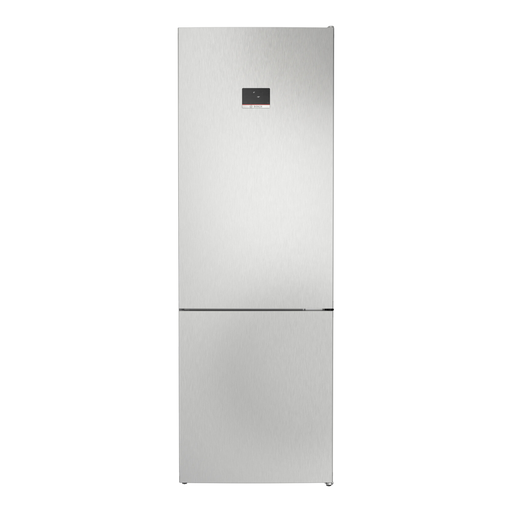 Image unavailable
Worth considering if you’re looking for a fridge freezer to keep meals chilled and freeze some portions.
Stated total capacity: 440 l. Energy rating: D. Compare the usable capacity of each compartment and the dimensions with your needs and available space.
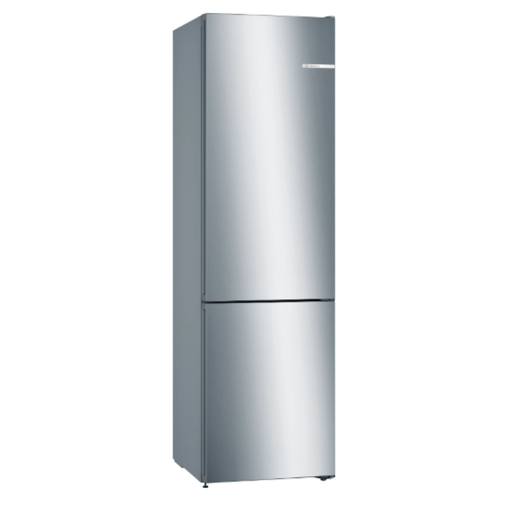 Image unavailable
A fridge freezer to consider if you use both fresh and frozen food to plan your meals.
Stated total capacity: 368 l. Energy rating: E. If you have an open-plan kitchen, check the model’s noise level before choosing.
 Image unavailable
Worth comparing if you want to keep portions chilled and frozen without prioritising a large total capacity.
Stated total capacity: 282 l, with a bottom freezer. Energy rating: E. Check the noise level if the appliance will be near a living area.
 Image unavailable
Worth considering if you need to store plenty of food in both compartments and have space for a side-by-side model.
The model name lists 333 l for the fridge and 192 l for the freezer, as well as a No Frost system and a noise level of 37 dB. Check the overall dimensions and annual energy consumption before buying.
 Image unavailable
Worth considering if space is limited and you don’t need to store large amounts of frozen food.
The model name indicates a total capacity of 262 l, a 70/30 split, a width of 54 cm, a height of 176 cm and Low Frost technology. Low Frost doesn’t mean you’ll never need to defrost it; also check the depth and installation clearances.
Count the portions you’ll keep chilled and the ones you’ll freeze separately, then compare them with the usable capacity of each compartment. UFC-Que Choisir gives a general guide of 100 to 150 l for one person, plus 50 l for each additional person. The containers you use and the amount of food you usually store are still key to deciding how to divide that space.
It may be enough if you only freeze small amounts occasionally. If you regularly prepare portions in advance or store lots of frozen food, check the usable capacity of a proper freezer compartment instead: UFC-Que Choisir says a small freezer compartment isn’t enough for storing large amounts of frozen food.
Measure the delivery route, the space available and the door clearance, then follow the model’s manual for clearances and setting it up. Electrolux recommends waiting at least four hours after transport before plugging in its fridge freezers. Always follow the instructions for the appliance you’ve bought.
Anses recommends setting your fridge below 4 °C. Also follow use-by dates and the storage instructions for each food: the temperature setting alone won’t extend how long food can be kept.
Old fridge freezers are collected through the waste electrical and electronic equipment scheme. The FAQ from the ministries responsible for the ecological transition describes a ‘one-for-one’ take-back when you buy an appliance of the same type. Agree the practical arrangements with the retailer before delivery.