Which features should you check first?
The right size depends on what you buy, but there is no single capacity that suits every household. Compare the usable capacity of each compartment with your usual shop, then rule out appliances that won’t fit your kitchen.
Table-top fridge
Consider it: for a very small kitchen and food stocks made up mostly of fresh produce.
Bear in mind: its capacity and limited space for frozen food may make it unsuitable for less frequent shopping; check the specifications of the exact model.
One-door fridge
Consider it: if most of your shopping is fresh food and you use little frozen food.
Bear in mind: a small freezer compartment, if there is one, may not hold your usual amount of frozen food.
Fridge-freezer
Consider it: if you want to keep fresh and frozen food in one appliance between shops.
Bear in mind: compartment capacities vary by model; the total capacity won’t tell you how much room there is for your usual shop.
Multi-door fridge
Consider it: if you need plenty of room for both fresh and frozen food.
Bear in mind: with a large appliance, check the width, door clearance and access route to your kitchen.
| Feature |
What to check |
Who it matters to |
| Space for fresh food |
Compare the fridge’s usable capacity and the space for your usual containers, not just the total capacity. |
When I get home with a full shop of fresh food, I want to put away dishes and vegetables without cramming them in. Around 33% of consumers would prioritise this fresh-food storage. |
| Space for frozen food |
Check the freezer’s usable capacity and drawer layout against the amount you usually keep. |
If frozen food makes up a large part of my shop, a small freezer compartment could limit what I can store. Around 27% of consumers would prioritise this storage. |
| Size and access |
Measure the space, required clearances and delivery route, including the packaged appliance. |
I’m looking for more storage, but my doors, hallway or kitchen may limit the size I can choose. Space and access would come first for around 27% of consumers. |
| Temperature and energy use |
Compare the stated annual energy consumption and temperature controls; check the ventilation and care instructions. |
Between shops, I want to keep an eye on the temperature without overlooking electricity use or maintenance. Around 13% of consumers would make this their main concern. |
Fridge-freezers and multi-door models to compare on Joybuy
These models offer two ways to store fresh and frozen food in one appliance: a fridge-freezer or a multi-door model. First compare their stated capacities with your usual shop, then check the dimensions needed for installation and delivery.
 Image unavailable
Haier HTW5618ENMG, 3-door fridge-freezer, 360 L
Worth comparing if you want to store fresh and frozen food in a fridge-freezer; check that the compartment layout suits your shop.
Features listed in the product title: Total No Frost, energy rating E, Wi-Fi and My Zone.
Before ordering, check the packaged dimensions, access route and installation clearances.
View on Joybuy
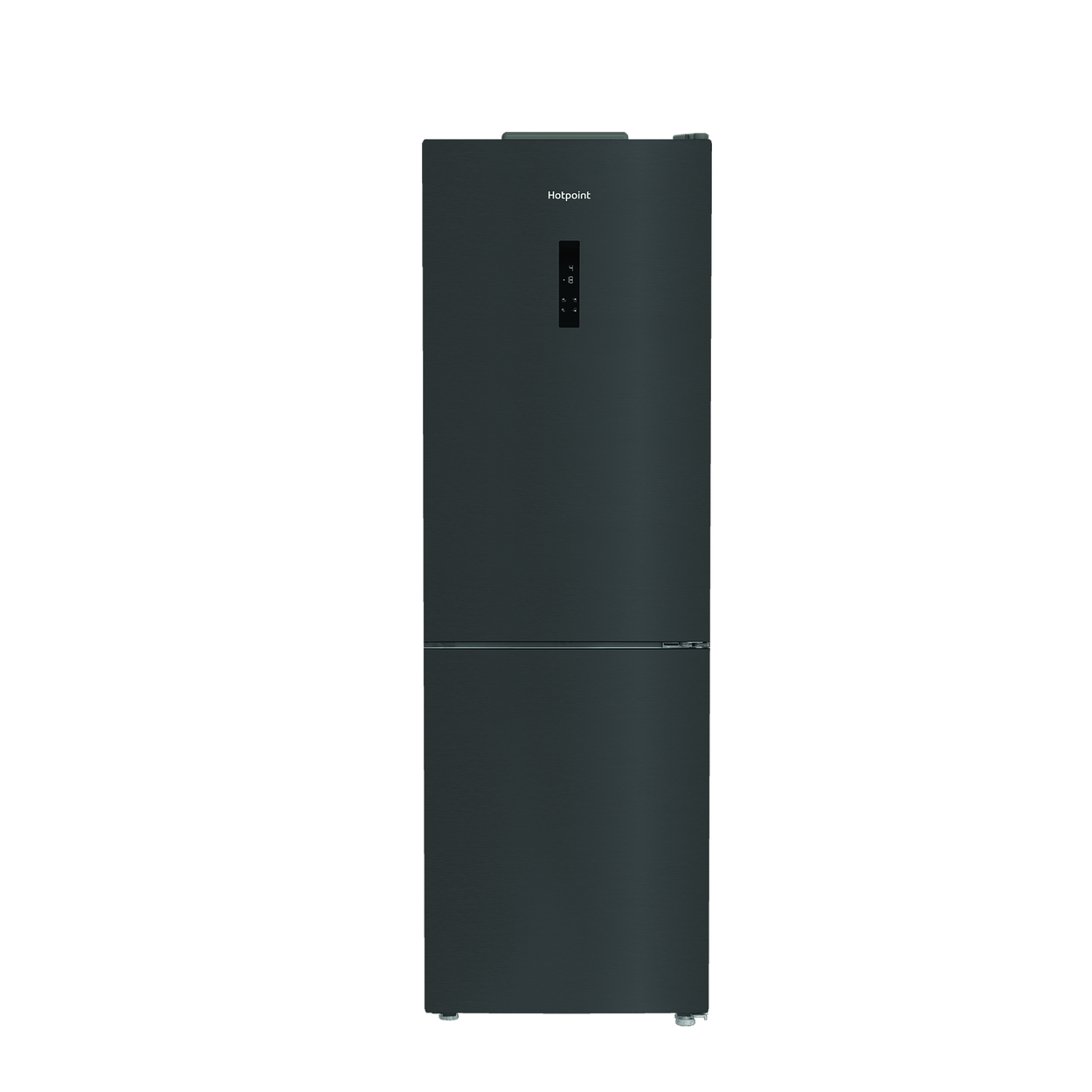 Image unavailable
Hotpoint HPK26363XBR5E, fridge-freezer, 316 L
Worth considering if you want to store both types of food in one appliance; compare the space for fresh and frozen food separately.
The product title lists a Dual No Frost system, energy rating D and a dark stainless-steel finish.
Check the delivery route, packaged dimensions and required clearances.
View on Joybuy
 Image unavailable
Candy CFQQ5T817EPS, 4-door multi-door fridge-freezer, 467 L
Consider it if you need a large appliance with space for fresh and frozen food, provided the doors can open fully in your kitchen.
The product title lists Total No Frost, energy rating E, Smart Inverter and a silver finish.
Measure the space and delivery route, including for the packaged appliance.
View on Joybuy
 Image unavailable
Samsung RF50C530EB1, multi-door fridge, 495 L
Worth comparing if you need plenty of space for less frequent shopping; check the capacity of each compartment before choosing.
The product title lists energy rating E and a black finish.
Check how much room is needed to open the doors, as well as the delivery route.
View on Joybuy
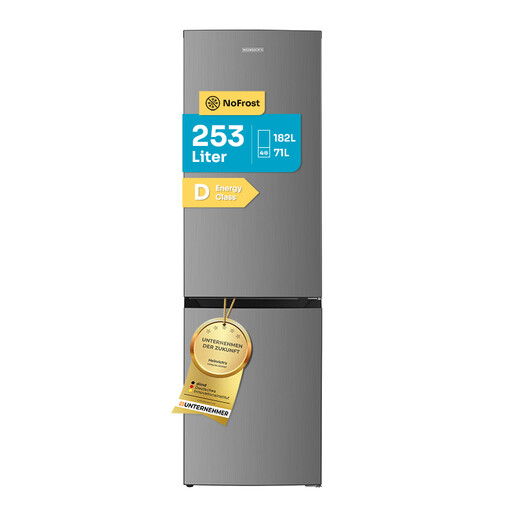 Image unavailable
Heinrich´s, fridge-freezer, 253 L, 182 L fridge capacity and 71 L freezer capacity
Consider it if this layout suits your food stocks; in particular, compare the 71 L freezer capacity with the amount of frozen food you buy.
The product title lists No Frost, a noise level of 39 dB, LED lighting and a reversible door hinge.
Check the width, depth, packaged dimensions and installation requirements before choosing this model.
View on Joybuy
Frequently asked questions
How much capacity should you allow for weekly or less frequent shopping?
How often you shop doesn’t determine the capacity you need on its own. UFC-Que Choisir suggests an average guide of 100 to 150 l for one person, plus 50 l for each additional person. Adjust this to the amount of fresh and frozen food you buy, and compare the usable capacities of both compartments.
Is a small freezer compartment enough to store frozen food between shops?
A small freezer compartment may not be enough if frozen food regularly takes up a large part of your shop, as UFC-Que Choisir points out. Compare the space in a freezer compartment and its drawers with the food you want to store.
What temperature should you check after a big shop?
Anses recommends keeping the coldest part of the fridge between 0 °C and 4 °C. Check this area after loading the fridge, allow air to circulate and store perishable food in the appropriate section.
What should you measure before delivery of a large multi-door fridge?
Measure the space and the entire route the packaged appliance will take, including doors, hallways, corners and lifts, if applicable. Also check the clearances needed for ventilation and to open the doors of your chosen model.
How can you manage energy use after buying?
Compare the stated annual energy consumption of the models you’re considering, then install the appliance according to its ventilation instructions. Keep it away from heat sources and, if required, defrost it regularly; UFC-Que Choisir says that frost thicker than 3 mm can increase energy consumption.


