Start by choosing a fridge capacity and layout that suit your usual food shop. If you regularly buy frozen food, check the freezer capacity of a fridge freezer separately. A kitchen housing unit requires a compatible built-in model, while a freestanding appliance needs enough space and room for its doors to open. To compare models that meet these needs, check their kWh/year figures and capacities on the energy label.
Who is this advice for?
Households that shop for several days at a time
If you store fresh food, opened products and frozen food, a clear layout makes it easier to check what you have before your next food shop. ADEME recommends checking your supplies and tidying your fridge regularly to avoid buying duplicates.
Shoppers who keep an eye on electricity use
A fridge runs constantly. ADEME advises taking its size and features into account: compare the annual energy use of models with a capacity that genuinely meets your needs.
Households with specific kitchen dimensions to work around
A housing unit, narrow access or the space needed to open the door could determine your choice before you even consider the interior layout. Measure the space and check the installation requirements for the model you’re considering.
What should you look for?
If you shop for several days at a time, start with what you usually buy, then rule out any appliances that won’t fit in your available space.
Fridge
Worth considering: if you mainly need space for fresh food and don’t need an integrated freezer for your regular food shop.
Bear in mind: check whether the specific model has a freezer compartment rather than assuming it does based on its name.
Fridge freezer
Worth considering: if your regular food shop includes fresh and frozen food that needs to be stored separately.
Bear in mind: the total capacity doesn’t show how much space each compartment offers, so check both capacities separately.
| Criteria |
What to check |
Who is it for? |
| Food visibility |
Layout of shelves, drawers and door balconies; usable space for your containers. |
When I shop for several days at a time, I want to spot products that are already open and avoid buying more of what I still have. Around 31% of consumers prioritise being able to see what’s in stock. |
| Fresh and frozen capacity |
Separate chilled and frozen capacities, in litres, on the energy label; a freezer that suits your regular purchases. |
If I regularly buy frozen food, I need enough room for it without running short on space for fresh food. Around 25% of consumers prioritise this balance. |
| Continuous energy use |
kWh/year, energy class and capacities of models that meet the same storage needs. |
I want to avoid an appliance that’s bigger than necessary, as it’ll be switched on all the time. Energy use is the main concern for around 25% of consumers. |
| Space in your kitchen |
Housing unit dimensions and door fixing for a built-in model; overall dimensions, access and door clearance for a freestanding model. |
If I have a housing unit or narrow access, I need to be able to install the appliance and open its doors without obstruction. Around 19% of consumers put kitchen compatibility ahead of other criteria. |
Mistakes to avoid
-
Looking only at the total capacity
Two fridge freezers can divide their capacity differently between the fridge and freezer. The total alone won’t tell you whether your food shop will fit in each compartment.
Work out how much space you need for fresh and frozen food separately, then check each compartment’s capacity on the model’s label.
-
Choosing a larger model without a clear need
ADEME points out that refrigeration appliances run constantly, and that a larger size or unnecessary features can add to your bills.
First, choose capacities that match your usual food shop, then compare their energy use in kWh/year.
-
Confusing built-in and freestanding models
Similar external dimensions don’t prove that an appliance will fit a housing unit or work with your fitted kitchen’s door-fixing system.
For a built-in model, check the installation guide and housing unit measurements. For a freestanding model, also check the access route and the space needed to open the doors.
-
Assuming every model from a brand has the same features
Storage zones and defrosting systems listed for Bosch, LG or Whirlpool products apply to specific models. Their names alone don’t prove how well food will keep.
Check the features and layout of the exact model before choosing it for your food shop.
Brands to consider, model by model
Bosch
The freestanding KGN362WDF fridge freezer is an example of a model with separate fridge and freezer capacities.
- According to Bosch Électroménager France, this model offers 218 L of fridge capacity and 103 L of freezer capacity, and measures 1860 × 600 × 665 mm.
- VitaFresh and MultiAirflow are features listed for this model, not features to assume are available on every Bosch appliance.
LG
The product details for the GBB72BM9CQ1 fridge freezer list several storage zones to consider in light of what you buy.
- LG France lists 233 L for the fridge, 110 L for the freezer and 44 L for the drawers on this model.
- Door Cooling and Linear Cooling are names for features on the model shown; they don’t tell you how other LG models perform.
Whirlpool
The models covered include a built-in fridge freezer and a freestanding one. First, consider how each needs to be installed.
- Whirlpool France specifies a 54 cm-wide housing unit and a 250 L capacity for the built-in WHC18T132FR, comprising 182 L of fridge capacity and 68 L of freezer capacity.
- The Dual No Frost system listed for the freestanding W9C841COX shouldn’t be assumed to be available on the built-in model or across the whole range.
Fridge freezers available on Joybuy
These built-in and freestanding fridge freezers offer separate storage for fresh and frozen food. Compare their capacity with your usual food shop and check that they’ll fit in your kitchen.
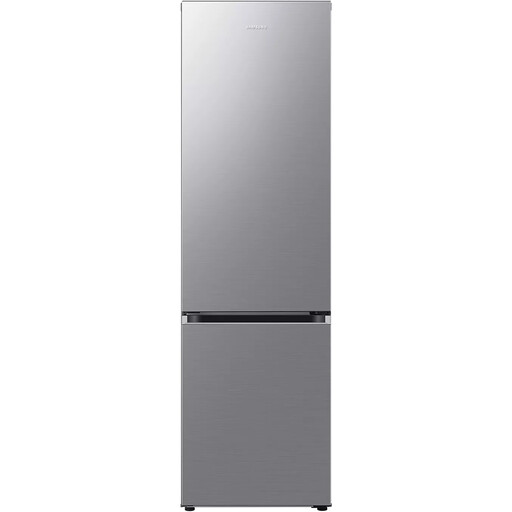 Image unavailable
Samsung RB38C603CS9, 390 L fridge freezer
Worth considering for food shops that include fresh and frozen food, if you have room for a freestanding appliance.
The product name gives a total capacity of 390 L and an energy class of C. Compare the capacities of each compartment and check the model’s energy label. Also check the clearance needed and the delivery access route.
View on Joybuy
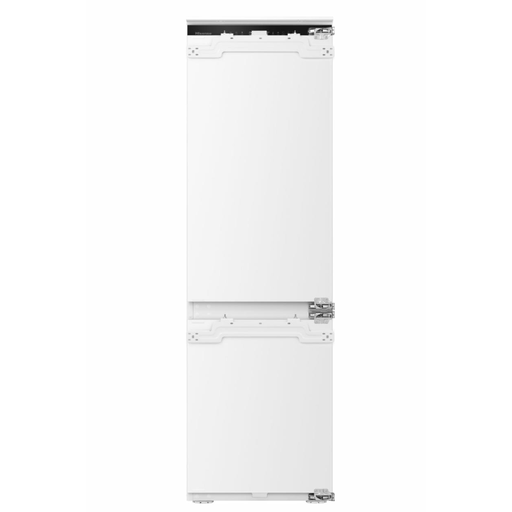 Image unavailable
Hisense RB3B250SAWC, 252 L built-in fridge freezer
Worth considering if your kitchen needs a built-in appliance and your food shop includes both fresh and frozen food.
The product name mentions No Frost and an energy class of C. Before choosing this model, check its housing unit and door-fixing requirements against your kitchen, then check its energy use on the energy label.
View on Joybuy
 Image unavailable
Haier HTW5618ENMG, 360 L three-door fridge freezer
Its design is worth considering if you want to keep different fresh and frozen purchases separate in a freestanding appliance.
The product name lists Total No Frost, My Zone and an energy class of E. Check the interior layout, energy use on the energy label, and the space needed for installation and opening the doors.
View on Joybuy
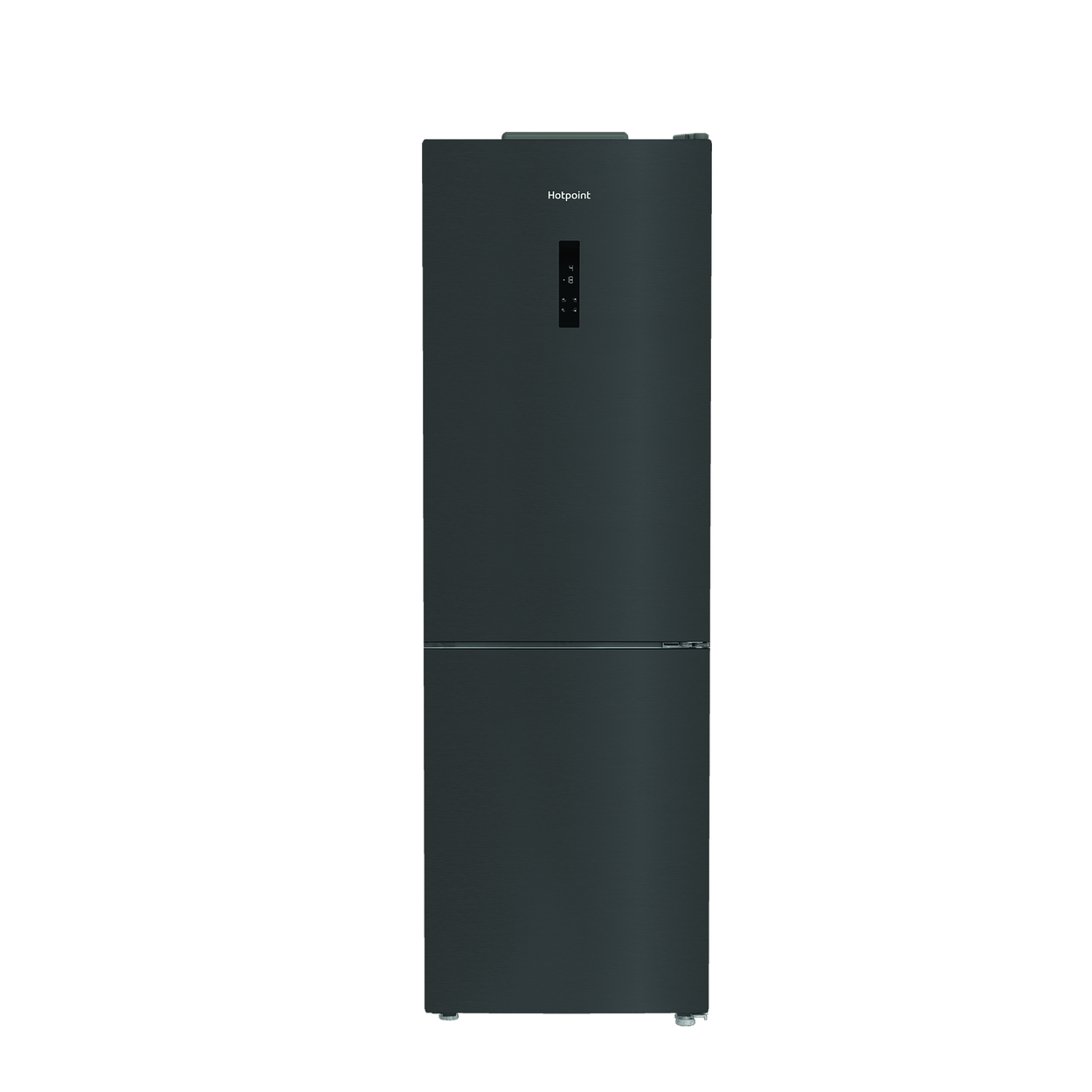 Image unavailable
Hotpoint HPK26363XBR5E, 316 L fridge freezer
Worth comparing for everyday storage of fresh and frozen food in a freestanding appliance.
The product name mentions a dual No Frost system and an energy class of D. Before buying, compare the space in each compartment with your food shop, then check the energy label, clearance and delivery access route.
View on Joybuy
 Image unavailable
Candy CFQQ5T817EPS, 467 L four-door fridge freezer
Worth considering if you need plenty of capacity and your kitchen can accommodate a freestanding four-door appliance.
The product name lists Total No Frost and an energy class of E. Check the fridge and freezer capacities, the space needed to open each door, and the energy use on the exact model’s label.
View on Joybuy
Frequently asked questions
What should you compare first on a fridge’s energy label?
Compare the kWh/year figures and the fridge and freezer capacities separately, after checking that the model suits what you buy. The European Commission says the label also shows the energy class and noise level; its QR code lets you look up the model’s details in EPREL.
Does a better energy class always mean lower energy use?
The energy class alone isn’t enough to compare fridges with different capacities. Check the kWh/year figures and capacities shown on each label too. ADEME points out that an appliance’s size affects a household’s electricity use.
What should you measure before choosing a built-in fridge freezer?
Measure the housing unit and check the appliance dimensions, its door-fixing system and the door-opening direction needed for your kitchen. Requirements vary by model: for example, Whirlpool France specifies a 54 cm-wide housing unit for the WHC18T132FR.


