What should you check ?
First work out how much space you need for fresh and frozen food, then check which formats will fit your kitchen. Que Choisir recommends taking your shopping habits into account, while ADEME notes that an appliance’s size and unnecessary extra features can affect the energy use of something that runs continuously.
| Priority |
What to check |
Who it matters to |
| Space for fresh and frozen food |
Compare the usable capacity of each compartment and check that the drawers can accommodate your usual shopping. |
If your shopping needs to last all week, you can’t work out how much room you have for frozen food from the total capacity alone. Around 33 % of consumers prioritise this division of storage space. |
| Location and delivery |
Measure the space and access routes, taking the packaged dimensions into account. For a built-in model, check the housing space and door system. |
In a fitted kitchen or somewhere with difficult access, the appliance needs to be delivered and installed before its features can be of any use. Around 27 % of consumers prioritise fitting it into their kitchen. |
| Energy consumption |
Compare the annual consumption in kWh/year on the energy label for appliances of a similar format and capacity. |
For an appliance that stays on all the time, I want to avoid capacity or features that I don’t need for my shopping. Around 20 % of consumers put energy consumption first. |
| Storage and maintenance |
Look at the drawer layout and cooling system; check the model’s temperature settings. |
When I shop less frequently, I want to organise fresh food and minimise the need to defrost the appliance. Around 20 % of consumers prioritise this aspect of everyday use. |
Fridge freezers on Joybuy
This selection includes freestanding fridge freezers and a multi-door model, for storing several days’ shopping with a separate space for frozen food. Compare each model’s capacity and dimensions with your own kitchen.
 Image unavailable
Candy CFQQ5T817EPS, four-door, 467 l
Worth considering if your shopping needs several storage zones and your kitchen can accommodate a multi-door model. The product title lists a capacity of 467 l, energy class E and Total No Frost. Compare the usable capacity of each compartment with the amount you usually store, then check the width, installation clearances and whether the packaged appliance will fit through your access routes.
View on Joybuy
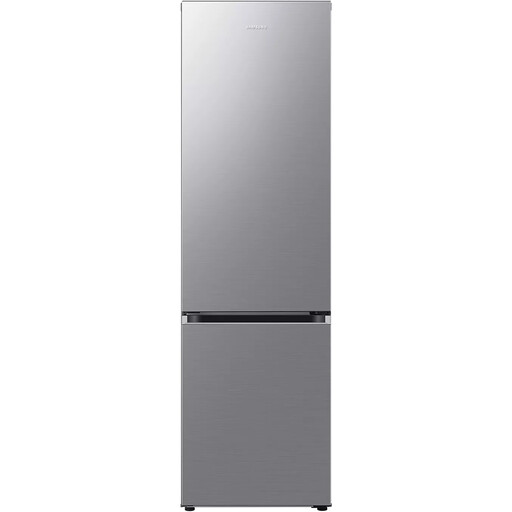 Image unavailable
Samsung RB38C603CS9, 390 l fridge freezer
This fridge freezer is worth considering if you want separate compartments for fresh and frozen food. Its title lists a capacity of 390 l and energy class C; the product details show how the capacity is divided between the fridge and freezer. Check that the capacity suits you, then check the packaged dimensions and the clearances needed for installation.
View on Joybuy
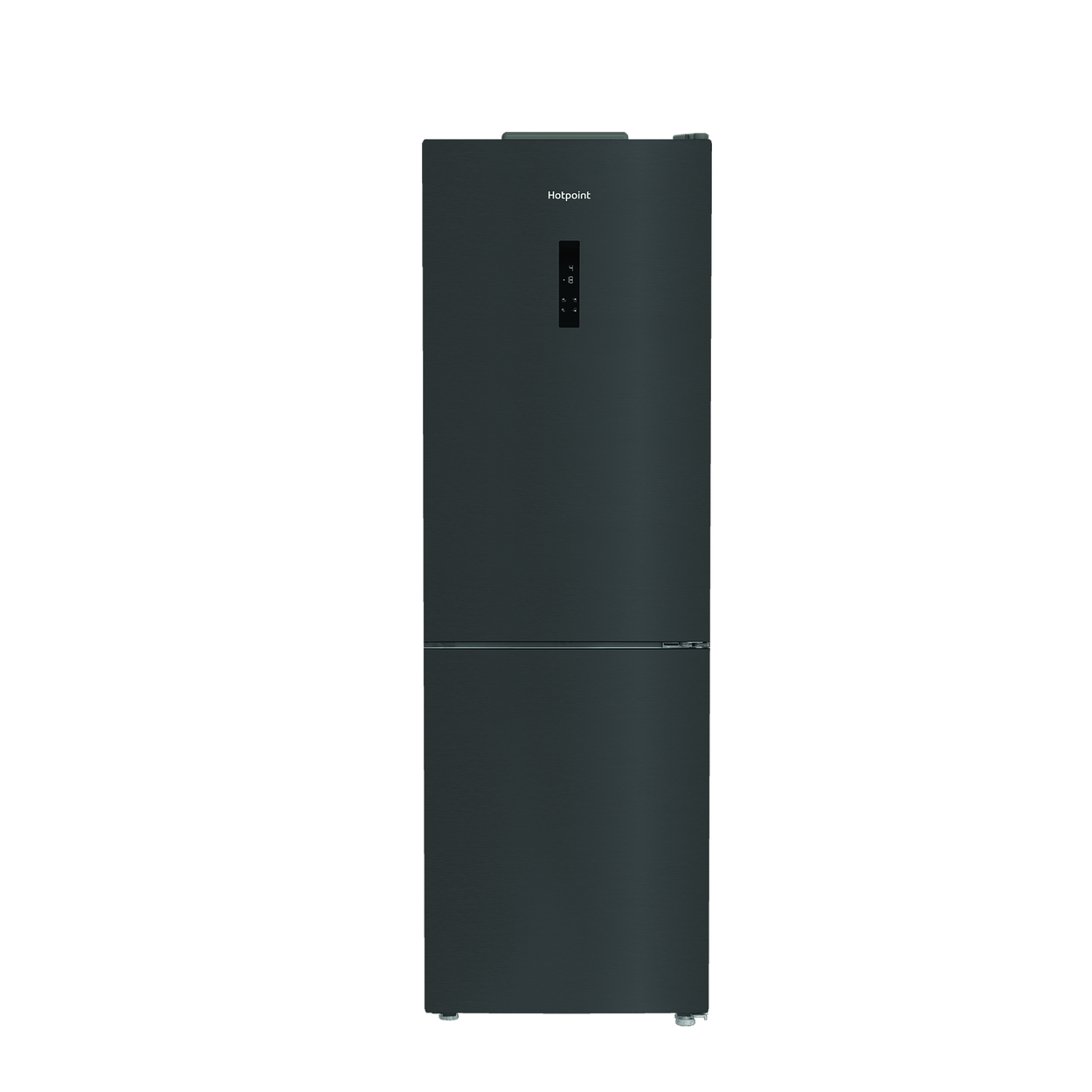 Image unavailable
Hotpoint HPK26363XBR5E, 316 l fridge freezer
Worth comparing if you shop less frequently and want a separate freezer. The title lists a capacity of 316 l, energy class D and a Dual No Frost system. For installation, the product details require at least 5 cm of clearance at the back and sides. Also measure the delivery access routes, taking the packaged dimensions into account.
View on Joybuy
 Image unavailable
Haier HTW5618ENMG, three-door, 360 l
This freestanding model is worth considering if you want separate storage for fresh food and the frozen food you regularly buy. Its title lists a capacity of 360 l, energy class E and Total No Frost. Check how much space is actually available in each compartment, as well as the installation clearances and delivery access routes.
View on Joybuy
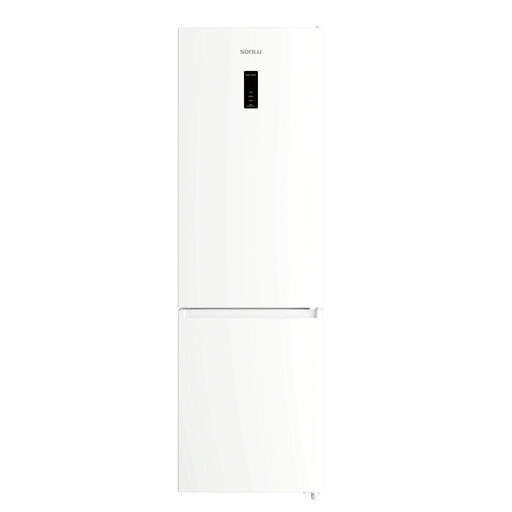 Image unavailable
Sonlu CD‑400RW, 355 l fridge freezer
Worth comparing if you’re looking for a fridge freezer for several days’ shopping and have a space around 60 cm wide. Its title divides the stated 355 l capacity into 252 l for the fridge and 103 l for the freezer, and lists energy class E. Check the height, depth, packaged dimensions and annual energy consumption in the model details before deciding whether it suits your kitchen.
View on Joybuy
Frequently asked questions
What capacity do you need for a weekly shop ?
Compare the usable capacity of the fridge and freezer separately, based on the size of your household and what you usually buy. Que Choisir gives a general guide of 100 to 150 l for one person, plus 50 l for each additional person; you’ll need to assess separately how much room your frozen food takes up.
Is a single-door fridge with a freezer compartment enough for regular frozen food ?
According to Que Choisir, a small freezer compartment is generally not enough if you eat a lot of frozen food. Instead, compare the freezer compartment of a fridge freezer or, if your quantities and available space warrant it, a multi-door model.
What should you measure before delivery ?
Measure the space and the entire route to your kitchen, taking the packaged dimensions into account. For a built-in model, check the housing dimensions and door system too. Samsung also recommends checking that its packaged appliance will fit through the access routes.
How do you compare the energy consumption of two models ?
Check the annual consumption in kWh/year and the energy class on the energy label, then compare appliances of a similar format and capacity. ADEME notes that an appliance’s size and unnecessary extra features can affect its energy consumption, so the energy class alone won’t tell you whether the capacity you choose is right for your needs.
What temperature should you check after installation ?
Anses recommends a temperature between 0 °C and 4 °C at the coldest point in the fridge. Check it especially if the kitchen is warm, the door is opened often or the appliance is very full.


