Households that do a big weekly shop
They need fresh food to be easy to reach, while keeping some freezer space for the week’s meals. UFC-Que Choisir includes a big weekly shop in its fridge-freezer testing protocol.


If your weekly shop includes both fresh food and portions to freeze, start by comparing the fridge and freezer capacities of a fridge-freezer, rather than its total capacity. If the fridge section is already big enough but the freezer is overflowing, a separate appliance may be a better fit. An upright freezer makes it easier to reach the drawers, while a chest freezer offers open storage at the cost of taking up more floor space. In either case, compare the dimensions and kWh/year of similar-capacity models against how you actually use them.
They need fresh food to be easy to reach, while keeping some freezer space for the week’s meals. UFC-Que Choisir includes a big weekly shop in its fridge-freezer testing protocol.
Their priority may be having enough space and easy access to frozen portions. If their current fridge has enough room for fresh food, they could compare a separate freezer with a larger fridge-freezer.
They need to consider the appliance’s dimensions, door clearance and genuinely useful capacity. ADEME points out that refrigeration appliances run continuously, so avoiding unnecessary capacity is another important consideration.
First, work out whether you need more space for fresh food, frozen portions or both. This will help you choose between a fridge-freezer, a fridge with a small freezer compartment and an additional appliance.
Consider this: if you want to keep fresh and frozen food in one appliance for your weekly shop.
Bear in mind: the freezer section may be too small for a large stock of portions, even if the total capacity looks generous.
Consider this: if fresh food is your main priority and you freeze very little.
Bear in mind: according to UFC-Que Choisir, a small freezer compartment is not enough when frozen food makes up a significant part of your shop.
Consider this: if your fridge has enough room for fresh food but you want to organise and find frozen portions easily.
Bear in mind: this additional appliance takes up space and also runs continuously.
Consider this: if you store large batches or bulky containers and have a suitable space for it.
Bear in mind: a chest freezer takes up more floor space, and food at the bottom is harder to reach than items in drawers.
| Priority | What to check | Who is it for? |
|---|---|---|
| Space for fresh food | Net fridge capacity and shelf layout. | If your weekly shop fills the fridge in one go, you need enough room to store fresh food without choosing an unnecessarily large appliance; around 25% of consumers would make this their priority. |
| Space for frozen portions | Net freezer capacity and the usable dimensions of the drawers or open space. | If you store prepared meals in portions alongside frozen food, the freezer’s usable space becomes crucial; this would be the main need for around 31% of consumers. |
| Energy use and size | kWh/year, capacities and external dimensions of similar-sized models. | In a small kitchen, a larger appliance or second freezer needs to justify the space it takes up and its continuous operation; around 25% of consumers would prioritise this balance. |
| Storage and access | Drawer layout, adjustable shelves and door clearance. | If you use your portions regularly, being able to find them without moving everything else matters just as much as the stated capacity; around 19% of consumers would make ease of access their priority. |
A large appliance may have too little room for frozen portions. UFC-Que Choisir highlights that a small freezer compartment is not suitable when you need to store a significant amount of frozen food.
Compare the net fridge and freezer capacities separately, then check that your containers will fit in the drawers.
ADEME points out that fridges and freezers run continuously, and that choosing an oversized or over-equipped appliance can increase energy use.
Compare the kWh/year of similar types and capacities, while making sure you have enough room for the items you use regularly.
Its open space can accommodate large containers, but it takes up floor space and makes items at the bottom harder to find.
Measure the space, access route and clearance needed to open the lid. If you often look for smaller portions, consider an upright freezer with drawers too.
Fresh-food zones, air circulation and frost-free systems vary from model to model. A brand description alone does not show how well food will keep in your home.
Check the exact model’s manual and product information for its features, and don’t let them distract you from the capacity and layout you need.
The KGN49AIBT is an example of a freestanding fridge-freezer to consider when you need space for both fresh and frozen food.
The CBNstb 579i is worth considering if fresh-food storage and noise levels are among your priorities.
The B3BCNA294HS is an integrated model to consider if the appliance needs to fit into a fitted kitchen.
The WB70E973W is an example of a freestanding fridge-freezer designed for a substantial amount of fresh and frozen food storage.
These models combine refrigeration and freezing in one appliance for your weekly shop and prepared meals. Compare their internal layout with your needs: they may not replace a separate freezer if frozen portions take up most of your storage space.
 Image unavailable
Worth considering if you want to keep fresh shopping and frozen portions in a freestanding fridge-freezer. The model name indicates a total capacity of 360 L, an energy rating of E and Total No Frost. Check the space available in each compartment and the dimensions required for installation.
 Image unavailable
Consider this if one appliance needs to hold a large shop and frozen food. This four-door model is listed with a total capacity of 467 L, an energy rating of E and Total No Frost. Measure the space, access routes and door clearance before choosing this size.
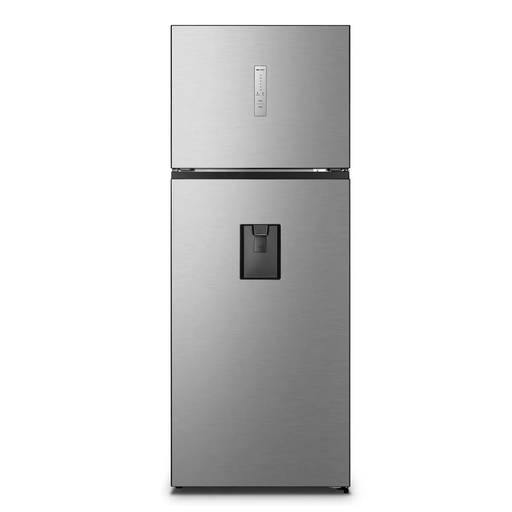 Image unavailable
Worth considering if fresh food makes up a large part of your shop and you also need some freezer space. The model name indicates a total capacity of 467 L, an energy rating of E and Total No Frost. Check the freezer capacity and storage access separately before planning to store lots of portions in it.
 Image unavailable
Worth considering for a compact kitchen if your fresh and frozen food needs fit within 153 L of fridge capacity and 74 L of freezer capacity. This model is listed with an energy rating of E, Low Frost and a reversible door. Low Frost does not mean frost-free; check the kWh/year on its energy label too.
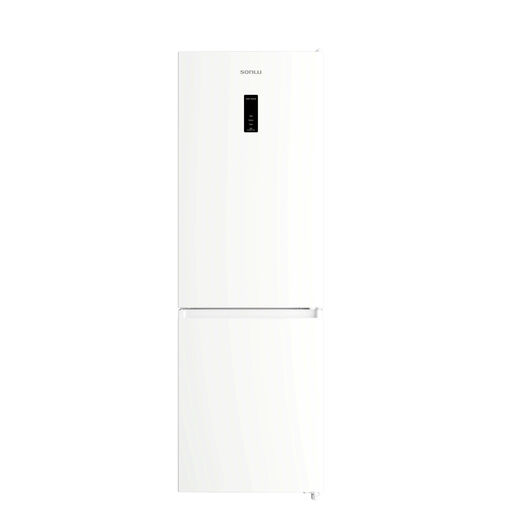 Image unavailable
Consider this if you’re looking for a fridge-freezer to store fresh shopping and frozen portions, with a stated width of 60 cm. The model name specifies 211 L for the fridge, 99 L for the freezer, an energy rating of E and a reversible door. Check the full dimensions, layout and kWh/year before comparing its installation and energy use with other models.
First compare the kWh/year of similar types and capacities, then check the space allocated to fresh and frozen food. The European Commission says the label also gives the energy rating and noise level; these details do not replace checking the internal layout.
No: most of the total capacity may be for refrigeration, while prepared portions need to go in the freezer. Check the net capacity of each compartment and make sure your containers will fit in the drawers.
Consider a separate appliance if your fridge already has enough room for fresh food but you’re consistently short of space for frozen portions. According to the UFC-Que Choisir guide, an upright freezer makes it easier to organise food in drawers, while a chest freezer offers open storage but takes up more floor space and makes items at the bottom harder to reach.
No. Even if your chosen model has this feature, check its net capacity and the size of its storage compartments before planning where to put your portions. Also check the manual to see which compartments the feature applies to.
Check the ambient temperature range allowed by the model’s climate class and compare it with the conditions in the room. UFC-Que Choisir gives a range of +16 to +32 °C for class N, for example; check the manual for the exact freezer before deciding where to put it.