Households doing one big weekly shop
If you need to store several meals, drinks and leftovers until your next shop, look at the available fridge and freezer space separately, then consider how the storage is laid out.


For your weekly family shop, start by working out how much fridge and freezer space you need, rather than focusing on the total capacity alone. A fridge freezer combines both in one appliance; a multi-door model offers more compartmentalised storage, while separate appliances let you dedicate more space to frozen food if your kitchen can accommodate them. Then check the stated annual energy consumption, the route into your kitchen and the installation instructions for the exact model.
If you need to store several meals, drinks and leftovers until your next shop, look at the available fridge and freezer space separately, then consider how the storage is laid out.
For frozen food and meals prepared in advance, compare the freezer capacity of a fridge freezer, a multi-door model and separate appliances against the amount you actually store.
Your appliance needs to fit through doorways and around corners, then have room to open and ventilate in its final position. Measure these spaces before choosing a configuration.
Start with what you store over a typical week. Rule out any configurations that won’t fit your space before comparing their energy consumption.
Worth considering if: you need fridge and freezer space in a single appliance.
Bear in mind: the amount of space allocated to the freezer may not suit your household’s frozen food stock.
Worth considering if: you want several storage compartments for larger amounts of fresh and frozen food.
Bear in mind: the width and door opening need careful checking against your access route and kitchen space.
Worth considering if: you only buy frozen food occasionally, rather than keeping a week’s worth in stock.
Bear in mind: having a freezer compartment doesn’t, by itself, tell you how much usable space it offers.
Worth considering if: your frozen food needs its own dedicated space and you have room for two appliances.
Bear in mind: check the dimensions, ventilation and energy consumption of both appliances.
| Criteria | What to check | Your needs |
|---|---|---|
| Food storage space | Compare the usable litres of fridge and freezer space separately. Also consider the drawers and bins you need for your food. | I want enough room for fresh food, frozen food and leftovers for the week, rather than choosing based on total capacity alone. |
| Energy consumption | As ADEME advises for the energy label, check the energy rating and annual consumption in kWh for the exact model. Compare appliances with similar configurations and capacities. | Energy consumption matters to me, but I also need enough space in each compartment. |
| Temperature and storage | ANSES recommends aiming for 0 to +4 °C in the coldest part of the fridge. Check how to monitor the temperature and avoid overfilling the storage compartments. | I store perishable food and homemade dishes, so I want to place them in the right zone and allow cold air to circulate. |
| Installation | Measure the delivery route, the space where the appliance will go and the door clearance. Check the model’s instructions for ventilation requirements and its climate class for the intended ambient conditions. | The appliance needs to fit through the access route, and its doors must open properly once it’s in place. |
Two appliances can divide their capacity differently between fresh and frozen food. A large total capacity won’t solve a shortage of space in the compartment you use most.
Make a list of a week’s shopping, leftovers and prepared meals, then compare it with the published usable capacity of each compartment.
Whirlpool lists the WHG26514XK6E as 83,2 cm wide and the WQ9IMO1L as 90,8 cm wide. Capacity is no use if the appliance won’t fit through the access route or a door is blocked by a wall.
Measure the whole route, including corners and the final position. Check the door clearance and ventilation gaps in the instructions for your chosen model.
The rating doesn’t tell you how much storage space is available or how it’s divided between the fridge and freezer. It’s not enough to compare two appliances that offer different storage options.
For the models you’re considering, compare the rating, kWh/year, configuration and usable capacities on their energy labels. ADEME says the QR code links to the product record registered in EPREL.
A feature such as No Frost doesn’t remove the need to monitor how food is stored and its temperature. ANSES recommends 0 to +4 °C in the coldest part of the fridge.
Check the temperature, put perishable food in the right zone and avoid filling the appliance so full that cold air can’t circulate.
These examples of product ranges can help you compare configurations; the specifications apply only to the models mentioned.
Bosch offers fridge freezers and fridges with an integrated freezer compartment.
The Beko fridge freezers mentioned here let you compare different ways of dividing space between fresh and frozen food in one appliance.
The Whirlpool multi-door models mentioned here show how fresh and frozen food can be stored in separate compartments.
These models combine fridge and freezer space in one appliance. The selection includes fridge freezers and a multi-door model. Compare their compartments and dimensions against your shopping needs, rather than assuming total capacity alone will meet them.
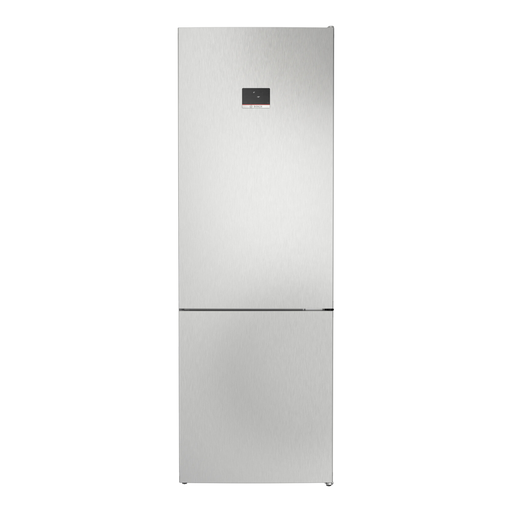 Image unavailable
If you want to store fresh and frozen food in one appliance, compare how the stated 440 L is divided between the two. Also check the delivery route, door clearance and ventilation gaps specified in the instructions.
 Image unavailable
This E-rated multi-door model with Total No Frost is worth considering if you want to organise your shopping across several compartments. Before buying, check the amount of freezer space and the clearance needed for its non-reversible doors.
 Image unavailable
This E-rated model with Total No Frost offers three doors for storing fresh and frozen food in one appliance. Check the capacity of each section, then make sure the delivery route and clearances meet the requirements in the instructions.
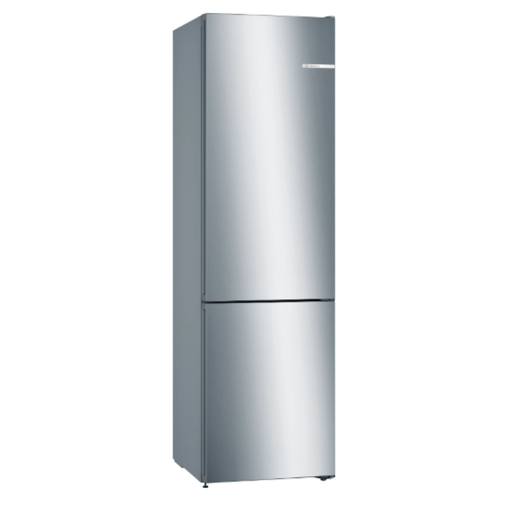 Image unavailable
This fridge freezer keeps fresh and frozen food together in one space. Before choosing it for your weekly shop, compare the capacity of its two compartments and check that its 203 cm height works for the delivery route and your kitchen.
 Image unavailable
This Low Frost 70/30 fridge freezer is worth considering if you have limited width. Compare the space you actually need for fresh and frozen food, then check the energy label and installation instructions for this model.
It may be enough if you only buy frozen food occasionally, but having a freezer compartment doesn’t guarantee enough space for a family’s stock. Compare its usable capacity with that of a fridge freezer, a multi-door model or a separate freezer. For example, Bosch lists 104 L of fridge capacity for its KIL22NSE0 with an integrated freezer compartment.
No. Also compare the kWh/year and usable capacity of each compartment in appliances with similar configurations. The energy rating appears on the energy label; according to ADEME, its QR code lets you view details of the model registered in EPREL.
Measure the route into your kitchen and the final position, remembering to allow enough room for the doors to open. Check the instructions for your chosen model for ventilation clearances and installation requirements, as these vary between models.
ANSES recommends a temperature of 0 to +4 °C in the coldest part of the fridge. Check it regularly, place perishable food in the right zone and avoid overfilling the fridge so that cold air can circulate.
According to ADEME, it links to the information stored in the European EPREL database. Before comparing the details, make sure the model reference shown matches the exact appliance you’re considering.