Households that stock up for the week
If you buy fresh food, prepare meals in advance and also keep frozen food, check how much space each compartment offers. The total capacity alone won’t tell you how easily you can organise your shopping.


To keep fresh food and frozen food for several days, consider a fridge-freezer if its dimensions and door swing suit your kitchen. A tabletop or under-counter model is better suited to limited storage needs. Whichever you choose, compare the capacity of each compartment separately, then check the stated noise level and energy consumption.
If you buy fresh food, prepare meals in advance and also keep frozen food, check how much space each compartment offers. The total capacity alone won’t tell you how easily you can organise your shopping.
An alcove, worktop or wall near the door can restrict the size of appliance you can choose. You’ll need to balance the space available with the amount of food you actually store between shops.
If your kitchen is open-plan or close to a living area, it’s worth comparing the stated noise levels. You should also consider annual energy consumption alongside the capacity and format you need.
First rule out any formats that can’t be installed in your kitchen or won’t provide enough space for your usual shopping. Noise and energy consumption can then help you choose between appliances that meet those needs.
Consider it if: space is very limited and you store little food, especially frozen food.
Bear in mind: its limited capacity can quickly become restrictive when shopping for several people.
Consider it if: you need to keep both fresh and frozen food for several days.
Bear in mind: its height and depth must suit the space, and if it’s integrated, the installation must be suitable too.
Consider it if: the appliance needs to fit beneath your worktop and you have little need for freezer space, or have another way to store frozen food.
Bear in mind: fresh-food capacity is limited, and some models don’t have a freezer compartment.
Consider it if: your household needs a large capacity and has enough space for the appliance.
Bear in mind: check the width and depth, the route into your kitchen and the clearance needed to open the doors.
| What matters | What to check | Who is it for? |
|---|---|---|
| Placement | Measure the space and door clearance. For an integrated model, check the niche, fixings and ventilation requirements against the installation instructions. | If my kitchen is narrow, I need to be able to open the door and access the drawers without blocking the way. Around 34% of consumers would make this their main requirement. |
| Fresh-food space | Compare the usable fridge capacity in litres and the layout of the shelves and drawers, rather than looking at the total capacity alone. | If I cook ahead for the week, I need room for fresh ingredients and prepared meals. This capacity would be the priority for around 33% of consumers. |
| Freezer space | Check the usable freezer capacity and drawer layout, and make sure a separate compartment suits the food you buy. | If frozen food makes up a regular part of my shopping, a small compartment might not be big enough for my groceries. Around 20% of consumers would put freezer capacity first. |
| Noise and energy consumption | Compare the stated dB(A) and kWh/year figures on the label, ideally between appliances with similar formats and capacities. | In an open-plan kitchen, I want to take everyday noise and energy consumption into account before choosing. For around 13% of consumers, this day-to-day comfort would be the main requirement. |
As a guide to fridge capacity, Que Choisir recommends 100 to 150 l for one person, plus 50 l for each additional person. Adjust this according to how often you shop and how much space your food takes up. It doesn’t replace comparing the freezer compartment too.
An appliance might claim to offer enough capacity overall, but still not have enough room in the compartment where you store most of your shopping.
Work out how much space you need for fresh and frozen food separately, then check the corresponding usable capacities.
The cabinet size isn’t the only thing to consider: door fixings and ventilation requirements are also part of the installation. For example, Bosch specifies plinth ventilation for certain under-counter models.
Measure the niche and check the instructions for your chosen model, including door installation and the required clearances.
If the appliance isn’t compatible, you may need to adapt the cabinet or installation.
In a compact kitchen, the stated capacity is only useful if the appliance can be brought to its intended location and the doors can open.
Before choosing a multi-door model, measure the delivery route too, and compare its noise level and kWh/year figures with those of models that offer the same storage capacity.
Names for cooling technologies and compartments refer to features on specific models. They don’t prove that every model in a range offers the same performance.
Check the features of the exact model once you’ve confirmed its capacities, dimensions and running costs.
The range includes integrated fridge-freezers and under-counter fridges, which are worth considering when the niche and door installation affect your choice.
Its product specifications cover both freestanding fridge-freezers and under-counter models, depending on the capacity and height you have available.
Beko’s freestanding fridge-freezer range may appeal to households looking at the cooling system and available features after doing their shopping.
An integrated fridge-freezer from the range may be suitable for a fitted kitchen, provided its dimensions and installation requirements are right.
These models are suited to storing fresh and frozen food in one appliance. This selection includes freestanding fridge-freezers and an integrated model. First, choose the installation type that’s right for your kitchen.
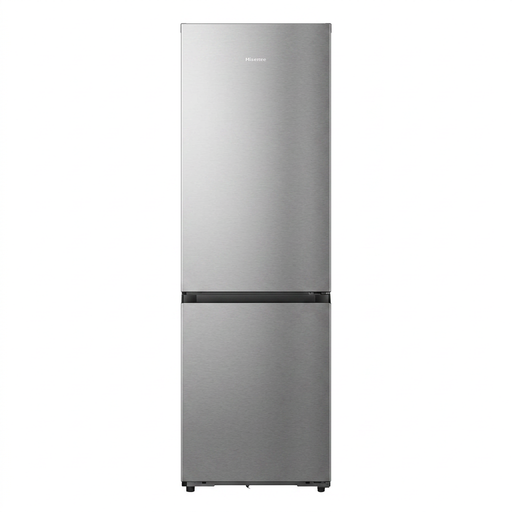 Image unavailable
This freestanding fridge-freezer is worth considering if you want to store fresh and frozen food without an integrated installation. The product title lists a capacity of 330 L, a noise level of 35 dB and a No Frost system. Measure the space and check how the capacity is divided between the compartments, as well as the energy label.
 Image unavailable
This three-door model may suit a household that needs to store fresh and frozen food for several days. The product title lists a capacity of 360 L, Total No Frost, an E rating and Wi-Fi. Check that its depth and door clearance work in your kitchen.
 Image unavailable
Consider this fridge-freezer if you need to balance space for fresh and frozen food with the depth of the appliance. The product title lists a capacity of 333 L and a C rating. NatureFRESH, DoorCooling+ and LinearCooling are feature names, not guarantees about how your food will keep. Check the installation clearances for this model.
 Image unavailable
This integrated fridge-freezer is designed for a fitted kitchen with a compatible niche and door fixing. The product title lists a capacity of 249 L, an E rating and TwinTech No Frost. Before ordering, check the installation instructions against your cabinet measurements and compare the fridge and freezer capacities with your shopping needs.
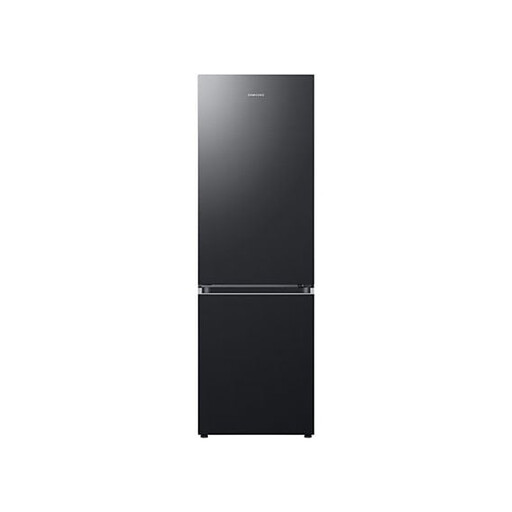 Image unavailable
This fridge-freezer may suit a household looking to divide its shopping between fresh and frozen food. The product title lists a capacity of 344 L and a D rating. Check the full dimensions, particularly the depth, as well as the noise level and kWh/year figures before comparing it with other appliances.
Que Choisir recommends 100 to 150 l for one person, plus 50 l for each additional person. Use this as a starting point and adjust it according to the food you keep between shops. Compare the fridge and freezer capacities separately.
Yes, if it has enough capacity for your shopping and you have little need for freezer space, or have another way to store frozen food. The Bosch KUR21VFE0 under-counter model, for example, offers 134 l of fridge space without an integrated freezer compartment. Also check the niche and ventilation requirements for your chosen model.
Check which compartments the feature applies to and consult the instructions for the exact model. Liebherr describes the NoFrost feature on its CNd 5704 as a way to limit frost build-up in the freezer. This doesn’t replace comparing its capacity and drawers with your needs.
Compare the kWh/year figures on the energy labels, as well as the capacity and format of the appliances. The European Commission also lists compartment capacities in the product information in its EPREL database. These details help you avoid judging energy consumption by the rating letter alone.