Households that shop once a week or less
To keep your shopping fresh until your next trip, compare the capacity for fresh and frozen food separately, then check that the appliance will fit in your kitchen.


If you regularly store fresh food and frozen food between shopping trips, start by comparing fridge-freezers with separate fridge and freezer compartments. Check the capacity of each compartment individually, not just the total. A multi-door model is only worth considering if you have the storage needs and space to justify it; a table-top, compact or single-door model with a small freezer compartment is more suitable if you don’t need much freezer space. In every case, check the dimensions and kWh/year figures against your home and how you’ll use the appliance.
How often you shop and how much space you need for frozen food affect the capacity split to look for. The Que Choisir guide covers formats including single-door, fridge-freezer, table-top and multi-door models.
To keep your shopping fresh until your next trip, compare the capacity for fresh and frozen food separately, then check that the appliance will fit in your kitchen.
A separate freezer is worth considering if the small freezer compartment in a single-door fridge might not be enough. The capacity you need will depend on what you usually buy.
A table-top, compact or single-door model may suit you if you only need a small amount of freezer space. However, check the capacities, door swing and route to the space where you plan to install it.
Start with the space you need for fresh and frozen food, then rule out appliances that won’t fit where you plan to put them. Next, compare energy use between models with similar capacities and features.
| What to consider | What to check | What I need |
|---|---|---|
| Capacity split | Compare the capacity in litres of the fridge and freezer compartments on each model. According to the European Commission, the energy label and EPREL product information sheet show these capacities separately. | My shopping needs to last until my next trip, and the total capacity shouldn’t disguise a freezer that’s too small for the frozen food I buy. |
| Format and freezer space | Check whether the appliance has a small freezer compartment or a separate freezer. Compare fridge-freezers, single-door, table-top and multi-door models according to how much space you need for each type of food. | I often buy frozen food, so a separate compartment appeals to me more than a small compartment inside the fridge. If I don’t buy much frozen food, I may prefer more space for fresh food. |
| Energy use | Check the kWh/year figure, the A to G energy class and the capacities for the exact model. Compare models with similar capacities and features: ADEME notes that fridges run continuously, and that their size and features matter. | I want enough space for my shopping without choosing a capacity or features I won’t use. |
| Installation | Measure the space and delivery route, including the packaged appliance if necessary. Check the model’s manual for door clearance and ventilation gaps; instructions for a freestanding appliance don’t necessarily apply to a built-in model. | The appliance must fit through my doors and hallways, then fit into the space available. |
Two appliances can split their capacity differently between fresh and frozen food. The total won’t tell you how much space you’ll have for frozen food.
Make a note of the capacity your household needs for each, then compare it with the litres shown for each compartment on the energy label or EPREL product information sheet.
Capacity and features also matter for an appliance that runs continuously. ADEME recommends taking size and unnecessary extra features into account.
Compare the annual energy use shown for models with similar capacities and features. Use the A to G energy class alongside these figures, not instead of them.
Having enough space in the kitchen doesn’t guarantee that the packaged appliance will fit through the door. For its RF65DG960ESL multi-door model, Samsung specifically advises measuring doorways, hallways and lifts.
Check the whole delivery route, then confirm the dimensions and clearances required in the manual for your chosen model.
Que Choisir notes that a single-door fridge may have only a small freezer compartment. This format may not meet the needs of a household that stores frozen food between shopping trips.
Check the freezer capacity in litres before choosing an appliance based only on its compact size.
These examples show why you should check the specifications for each model; they don’t represent every model in each brand’s range.
The Bosch France product pages for the freestanding KGE49AICA and KGN492IAF fridge-freezers make it easy to compare fresh and frozen food capacities directly.
The WHKF 6353 XBR6E multi-door model is a useful example to consider if you want separate compartments, rather than basing your choice on total capacity alone.
The RF65DG960ESL is an example of a large-capacity multi-door fridge-freezer for a household with enough room for it.
These Joybuy options include fridge-freezers and multi-door appliances, with separate spaces for fresh and frozen food. Compare their compartments, overall size and energy labels against your needs.
 Image unavailable
This four-door model is worth considering if your household needs plenty of space for less frequent shopping and frozen food. Its model name lists a capacity of 467 L, Total No Frost and energy class E; check the product page to see how the capacity is split between compartments. Also measure the route for the packaged appliance and allow enough room to open the doors.
 Image unavailable
This three-door model is worth comparing if you’re looking for separate spaces for fresh and frozen food. Its model name lists a capacity of 360 L, Total No Frost, energy class E, Wi-Fi and My Zone; check the capacity of each compartment rather than looking at the total alone. Check the delivery route and the clearances specified in the manual.
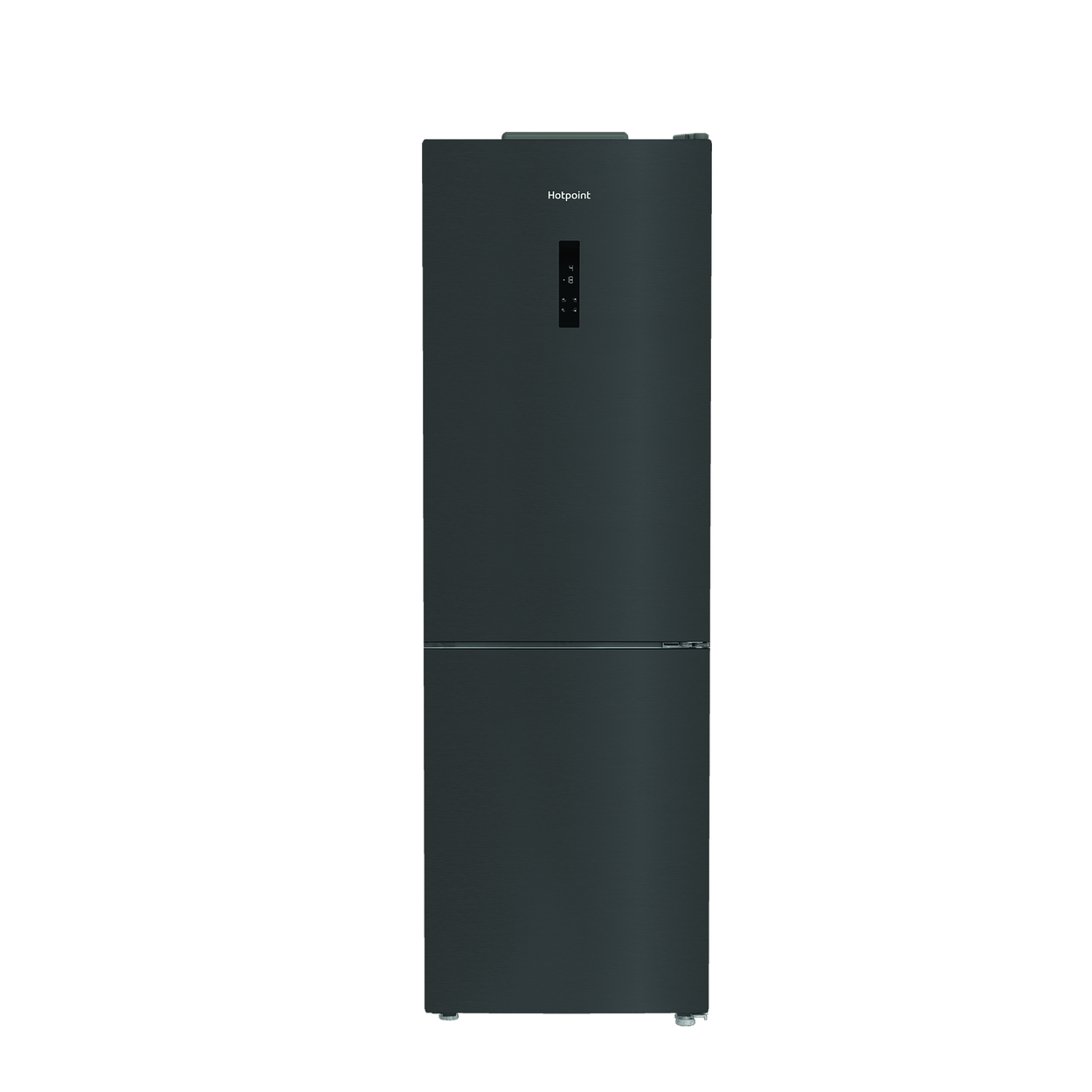 Image unavailable
This fridge-freezer offers separate fridge and freezer compartments for households that regularly buy frozen food. Its model name lists a capacity of 316 L, Dual No Frost and energy class D; compare the capacity of each compartment with what you buy. The product page recommends leaving at least 5 cm at the back and sides: check the manual for the exact requirements and measure the delivery route.
 Image unavailable
This fridge-freezer is 54 cm wide, making it worth considering for a narrow kitchen, provided the freezer space meets your needs. Its model name lists a capacity of 262 L, a 70/30 split and Low Frost; the product page says the freezer needs to be defrosted manually. Check the manual for the required clearances and the temperature range for the room where you plan to install it.
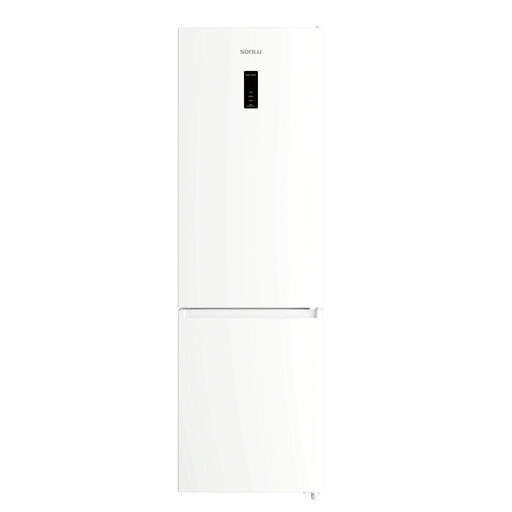 Image unavailable
This fridge-freezer is worth comparing by looking at the capacities of each compartment: its model name lists 252 L for the fridge and 103 L for the freezer, giving a total of 355 L. It also lists a width of 60 cm, a reversible door and energy class E. Check the model’s energy label for its kWh/year figure, then confirm the height, depth and clearances before deciding where to put it.
Check the kWh/year figure and A to G energy class alongside the fresh and frozen food capacities for the exact model. You’ll get a more useful comparison when the appliances have similar capacities, features and installation types. According to the European Commission, the energy label shows details including capacity and energy use; its QR code links to information about the model in EPREL.
Follow the clearance instructions in the manual for the fridge you choose, as requirements vary by model and installation type. For the freestanding appliances covered by its guidance, Beko recommends leaving at least 5 cm at the sides and back. Don’t automatically apply this measurement to another appliance or a built-in model.
No. Also measure the doorways, hallways and lifts on the delivery route, allowing for the packaged dimensions where necessary. Then check the door swing and the clearances specified in the manual for the final installation space.
Yes. For refrigeration appliances covered by EU rules, the official Your Europe portal says the label must be clearly displayed at the point of sale, including online. The European Commission states that the energy scale for domestic fridges and freezers has run from A to G since 1 March 2021.