For a fitted kitchen, choose between a freestanding fridge-freezer, a built-in fridge-freezer or a single-door fridge with a separate freezer, depending on the space available and how much room you need for fresh and frozen food. Measure the space, access routes and door clearance, then check the required clearances in the model’s manual. Next, compare the capacity of each compartment and the kWh/year figure. ADEME reminds us that these appliances run continuously, and that choosing a model that is too large or has more features than you need can increase energy use.
Who is this choice for?
Households with a kitchen recess
You’ll need to make sure the recess, door panel, ventilation and door opening all suit the specific model. Bosch’s installation guides and the product specifications from Liebherr and Electrolux show why these checks depend on the appliance you choose.
Households that buy both fresh and frozen food
You’ll want a balance of compartments that suits your shopping, rather than focusing on the total capacity alone. UFC-Que Choisir includes capacity, layout and cooling type among its comparison criteria.
Households that prioritise fresh food
You could consider a large single-door fridge with a separate freezer if you have two suitable spaces available. The models featured by Liebherr France illustrate the recess checks needed for separate appliances.
What should you check before buying?
ADEME reminds us that fridges and freezers run continuously. Compare how each model will fit your kitchen, its storage layout, energy use and maintenance needs, taking your habits into account.
| What matters |
What to check |
Who is it most relevant to? |
| Fit with your kitchen and doors |
Measure the space and access routes. Check the manual for clearances, ventilation, recess dimensions and door-panel fitting if the appliance is built-in. |
If I want the appliance to fit neatly and its doors and drawers to open properly, I’ll check the measurements before making my choice. Around 36% of consumers prioritise how the appliance fits. |
| Balance between fresh and frozen food |
Compare the fridge and freezer capacities separately, along with the freezer’s position and the storage layout for your shopping. |
When my shopping includes both fresh and frozen food, the space in each compartment matters more than the total capacity alone. Around 29% of consumers prioritise this storage balance. |
| Energy use during continuous operation |
Compare the kWh/year figures for the models you’re considering, along with their usable capacity. If you’re buying two appliances, check the annual energy use on both product specifications. |
If I want to choose an appliance that suits my needs without opting for excessive capacity, I’ll look at annual energy use alongside usable capacity. Around 21% of consumers put energy use first. |
| Maintenance and everyday use |
Check the technology and defrosting requirements for each compartment separately, as well as the installation and cleaning instructions. |
If I want to know what maintenance to expect, I’ll check exactly what the advertised technology means. Around 14% of consumers prioritise easy maintenance. |
Mistakes to avoid
-
Choosing based only on the external dimensions
An appliance that appears to fit the available space may not have enough room for ventilation, opening the door or pulling out the drawers. A built-in model also needs a compatible recess and door-panel fitting.
Before ordering, compare your measurements with the installation instructions for the exact model you’re considering.
-
Confusing LowFrost with no defrosting
On the Bosch KGE39ALCA, LowFrost reduces frost build-up but doesn’t eliminate the need for manual defrosting. The Electrolux KNS3SE18S also specifies manual defrosting for the freezer.
Check the technology and defrosting requirements listed for each compartment on the model you’re considering.
-
Comparing only the energy rating or total capacity
ADEME says that choosing a larger appliance than you need or one with more features than necessary can increase the energy use of appliances that run continuously. The energy rating and kWh/year figures provide different information.
Compare the kWh/year figures and compartment capacities for models that suit the way you use them.
Brands and models to consider as a guide
Bosch
Examples of a freestanding fridge-freezer and a single-door fridge let you compare different layouts.
- The KGE39ALCA offers 249 l of fridge capacity, 94 l of freezer capacity, a C energy rating and LowFrost.
- LowFrost reduces frost build-up but doesn’t eliminate manual defrosting. These features apply to the models mentioned, not the entire brand.
Beko
The B1RCNA344W is an example of a freestanding fridge-freezer with a bottom freezer and a reversible door.
- The manufacturer’s specifications list a total capacity of 301 l and fan-assisted cooling.
- Check the installation dimensions and compartment capacities for the exact model before choosing it.
Liebherr
The models mentioned illustrate built-in layouts: a fridge-freezer, a single-door fridge and a separate freezer.
- The model specifications give the recess dimensions and describe a sliding-door fitting system.
- Two separate appliances need two suitable spaces. The food-preservation benefits described by the brand are not results from independent comparative tests.
Electrolux
The KNS3SE18S is an example of a built-in fridge-freezer with a sliding-door fitting system.
- The product specifications list a total net capacity of 249 l.
- The freezer is listed as requiring manual defrosting. Follow this model’s instructions for installation and air circulation.
LG
The GBV3200DPY is an example of a freestanding fridge-freezer described by LG.
- LG’s product specifications list a capacity of 387 l and fan-assisted cooling for this model.
- LG presents the results associated with its freshness features for specific models and test protocols. They don’t show that every user will get the same benefits.
Joybuy products related to this choice
This selection features freestanding and built-in fridge-freezers for storing fresh and frozen food in a single appliance.
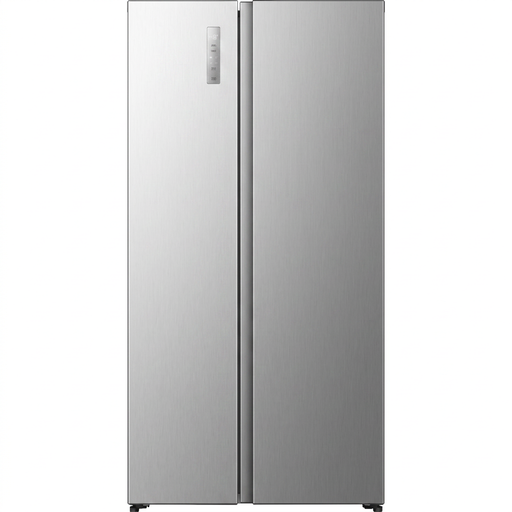 Image unavailable
Hisense RS3P558NEID Side-by-Side, 544 l, No Frost
For a freestanding setup with fresh and frozen food compartments in one appliance.
The product name specifies a Side-by-Side layout, 544 l capacity, No Frost and a water dispenser.
View product on Joybuy
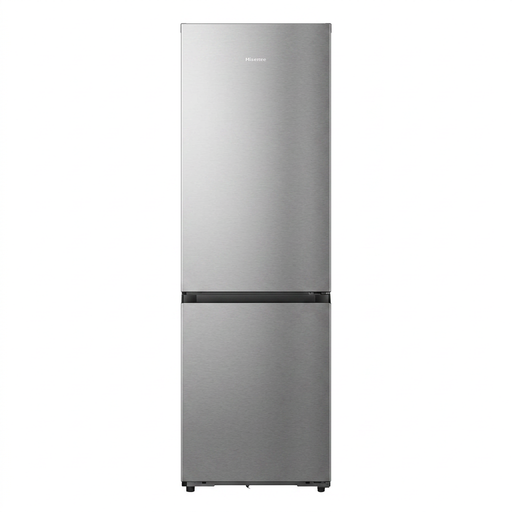 Image unavailable
Hisense RB3K330SAFC, freestanding, 330 l
For a freestanding installation with separate compartments for fresh and frozen food.
The product name specifies 330 l, a fan-assisted frost-free system and a noise level of 35 dB.
View product on Joybuy
 Image unavailable
AEG NSC6M18FES, built-in, 249 l
For a fitted kitchen designed for a built-in appliance with sliding-door fitting.
The product name specifies 249 l, TwinTech No Frost, an E energy rating and a white finish.
View product on Joybuy
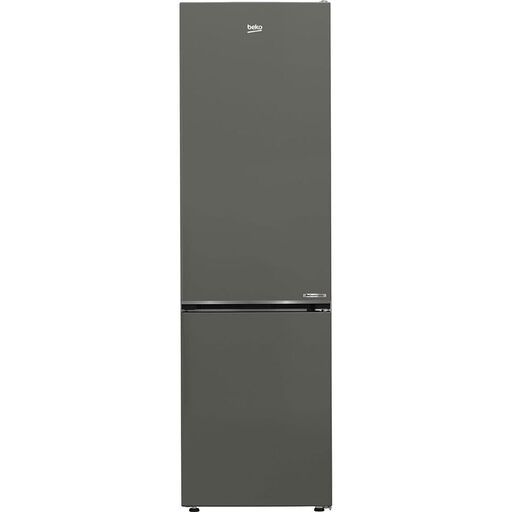 Image unavailable
Beko B5RCNE406HG, freestanding, 355 l
For a freestanding setup with dedicated compartments for fresh and frozen food.
The product name specifies 355 l, Total No Frost, a C energy rating and a grey finish.
View product on Joybuy
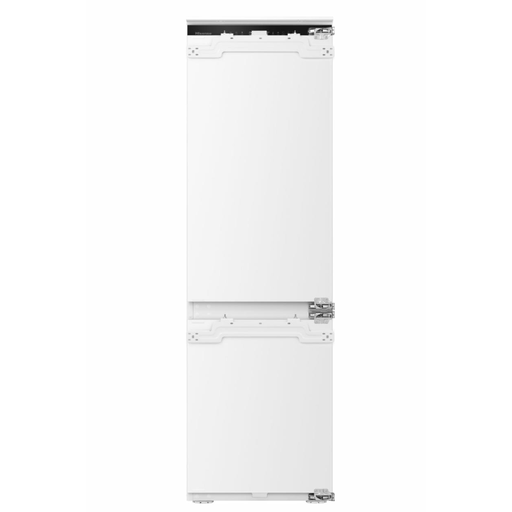 Image unavailable
Hisense RB3B250SAWC, built-in, 252 l
For a fitted kitchen with a recess designed for a built-in fridge-freezer.
The product name specifies 252 l, No Frost, a C energy rating and an Inverter compressor.
View product on Joybuy
Frequently asked questions
How much ventilation space should you leave around a fridge?
Follow the clearances specified in the model’s manual, as there is no single measurement that applies to every appliance. Electrolux recommends allowing air to circulate around the appliance and following its installation instructions.
Can you install a freestanding fridge in a recess designed for a built-in model?
Don’t assume it will fit based on the width alone. Check the depth, clearances, ventilation and door opening in the freestanding model’s manual. Bosch says that if a recess is too small for a built-in appliance, you could consider a freestanding model. However, the dimensions and door-panel fitting requirements for a built-in model don’t apply to it.
How can you check that food is being kept at the right temperature after installation?
Anses advises keeping the temperature between 0 and +4 °C at the coldest point and checking it regularly. It also recommends not overfilling the fridge, to help air circulate.
Which statutory guarantee applies in France, and what should you know about the energy label?
For goods bought by an individual from a professional seller in France, the right to claim under the statutory guarantee of conformity expires two years after delivery, according to DGCCRF. DGCCRF also states that household refrigeration appliances are covered by energy labelling requirements, and that the label and product information sheet must be in French.


