What should you compare before buying?
Start with the food you need to store and the space available, then compare compatible appliances by their installation requirements and features.
| Feature |
What to check |
Your needs |
| Usable capacity |
Compare the fridge and freezer capacities separately. Also check the space available for large containers and frozen food. |
I do a big shop less often: the space for fresh food and the freezer drawers need to suit what I store. |
| Size and installation |
Measure the height, width and depth, check how far the doors open and measure the delivery route. For an integrated model, check the housing unit, ventilation and door fixing system in the model's instructions. |
My appliance needs to fit in the kitchen and be able to open properly. If I’m keeping an existing kitchen unit, making sure it’s compatible with the integrated model matters more than the appearance of the door. |
| Access to food |
Check where the freezer is and how the shelves and drawers are arranged. Compare the capacity of each compartment, not just its position. |
I mainly reach for fresh food every day, so a bottom freezer may put the fridge at a more convenient height. If I open the freezer more often, I’ll also look at models with the freezer at the top. |
| Cooling and maintenance |
Find out what type of cooling each compartment uses and how defrosting works. Check the storage features of the exact model. |
Manual defrosting is a drawback for me, so I want to know what the freezer I choose offers. I won’t assume that a feature on one model is included across the whole range. |
| Energy, noise and room |
The European Commission says the energy label provides information including the energy class, consumption, capacity and noise level. Compare similar sizes and capacities; also check the climate class for the room temperature, as recommended by ADEME. |
In an open-plan kitchen, noise matters as much as capacity. If the appliance will go in a garage or another room where the temperature varies, I’ll check the recommended ambient temperature range. |
Which brands should you consider?
These examples can help you compare models with clearly documented specifications. The features mentioned apply to the specific models, not to every appliance from each brand.
Bosch
Freestanding fridge freezers worth comparing for their dimensions, capacity split and noise level.
- Bosch’s product information for the KGN36VLED and KGN367LDF gives the fridge and freezer capacities separately.
- Their capacities and dimensions differ, so check the exact model rather than making assumptions about the whole range.
Liebherr
Worth considering if the fit of an integrated model in your kitchen unit is a key factor.
- Liebherr states that the ICBNci 5663 requires a housing unit 194 to 195 cm high, 56 to 57 cm wide and 55,0 cm deep, and has fixed hinges.
- These measurements and fittings apply to the ICBNci 5663. They must suit your housing unit and don’t describe other models.
Beko
The B3BCNA294HS is an integrated bottom-freezer configuration to consider.
- Beko’s product information specifies a sliding hinge system and fan-assisted cooling for this model.
- Check the housing unit dimensions and make sure the sliding hinges are compatible with your kitchen unit before choosing this model.
Samsung
Samsung France’s buying guide includes bottom-freezer fridge freezers among the available layouts.
- This layout lets you consider ease of access to fresh food as one of your selection criteria.
- The freezer’s position doesn’t determine capacity, dimensions or noise level, so compare the product information for each appliance.
Fridges and freezers available on Joybuy
These options include freestanding fridge freezers, an integrated model and a fridge with a small freezer compartment. Compare their size and capacity with the space available and the amount of frozen food you keep.
 Image unavailable
Haier HTW5618ENMG, 3 doors, 360 L
Worth considering if you’re looking for a freestanding appliance with separate spaces for fresh and frozen food. The product title lists Total No Frost, an E energy rating, Wi-Fi and My Zone. Check the space needed to open the doors and the installation instructions.
View on Joybuy
 Image unavailable
CHiQ JR263LGE, 262 L, Low Frost
Compare this model if you want to prioritise fridge space in a bottom-freezer fridge freezer. The product title specifies a 70/30 split, a width of 54 cm and a height of 176 cm. Low Frost doesn’t mean you can skip checking the defrosting requirements and installation clearances.
View on Joybuy
 Image unavailable
AEG NSC6M18FES integrated, 249 L
Consider this model if your kitchen housing unit and door are compatible with it. The product title lists TwinTech No Frost and an E energy rating. Check the housing unit dimensions and door fitting in the instructions before ordering.
View on Joybuy
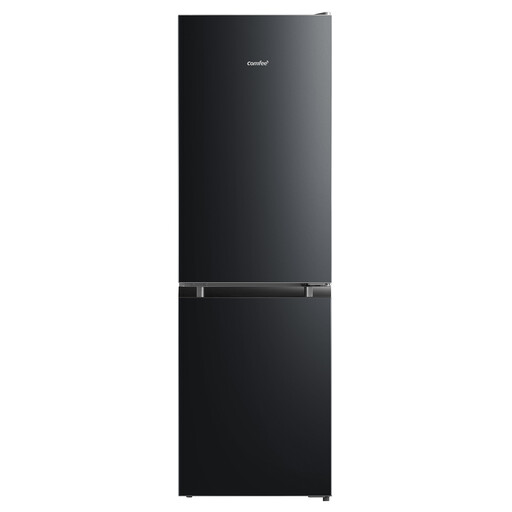 Image unavailable
Comfee' by Midea RCB230BL2EU(E), 174 L
This freestanding model is worth considering if the space available calls for a capacity of 174 L. The product title lists Low Frost, an adjustable thermostat, LED lighting and a reversible door. Check the capacity of each compartment and the installation requirements against your shopping habits.
View on Joybuy
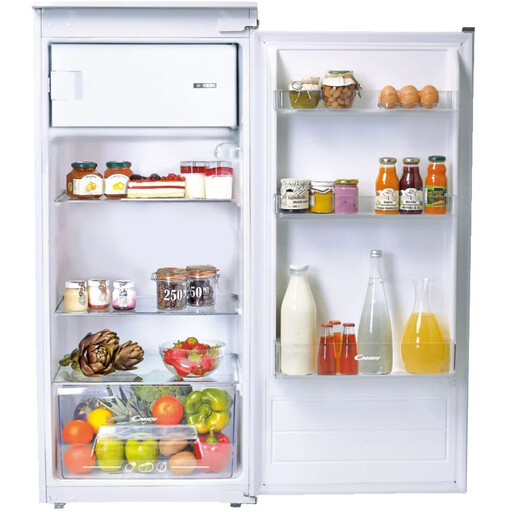 Image unavailable
Candy CIO 225 EE/N, single door, 179 L
Compare this model if you mainly want a fridge with a small freezer compartment for occasional use. The stated total capacity is 179 L. Check the freezer compartment’s capacity before choosing it to store a supply of frozen food.
View on Joybuy
Frequently asked questions
How do I estimate the usable capacity I need?
Start with the number of people in your household, how often you shop and how much frozen food you store. UFC-Que Choisir suggests 100 to 150 l for one person, plus 50 l for each additional person. Then compare the fridge and freezer capacities separately.
What should I measure before ordering an integrated appliance?
Measure the housing unit and check its depth, as well as the door fixing system specified in the model’s instructions. Also check how far the doors can open, the ventilation requirements and the delivery route.
Should I choose No Frost?
Consider No Frost if manually defrosting the freezer would be a significant drawback for you. Still compare the capacity, noise and energy consumption of the specific model: the cooling system alone won’t meet these other needs.
What should I compare on the energy label?
According to the European Commission, the label for fridges and freezers includes information such as the energy class, consumption, compartment capacities and noise emissions. Compare these details across appliances of similar sizes and capacities, then check separately that the climate class is suitable for the room where you plan to keep it.
Does a breakdown mean I have to replace my fridge?
No. First find out whether it can be repaired, and don’t keep using an appliance that no longer does its job. If you replace it, arrange a suitable take-back or collection option for the old appliance.


