If your regular shop includes both fresh and frozen food, choose a fridge-freezer with compartments that suit your needs. If you mainly need space for fresh food, consider a fridge on its own; choose a separate freezer for regular stocks of frozen food. In every case, compare the annual consumption in kWh of similar-sized appliances with similar capacities, rather than assuming that one feature alone will save energy.
Which option is right for you?
Households looking to avoid an oversized appliance
If you mainly buy fresh food, start by estimating how much space your shopping and meals actually take up. How that space is divided between fresh and frozen food matters just as much as the total capacity.
Households that buy fresh and frozen food every week
A fridge-freezer gives you separate space for each type of food. Check the capacity in litres of each compartment before choosing a model.
Households that store plenty of frozen food
If you regularly freeze prepared meals or bulk-bought food, consider the capacity and layout of a separate freezer, as well as the space needed to install it.
What should you consider?
First decide how much space you need for fresh and frozen food, then compare the energy use of appliances that offer the same balance.
Fridge on its own
Consider this if: you mainly store fresh food and rarely use frozen food.
Limitation: it won’t meet your needs if you regularly need plenty of freezer space.
Fridge-freezer
Consider this if: your weekly shop includes both fresh and frozen food.
Limitation: the fixed split between compartments needs to suit your habits.
Separate freezer
Consider this if: you regularly need more space for frozen food.
Limitation: you’ll need space for an additional appliance that runs continuously, as well as a suitable power supply.
| Criteria | What to check | Who is this for? |
|---|
| Usable capacity |
Compare the fridge and freezer capacities in litres separately, then check the appliance dimensions. |
My shopping habits don’t vary much, so I want enough room without setting aside space for a compartment I’ll rarely use. Around 36% of consumers would prioritise getting the right capacity. |
| Annual energy consumption |
Check the kWh/an figure and compare it with the size and usable capacity of similar models. |
My appliance runs all year round, so I want to know how much energy it uses before choosing its size. Annual energy consumption would be the top priority for around 29% of consumers. |
| Space for frozen food |
Check the freezer capacity; for a separate appliance, also consider whether a chest or upright freezer would suit you better. |
I prepare meals in advance or regularly buy frozen food, so I need enough freezer space. Around 21% of consumers would prioritise this capacity. |
| Maintenance and noise |
Check the cooling system and compare the stated noise level if the appliance will be near a living area. |
I have an open-plan kitchen and want to keep noise to a minimum. If I want to spend less time dealing with ice build-up, I’ll also check the cooling system. These comfort-related needs would come first for around 14% of consumers. |
Mistakes to avoid
-
Choosing a large capacity ‘just in case’
A refrigeration appliance runs continuously. ADEME advises taking its size into account, while UFC-Que Choisir recommends choosing a usable capacity that suits your household.
Estimate how much space your shopping, prepared meals and frozen food take up, then look at each compartment rather than focusing only on the total capacity.
-
Choosing based on the energy rating alone
Two appliances of different sizes or layouts may not meet the same storage needs, so the energy rating letter alone won’t tell you which one to choose.
Compare the kWh/an figures, fresh and frozen capacities, and dimensions of models suited to the same use.
-
Assuming No Frost means lower energy use
No Frost is designed to reduce ice build-up. On its own, this feature doesn’t tell you whether one model uses less energy than another.
Choose it based on your maintenance preferences, then check the stated annual energy consumption separately.
-
Adding a freezer without considering how you’ll use it
A separate freezer takes up space and runs continuously, even if you rarely use its extra capacity.
First assess how much frozen food you usually store, then check the capacity, location and kWh/an figure of the appliance you’re considering.
Brands to consider when comparing models
Bosch
Bosch’s fridge-freezer range lets you compare compartment capacities, dimensions and noise levels by model.
- Bosch lists the KGE49AICA as having 302 L of fridge capacity, 117 L of freezer capacity and a noise level of 38 dB(A).
- These specifications apply to this particular model. Also check its annual energy consumption and the space needed to install it.
Liebherr
Liebherr’s BluPerformance range focuses on how the usable space is arranged.
- It’s worth looking at this range if the available space in your kitchen limits your choice.
- Don’t assume a model’s usable capacity or energy consumption from the range name. Check its capacity in litres, dimensions, kWh/an figure and ventilation requirements.
Whirlpool
Whirlpool offers fridge-freezers with two compartments for fresh and frozen food.
- Depending on the model, the range includes different cooling systems and layout options.
- Check which features are included in the model you’re considering, then compare its capacities, dimensions and kWh/an figure.
Fridge-freezers available on Joybuy
These models combine refrigeration and freezing in one appliance. To choose between them, compare their total capacity with the space you need in each compartment, then check the model’s dimensions and annual energy consumption on its product page.
 Image unavailable
Candy CFQQ5T817EPS, 467 L four-door fridge-freezer
Worth considering if you’re looking for a large-capacity appliance that caters for both fresh and frozen food. The product title lists a capacity of 467 L, Total No Frost and an E energy rating. Check how the capacity is split between the fridge and freezer, and confirm the dimensions before choosing.
View on Joybuy
 Image unavailable
Samsung RF50C530EB1, 495 L multi-door fridge-freezer
Consider this if you plan to store both fresh and frozen food in a large-capacity appliance. The product title lists a capacity of 495 L and an E energy rating. Check the capacity of each compartment, the space available and the model’s kWh/an figure.
View on Joybuy
 Image unavailable
Haier HTW5618ENMG, 360 L three-door fridge-freezer
Consider this model if a 360 L fridge-freezer suits your shopping habits. The product title mentions Total No Frost, an E energy rating, Wi-Fi and My Zone. Check the capacity of each compartment and the dimensions, and don’t assume these features mean lower energy consumption.
View on Joybuy
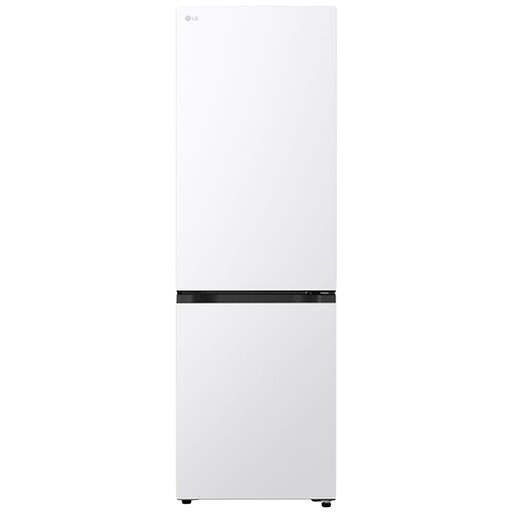 Image unavailable
LG GBBSJ1CCSW, 333 L fridge-freezer
Worth considering if you’re looking for a fridge-freezer with a stated total capacity of 333 L. The product title lists a C energy rating. Check how the capacity is split between the storage areas and compare the kWh/an figure with those of similar-sized appliances.
View on Joybuy
 Image unavailable
Sonlu CC-520WE, 444 L fridge-freezer
This model may suit you if you need a total capacity of 444 L. The product title mentions frost-free cooling, 40 dB and an E energy rating. Check the capacity of each compartment and the dimensions to see whether it suits your shopping habits and kitchen.
View on Joybuy
Frequently asked questions
Is the energy rating enough to help me choose?
No. It doesn’t replace comparing kWh/an figures and usable capacities. First shortlist appliances with a size and compartment layout that meet the same needs, then compare their annual energy consumption.
Does No Frost mean an appliance uses less energy?
No. No Frost is primarily designed to tackle ice build-up. To compare energy consumption, check the kWh/an figures for models of similar size and capacity.
What fridge capacity should I allow for my household?
UFC-Que Choisir suggests 100 to 150 L for one person as a rough guide, then an extra 50 L for each additional person. Adjust this starting point based on how often you shop, whether you prepare meals in advance and how much space you need for frozen food.


