Who is this choice for?
The right set-up depends as much on how much space you need in each compartment as on the space available where you plan to put it.
Households replacing a fridge-freezer
If your current appliance no longer suits your day-to-day storage needs, compare the usable capacity in litres of both compartments before looking at the kWh/year figures for similar models. According to ADEME, fridges and freezers run continuously, so it’s worth asking whether you really need any unused capacity.
Households that freeze a lot of food
If you need considerably more space for frozen food than for fresh produce, compare a large fridge-freezer with two separately sized appliances. Check how much space they take up and add together the kWh/year figures for both appliances to compare the set-ups.
Buyers interested in convenience features
A dispenser, specialised drawers or a large format may suit a particular need. Check the specifications of the model you’re considering rather than assuming a feature will reduce energy consumption: ADEME notes that a larger size and unnecessary extras can push up your bill.
What should you compare?
Start by deciding whether one appliance can hold all your fresh and frozen food. Then compare the specifications of set-ups that genuinely meet your needs.
One fridge-freezer
Consider this if: one appliance can meet your needs for both compartments.
Trade-off: the split between the compartments depends on the model. A large total capacity doesn’t guarantee enough space in the compartment that matters most to you.
Two separate appliances
Consider this if: your fresh and frozen food storage needs are consistently very different and you have room for two appliances.
Trade-off: each appliance takes up space and both run continuously. Compare their combined kWh/year figure with that of a fridge-freezer suited to your needs.
| Criteria |
What to check |
My needs |
| Energy consumption |
Compare the kWh/year figures for models of the same type and similar capacity. Consider the energy rating alongside this figure. ADEME says the energy label is available for new fridges, and the European Commission lists model specifications in EPREL. |
I want to know the stated annual energy consumption of an appliance that suits my storage needs, rather than choosing based on its energy rating letter alone. |
| Capacity |
Check the usable capacity in litres of the fridge and freezer compartments separately, then look at the external dimensions. If you’re buying two appliances, make sure you have enough room for each one. |
Space for frozen food matters more to me than the total capacity shown. I’m looking for a layout that suits my usual shopping habits. |
| Features |
Look for features you’ll use and check the kWh/year figure for the exact model. ADEME says that a larger size and unnecessary extras can push up your bill; a feature’s name alone won’t tell you how it affects energy use. |
I’m interested in a dispenser or special drawers if they’ll be useful regularly, not just because they’re listed in the product specifications. |
| Installation and noise |
Check the height, width, depth and installation clearances specified for the model. If it’s going near a living area, compare the noise level in dB(A) too. |
In an open-plan kitchen, I need to be sure the appliance will fit in the intended space and take its stated noise level into account. |
| Maintenance and support |
Check the terms of the commercial warranty, the after-sales service options and the information available about parts for the model you’re considering. Also check what its defrosting system involves. |
Before choosing between two similar set-ups, I’d like to know what maintenance is involved and who to contact if something goes wrong. |
Brands to consider
The specifications below relate to the models named by their manufacturers; they don’t apply to every model from each brand.
Bosch
In France, Bosch offers fridge-freezers as well as other fridge and freezer formats.
- Bosch’s KGV36VBEAS specifications list a 214 l fridge, a 94 l freezer, an E energy rating and a noise level of 39 dB(A).
- These specifications apply to the KGV36VBEAS only. Check the capacity and kWh/year figures for any other model you’re considering.
Beko
Beko offers fridge-freezers with different capacities and features, including models in its Multizone range.
- According to Beko France’s specifications for the B3RCNE565HXB, this model has a total capacity of 490 l and uses 237 kWh/year. It has a D energy rating and a noise level of 35 dB(A).
- Multizone configuration options vary by model; they don’t guarantee lower electricity consumption.
Haier
Haier offers, among other options, fridge-freezers with freezer drawers and side-by-side models with water dispensers.
- Haier gives the HTR3620CNMG drawer fridge-freezer a C energy rating, and the HSR3918EWPG side-by-side model with water dispenser an E rating.
- These appliances are different formats. Compare their usable capacities, dimensions and kWh/year figures with your needs before comparing their energy ratings.
Fridge-freezers available on Joybuy
These models combine fridge and freezer compartments in one appliance, with different capacities and features. To compare them, check the compartment capacities and annual energy consumption on the energy label or in the EPREL record for the exact model, then make sure you have enough room to install it.
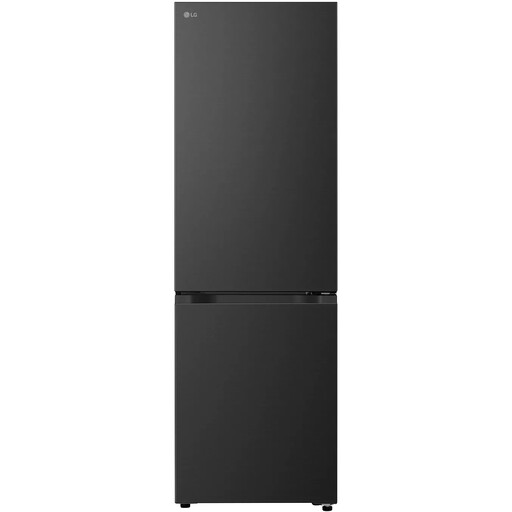 Image unavailable
LG GBBS312AEV, 333 L, A energy rating
This fridge-freezer may be worth considering if you want to keep fresh and frozen food in one 333 L appliance. Its product title mentions No Frost and an A energy rating. Check the capacity of each compartment and the kWh/year figure on the GBBS312AEV’s energy label, as well as the clearance needed for installation.
View on Joybuy
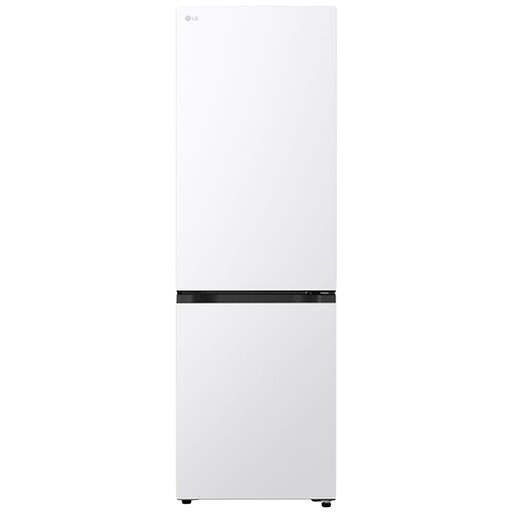 Image unavailable
LG GBBSJ1CCSW, 333 L, C energy rating
This alternative 333 L configuration is worth comparing against the space you need in each compartment. The product title mentions a C energy rating, as well as NatureFRESH™, DoorCooling+™ and LinearCooling™. Check the kWh/year figure, detailed compartment capacities and dimensions in the specifications for the exact model.
View on Joybuy
 Image unavailable
Haier HTW5618ENMG, 360 L, three doors
The three-door design may appeal to households looking at separate access to and capacity for their storage areas. The product title lists a 360 L capacity, Total No Frost, an E energy rating, Wi-Fi and My Zone. Check the capacity of each compartment, the kWh/year figure and the clearance needed to install the HTW5618ENMG.
View on Joybuy
 Image unavailable
Candy CFQQ5T817EPS, 467 L, four doors
This large model is worth considering if its capacity suits your regular needs and you have room to install it. The product title lists a 467 L capacity, four doors, Total No Frost and an E energy rating. Compare its kWh/year figure and compartment capacities with those of appliances that can hold the same amount of food.
View on Joybuy
 Image unavailable
CHiQ JR227LSE, 227 L, Low Frost
Its stated width of 54 cm may make it worth considering for a narrow space, but remember to check the height, depth and installation clearances too. The product title lists a 227 L capacity, Low Frost, a reversible door and an E energy rating. Confirm the capacity of each compartment and the kWh/year figure on the JR227LSE’s energy label, and check what maintenance Low Frost requires.
View on Joybuy
Frequently asked questions
What should I compare when choosing between two fridge-freezers?
Start by comparing the usable capacity for fresh and frozen food, the dimensions and the annual energy consumption in kWh/year for models of the same type. The energy rating adds to this picture: ADEME explains the energy label for new fridges, while the European Commission’s EPREL database lists the declared specifications of models.
Where can I find the energy label for a new fridge?
According to ADEME, the energy label is available online and in shops for new fridges. To compare a specific model, note its reference number and check the corresponding specifications in EPREL too.
Does a large fridge always use more energy?
Not necessarily. Check the kWh/year figure for the exact model rather than judging its energy use by size alone. ADEME does warn, however, that a larger size can push up your bill, so work out how much capacity you need before comparing energy consumption.
Will a water or ice dispenser reduce energy consumption?
A dispenser doesn’t mean an appliance will use less electricity. In fact, ADEME notes that unnecessary extras, including having ice available continuously, can push up your bill. Compare the kWh/year figures for models with similar capacities and choose a feature because it’s genuinely useful to you.
How can I assess the durability of a fridge-freezer?
Ask for model-specific information about the commercial warranty, after-sales service and spare parts. The French ministries responsible for ecology and consumer affairs explain that the durability index is being introduced for televisions and washing machines. So, don’t treat the absence of this index on a fridge-freezer as a measure of its durability.


