Households mindful of their electricity use
Your appliance runs continuously and you want to know whether replacing it would meet your needs, without assuming that a new model will necessarily reduce your energy consumption.


Before deciding whether to replace your fridge freezer, first check its settings and maintenance, then compare appliances suited to your fresh and frozen food needs. Look at the capacity of each compartment alongside annual energy consumption in kWh: the energy rating alone won’t tell you whether a different layout would suit you better. Before ordering, also check the dimensions, delivery arrangements and collection of your old appliance.
Your appliance runs continuously and you want to know whether replacing it would meet your needs, without assuming that a new model will necessarily reduce your energy consumption.
You need to divide the space between fresh and frozen food, particularly if your current appliance’s capacity doesn’t suit your habits.
You’re replacing a bulky appliance and need to plan how it will be moved to its intended position, as well as arranging collection of your old appliance.
First choose a configuration that suits how you use it, then compare the specifications of similar models.
Worth considering: if you mainly store fresh food and have little need for frozen storage.
Bear in mind: check whether it has a freezer compartment and how much capacity it offers before relying on it to store frozen food.
Worth considering: if you regularly use both types of storage and want them in one appliance.
Bear in mind: the split between compartments needs to suit how you use them. A suitable total capacity doesn’t guarantee enough space in the right compartment.
Worth considering: if your refrigeration and freezing needs call for different capacities.
Bear in mind: you’ll need space for two appliances, and should add together the annual energy consumption figures for the specific models you’re comparing.
| Factor | What to check | Consider your needs |
|---|---|---|
| Energy consumption | Check the energy rating and kWh/year. Compare appliances for similar uses and with similar capacities; for two separate appliances, add together their kWh/year figures. | I want to compare the stated energy consumption with the capacity I actually need, rather than choosing based on a letter alone. |
| Capacity | Check the litres available for fresh and frozen food separately. Look up the compartment split for the exact model in the European Commission’s EPREL database. | The space for frozen food should suit my habits without leaving too little room for fresh food. |
| Features and space | Check the dimensions, the clearances specified in the manual and which features you’ll use. ADEME says that size and unnecessary features can increase running costs. | I want an appliance that fits in its intended space, without choosing a capacity or features I don’t need. |
| Current appliance | Check the settings, door seals, ventilation and any ice build-up, following the manual. Gifam recommends a temperature of between 0 °C and 4 °C in the cold zone. | Before replacing it, I want to check whether maintenance or adjusting the settings could resolve the problem I’ve noticed. |
| Delivery and collection | Check the dimensions of access routes, the delivery point and which services are included. In France, under the « 1 pour 1 » scheme described by ecosystem, retailers must take back an old appliance when you buy an equivalent new one. Check the offer for the delivery and collection arrangements. | I need to be able to get the new appliance into my home and arrange for the old one to be taken away, without assuming that unpacking and installation are included. |
Two appliances with the same rating can have different capacities and layouts. Annual energy consumption and the capacity of each compartment also matter when choosing.
Note the exact model number, kWh/year and capacities on the label, then compare appliances designed for the same use.
ADEME says that the size and unnecessary features of a refrigeration appliance can increase running costs.
Work out how much space you need for fresh and frozen food separately. Consider extra features in light of how you’ll use them.
Incorrect settings, blocked vents or ice build-up can affect how it works. Replacing the appliance straight away may not solve these problems.
Follow the manual to check the seals, clear the vents, clean any accessible grille and defrost the relevant compartments. Gifam recommends setting the cold zone between 0 °C and 4 °C.
Taking away your old appliance and setting up the new one are separate services. In France, the Environmental Code sets out arrangements for taking back an old appliance when a new one is delivered, but installation services may vary from one offer to another.
Before ordering, check in writing where the appliance will be delivered, how the old one will be collected, what access is needed and whether unpacking and installation are included.
These models combine refrigeration and freezing. To compare them when replacing an appliance, check their usable capacities, the annual energy consumption on the label for the exact model and the space available in your home.
 Image unavailable
This four-door fridge freezer is worth considering if you need space for both fresh and frozen food. Its listing states 467 L, Total No Frost and an E energy rating. Check the capacity of each compartment, the kWh/year and the dimensions of the exact model before choosing.
 Image unavailable
This three-door model is worth comparing if its total capacity of 360 L suits your needs. Its listing states Total No Frost, an E energy rating, Wi-Fi and My Zone. Check the fridge and freezer capacities separately, along with the kWh/year.
 Image unavailable
Compare this 344 L fridge freezer with the space you need for fresh and frozen food. Its listing states an E energy rating. Check the label for the kWh/year and the compartment capacities for the exact model, then consult the manual for the required clearances.
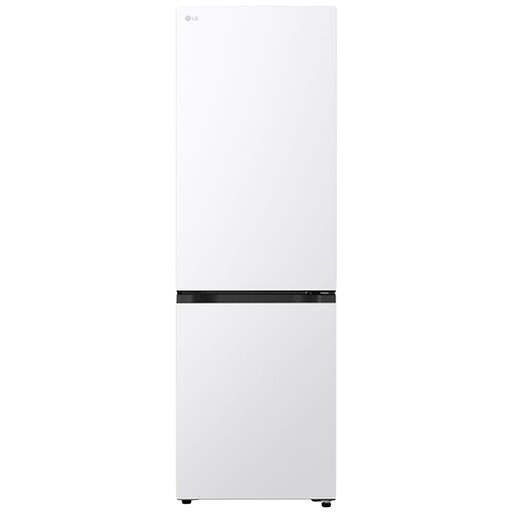 Image unavailable
To see whether this fridge freezer suits your needs, check how its 333 L capacity is divided between compartments. Its listing states a C energy rating. Also compare the kWh/year for the exact model and check the clearances required for its intended position.
 Image unavailable
This fridge freezer is worth considering if its stated width of 54 cm suits the available space. Its listing states a capacity of 262 L, a 70/30 split, a height of 176 cm and Low Frost. Check the manual for freezer maintenance and positioning requirements, and check the label for the kWh/year.
Compare the energy rating, annual consumption in kWh, compartment capacities and noise information. Gifam’s guide to refrigeration appliances explains these details. Start by comparing the kWh/year with the capacities you need, rather than focusing on the rating alone.
Yes. In France, energy labelling is compulsory for the fridge freezers covered by the rules, and the Ministry of the Economy says this applies to both in-store and online sales. Check the label for the exact model number listed.
The European Commission’s public EPREL database lets you look up the specifications of registered refrigeration models, including their annual energy consumption and capacities. Make sure the model number in EPREL matches the one in the listing before comparing two appliances.
In France, ecosystem describes free « 1 pour 1 » collection when you buy an equivalent new electrical appliance, including online. For a sale with delivery, the Environmental Code provides for collection at the delivery point or by another method set out in the legislation. Check which option is offered before ordering.
Follow the manual to check the settings, door seals, ventilation and any ice build-up. Gifam recommends keeping the cold zone between 0 °C and 4 °C and regularly defrosting appliances where needed. These checks can help you work out whether the issue is maintenance-related or whether you need more capacity or a replacement.