Households replacing a fridge-freezer
If you want space for both fresh and frozen food without choosing an unnecessarily large appliance, compare the capacity of each compartment and the kWh/year figures for fridge-freezers with similar capacities.


First, decide whether you need a fridge-freezer, a fridge with a single door or a separate freezer, based on how much space you need for fresh and frozen food. Then compare usable capacity and declared energy use in kWh/year between appliances with the same function, and don’t forget to check their dimensions. According to ADEME, size and extra features can increase the energy use of appliances that run continuously. So a good energy rating alone isn’t enough to compare different formats or capacities.
If you want space for both fresh and frozen food without choosing an unnecessarily large appliance, compare the capacity of each compartment and the kWh/year figures for fridge-freezers with similar capacities.
Width isn’t everything: check the depth and height, how the door opens and whether the appliance will fit through the route to its intended position before settling on a capacity.
How the total capacity is divided between fresh and frozen food matters just as much as the overall volume. A fridge-freezer combines both uses, while a single-door fridge or separate freezer suits a different way of storing food.
Choose this if: you regularly store fresh and frozen food in one appliance.
Bear in mind: a large fridge-freezer needs more space. Check that each compartment suits your habits.
Choose this if: most of your food storage is fresh, and you freeze little or have another freezer.
Check: whether it has a freezer compartment and how much it holds, rather than assuming it will replace the one in a fridge-freezer.
Choose this if: your fridge already meets your needs for fresh food and you regularly store more frozen food.
The trade-off: you’ll be adding an appliance that runs continuously and needs its own space.
| Criterion | What to check | Think about your needs |
|---|---|---|
| Energy use | Compare the energy rating and declared kWh/year for appliances with the same function and similar capacities. Check the label for the exact model. | I want to limit the energy use of an appliance that stays switched on all the time, without assuming its rating guarantees lower bills in my home. |
| Capacity split | Check the usable litres of the fridge and freezer separately. Measure the height, width and depth, and allow enough room for the door. | Most of my shopping is fresh food, so I don’t want to choose a large freezer compartment that I’ll rarely use. |
| Food storage and maintenance | Check the temperature controls and defrosting features. Anses recommends keeping food between 0 and +4 °C at the coldest point in the fridge. | If regular defrosting would be a nuisance, I’ll check exactly which compartment has a No Frost feature. |
| Noise and installation | Compare the stated noise level in dB(A). For a built-in model, check the niche dimensions and door-fixing system. | My appliance will be near a living area or needs to fit into an existing niche. These constraints could rule out a model whose capacity would otherwise suit me. |
A small fridge, a large fridge-freezer and a separate freezer don’t do the same job. ADEME points out that size and extra features can affect energy use.
Compare the kWh/year and usable capacities of appliances that do the same job, then choose the capacity you need.
An appliance may fit in your kitchen but still be too big to get to its intended position or prevent the door from opening properly.
Check the delivery route, all three appliance dimensions and the clearance needed for installation. For a built-in model, also measure the niche and check the door type.
No Frost or a door alarm may be useful for practical reasons, but having either feature doesn’t in itself mean the appliance uses less energy.
Consider how each feature would fit into your daily routine, then compare the appliances’ capacities and declared kWh/year.
These features apply to the models mentioned, not to every appliance from each brand.
Bosch France product pages let you compare the capacities, dimensions, energy ratings and noise levels of freestanding fridge-freezers.
Liebherr’s freestanding fridge-freezer range includes a variety of capacities and widths, which can help you narrow down the format you need.
The built-in ENT6ME19S fridge-freezer is an example of a model that needs to fit a kitchen niche.
These five models combine refrigeration and freezing in one appliance. Compare the space allocated to each compartment and the declared kWh/year before choosing a model to suit your kitchen and habits.
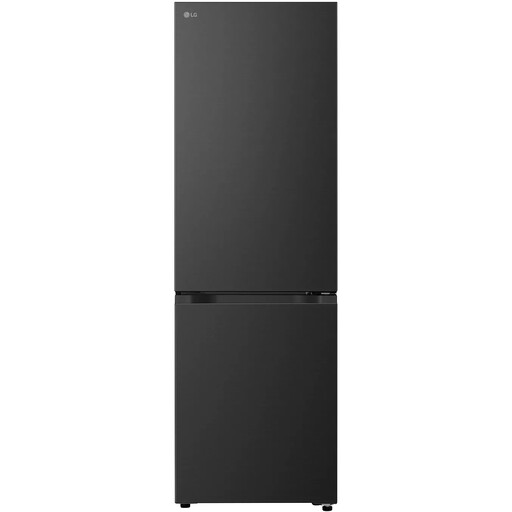 Image unavailable
Store fresh and frozen food in one appliance, with 220 L of fridge capacity and 113 L of freezer capacity. The product information lists an A rating, declared energy use of 108 kWh/year, a noise level of 29 dB and dimensions of 59,7 × 186 × 67,4 cm. Check the required clearance and delivery route; the kWh/year figure won’t reflect energy use in your home.
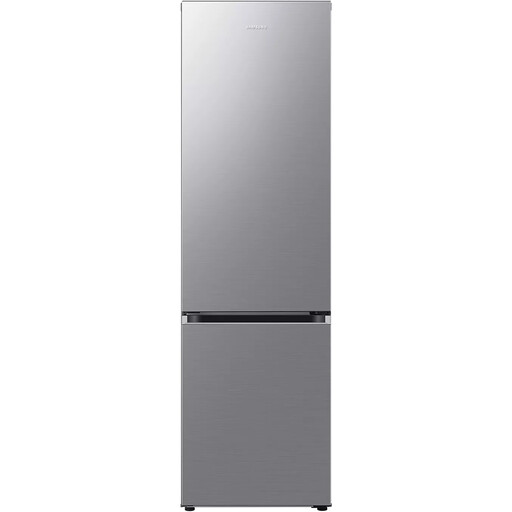 Image unavailable
If you need more room for fresh food, this model’s 390 L capacity is split between 276 L of fridge space and 114 L of freezer space. The product information lists a C rating, declared energy use of 169 kWh/year, No Frost, a noise level of 35 dB and dimensions of 59,5 × 203 × 65,8 cm. Check the height and the space needed to open the door.
 Image unavailable
Its stated width of 54 cm may suit a narrow space, but be sure to check the required clearances. The product information lists 187 L of fridge capacity, 75 L of freezer capacity, an E rating, declared energy use of 215 kWh/year and dimensions of 176 × 54 × 55 cm. The Low Frost freezer needs to be manually defrosted, with defrosting recommended around once or twice a year.
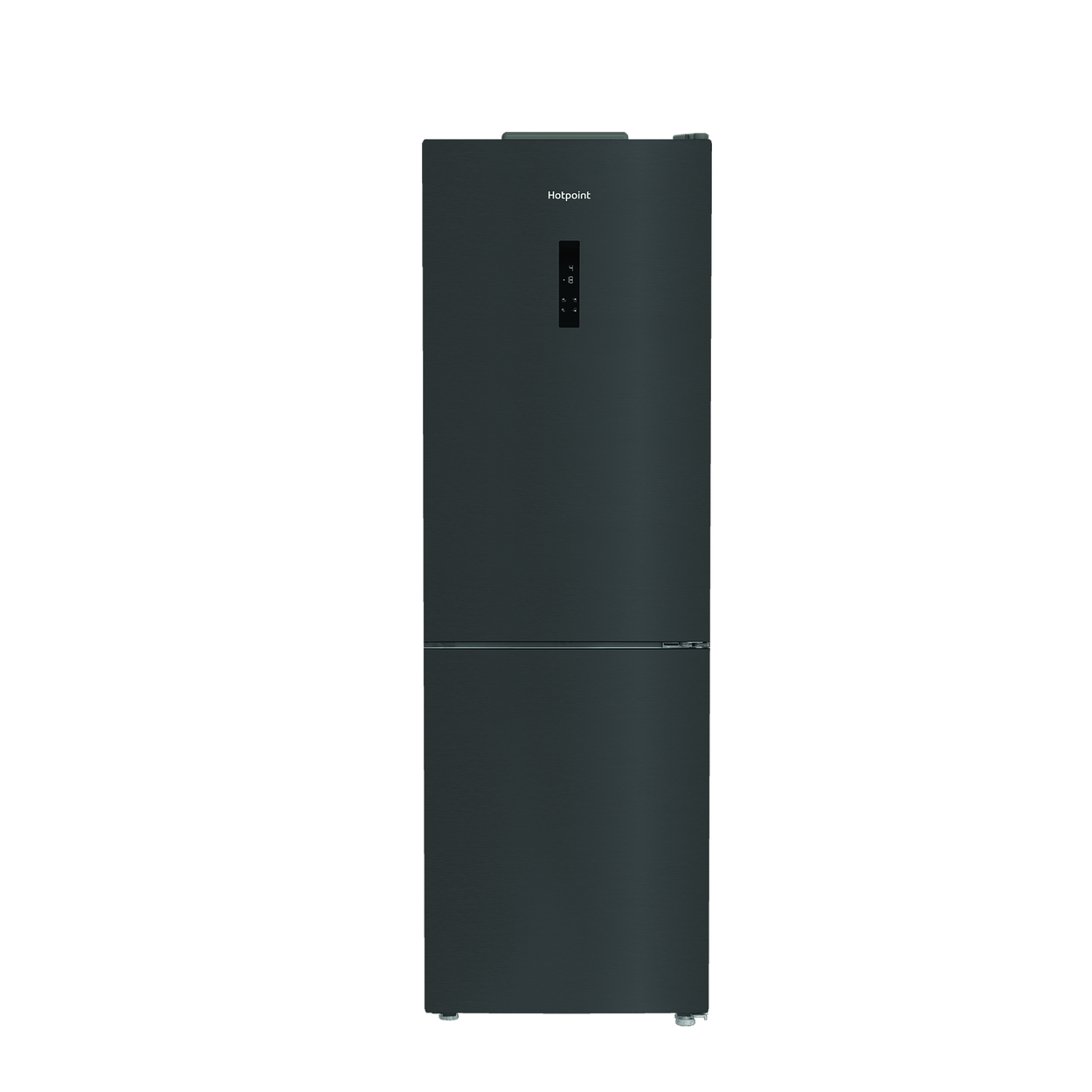 Image unavailable
If manual defrosting would be a nuisance, this model’s product information lists Dual No Frost for both compartments. It states 210 L of fridge capacity, 106 L of freezer capacity, a D rating, energy use of 198 kWh/year and dimensions of 186,5 × 59,5 × 66,3 cm. Allow at least 5 cm of clearance at the back and sides, as specified in the product information.
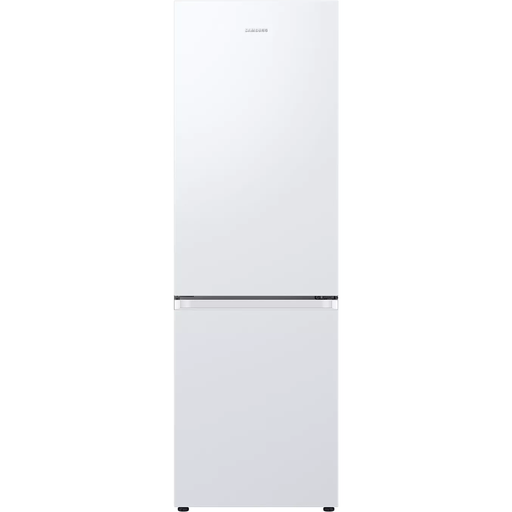 Image unavailable
With 276 L of fridge capacity and 114 L of freezer capacity, it offers plenty of storage space. Make sure you need this much before choosing it. The product information lists an E rating, declared energy use of 264 kWh/year, a noise level of 35 dB and dimensions of 59,5 × 203 × 65,8 cm. Check the clearance and make sure the door can open fully.
No. Also compare the declared kWh/year and usable capacity of each compartment, ideally between fridge-freezers with similar capacities. ADEME presents the energy label as a useful guide when choosing, but dimensions and noise levels matter too if your space has specific requirements.
Not necessarily: it adds an appliance that runs continuously. It’s mainly useful if you regularly need extra freezer space. Check its capacity and declared kWh/year, taking into account the fridge you’ll keep.
Anses recommends keeping food between 0 and +4 °C at the coldest point in the fridge. If the thermostat setting doesn’t tell you the temperature, check it inside the appliance.