When choosing an appliance for storing batch-cooked meals, start by considering how much space you need in the fridge and freezer, rather than looking at the total capacity. A fridge-freezer can suit regular use of both compartments; if frozen portions consistently take up more space, a separate freezer lets you size that storage independently. Also check the space available, annual energy consumption and actual temperature: the Anses recommends keeping the coldest part of the fridge between 0 and +4 °C.
Which households are these options suited to?
Households preparing several meals for the week
If you store both fresh ingredients and portions to freeze, check how much space is available in each compartment separately. Make sure you can also monitor the fridge temperature without cramming in your containers.
Households that regularly freeze portions
If batches stay in storage for several weeks, freezer capacity and the layout of its drawers, shelves or baskets matter just as much as the advertised total capacity. Compare them with the containers you actually use.
Small kitchens where freezing is occasional
If you eat most meals fresh within a few days, you could consider a fridge with a freezer compartment. However, check how much room it leaves for frozen portions and food already in storage.
What should you check before choosing?
Count your fresh and frozen portions, then measure your containers and the space where you plan to put the appliance. This will help you compare configurations suited to the same needs, without relying on a litre capacity that works for every household.
| Criterion | What to check | Depending on your needs |
|---|
| Fridge-freezer |
Check the fridge and freezer capacities separately; the European Commission’s EPREL database lists these volumes separately. Check that the drawer layout suits your containers. |
I store fresh ingredients and frozen portions every week, but don’t need to increase my freezer capacity separately. |
| Small freezer compartment |
Compare the freezer capacity and usable compartment size with the portions you plan to store. Don’t rely on the appliance’s total capacity alone. |
I’ll eat most of my meals fresh within a few days and only freeze small quantities at a time. |
| Two separate appliances |
Size the fridge and freezer independently. Measure both spaces and add together the annual energy consumption in kWh/year shown for the models you’re considering. |
I often freeze large batches and have room for a separate freezer as well as a fridge. |
| Chest or upright freezer |
Consider how easy it is to reach your portions: drawers and shelves in an upright freezer, or baskets and containers in a chest freezer. Check the external dimensions and the model’s installation requirements. |
I often open the freezer to find a particular container; if I prefer a chest freezer, I need to be able to organise the food stored at the bottom. |
| Temperature |
Check the temperature setting and measure the coldest part after installation. The Anses recommends keeping this area between 0 and +4 °C and notes that an overfilled appliance can become too warm. |
I want to keep meals and perishable ingredients chilled without packing them in so tightly that air can’t circulate. |
| Energy consumption and space |
Compare the kWh/year figures for models with similar configurations and capacities, as well as their energy ratings. Measure the height, width, depth and clearances required in the instructions. |
My appliance will run continuously and needs to fit in my kitchen with enough room for installation. |
What mistakes should you avoid?
-
Choosing a fridge-freezer based on total capacity alone
A large total capacity doesn’t tell you how much space is set aside for frozen portions. The European Commission’s EPREL database lists the capacities of frozen and unfrozen compartments separately.
List the fresh meals, batches to freeze and frozen food you already have, then compare the two capacities and the usable space for your containers.
-
Confusing No Frost with temperature control
Manufacturers describe No Frost as a way to reduce frost build-up and manual defrosting. This feature doesn’t replace the fridge temperature checks recommended by the Anses.
After installation and setup, check the coldest part and leave room for air to circulate around the food.
-
Comparing two appliances without adding together their energy consumption
A separate fridge and freezer meet different storage needs, but both run continuously.
Add together their stated annual energy consumption in kWh/year before comparing them with a fridge-freezer that has capacities suited to your needs.
-
Putting a freezer in an unheated room without checking the instructions
The permitted ambient temperature varies by model. For example, Liebherr states that its CFe 1870 chest freezer has a FrostProtect function that works down to -15 °C; this doesn’t apply to every freezer.
Check the instructions for the model you’re considering before choosing a garage, cellar or other unheated room.
Which brand models should you compare?
The specifications below relate to the models named by their manufacturers, not their entire ranges or the appliances featured later.
Bosch
The brand offers fridge-freezers and separate freezers, which you can compare according to how much space you need for chilled and frozen food.
- According to Bosch, the KGN36VLED fridge-freezer has Total NoFrost and separate temperature controls for the fridge and freezer.
- The GSN36VWDG freezer is listed with a usable capacity of 334 L; this figure applies to this specific model, not Bosch fridge-freezers.
Liebherr
The models featured here let you compare two different configurations: a fridge-freezer and a chest freezer.
- Liebherr lists a total capacity of 359 L and a noise level of 35 dB for the CNd 5704 fridge-freezer, and a total capacity of 281 L for the CFe 1870 chest freezer.
- The FrostProtect function, rated for temperatures down to -15 °C, applies to the CFe 1870. Check the installation requirements separately for any other model.
Whirlpool
The freestanding and built-in fridge-freezers featured here show why it’s important to compare how capacity is split between compartments, not just the external format.
- According to Whirlpool, the freestanding WFNF82EOXFR offers 223 L of fridge capacity and 97 L of freezer capacity, compared with 182 L and 68 L for the built-in WHC18T132FR.
- These capacities apply to these two specific models. Check the figures for the model you’re considering, as well as the space needed for installation.
Which appliances in the Joybuy selection should you consider?
This selection features fridge-freezers for storing both fresh food and frozen portions. Compare their overall size and check how capacity is split between compartments before choosing; a separate freezer is suited to a different storage need.
 Image unavailable
Candy CFQQ5T817EPS, 4-door fridge-freezer, 467 L
If you regularly store both chilled and frozen food, check the space available in each compartment and how the four doors are arranged. The product description lists Total No Frost and an E energy rating; check the installation dimensions and the actual temperature in the coldest part.
View on Joybuy
 Image unavailable
Haier HTW5618ENMG, 3-door fridge-freezer, 360 L
If you keep some meals chilled and others frozen, compare how its 360 L capacity is split with the portions and containers you use. The product description lists Total No Frost, an E energy rating and Wi-Fi; check the installation space and monitor the actual fridge temperature.
View on Joybuy
 Image unavailable
CHiQ JR263LGE, 262 L fridge-freezer, 54 cm
Its stated width of 54 cm is worth considering if space is tight, provided the depth and clearances also work for your kitchen. The product description lists a 70/30 split and Low Frost; check how much room is actually available for your frozen portions and allow for the manual defrosting specified for this model.
View on Joybuy
 Image unavailable
CHiQ JR227LSE, 227 L fridge-freezer, 54 cm
To organise portions in a small kitchen, compare the stated 153 L fridge capacity and 74 L freezer capacity with your containers. The product description lists Low Frost and an E energy rating; check the full dimensions, annual energy consumption in kWh/year and temperature after setup.
View on Joybuy
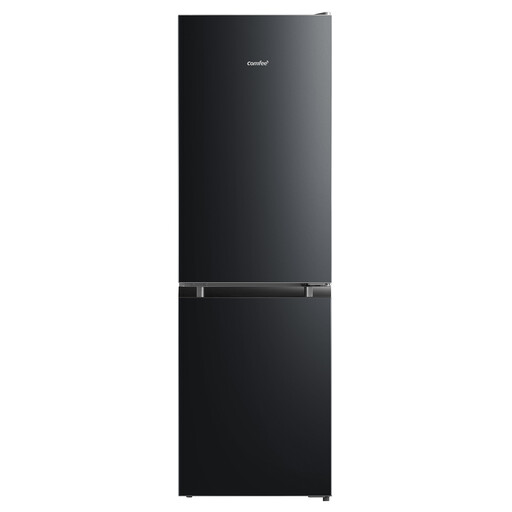 Image unavailable
Comfee' by Midea RCB230BL2EU(E), 174 L fridge-freezer
If you plan to freeze small quantities, first check that the freezer space is right for your containers. The product description lists Low Frost, an adjustable thermostat and a reversible door; also check the temperature reached and annual energy consumption before comparing this model with other sizes.
View on Joybuy
Frequently asked questions
What temperature should prepared meals be kept at in the fridge?
The Anses recommends keeping the coldest part of the fridge between 0 and +4 °C. Check the temperature after adjusting the settings, especially if the appliance is very full or opened often; the thermostat setting alone won’t tell you the temperature actually reached.
Should you choose the largest total capacity?
No: compare the fridge and freezer capacities separately with your portions and containers. The European Commission’s EPREL database lists these capacities separately; a high total figure doesn’t tell you how much room is available for frozen meals.
Does No Frost mean you don’t need to check the temperature?
No. Manufacturers describe No Frost as a feature that limits frost build-up or manual defrosting, while the Anses recommends checking the temperature in the coldest part. Avoid overfilling the appliance, too.
How do you compare the energy consumption of a fridge-freezer with two separate appliances?
Check the annual energy consumption in kWh/year on the energy labels or in EPREL. For a separate fridge and freezer, add their figures together, then compare the total with that of a fridge-freezer offering capacities suited to your needs.


