If you keep meals chilled for the days ahead and freeze portions too, consider a fridge-freezer and compare its usable fridge and freezer capacities separately. A small freezer compartment is better suited to occasional use. If frozen portions regularly take up all the available space, an additional freezer may be worth considering, provided you have a suitable place for it. In every case, check the space you’ll need in your kitchen, the annual energy consumption and the storage temperature for your meals.
Who is each option suited to ?
Preparing several meals in one session, as described by the French National Consumer Institute, may require space in the fridge, freezer or both. Where you plan to store your portions will guide your choice.
Meals prepared for the days ahead
If you cook several dishes at once to eat over the next few days, look at the fridge space that’s actually available once your ingredients and other food are put away. Your meals should fit in the cold zone without being crammed in.
Portions you freeze regularly
If you freeze some of the food you cook in each session, check the usable freezer capacity and the layout of its drawers. A large fridge won’t make up for a freezer compartment that’s too small for the portions you plan to store.
Small kitchens
When space is limited, compare the capacity you want with the appliance’s width, depth and height, and check how far the doors open. Adding a separate freezer also means finding a spot that meets the installation requirements in its manual.
How do you choose the right amount of storage space ?
First, choose a format based on how much of your food you plan to keep chilled or frozen. Then compare the features of models that will fit in your kitchen.
Fridge-freezer
Consider this if : you keep meals for the days ahead and freeze portions too, but don’t plan to buy a second appliance.
Bear in mind : the capacity is split between the fridge and freezer. UFC-Que Choisir says a standard fridge-freezer typically allocates around two-thirds of its capacity to the fridge and one-third to the freezer, but check the figures for each model.
Fridge with a small freezer compartment
Consider this if : you’ll mostly keep your meals chilled and only freeze food occasionally.
Bear in mind : this compartment can quickly run out of room if you regularly freeze portions, particularly if you also store frozen food in it.
Additional freezer
Consider this if : your frozen portions regularly fill your existing freezer and you have a suitable space for another appliance.
Bear in mind : an extra appliance takes up space and uses electricity. Choose between the easy access of an upright freezer with drawers and the open space of a chest freezer, depending on how you like to organise your food.
| What to consider | What to check | What you need |
|---|
| Usable capacity |
Compare the fridge and freezer capacities in litres separately, then check that the shelves and drawers will suit your containers. UFC-Que Choisir gives 100 to 150 L of usable capacity for one person as a general guide, plus 50 L for each additional person. Adjust this to suit the portions you prepare. |
I want to store my meals and ingredients without cramming them in, while leaving enough room for the portions I plan to freeze. |
| Temperature and storage |
According to Anses, the coldest part of the fridge should be between 0 and +4 °C. Check where this zone is, how to monitor its temperature and whether your containers allow air to circulate. |
I need to be able to put perishable meals in a sufficiently cold zone without filling every shelf. |
| Installation |
Measure the height, width and depth, including the space needed to open the doors. Check the clearances required in the manual and make sure the climate class is suitable for the room temperature. |
For a small kitchen or utility room, I need an appliance that can be installed and used in the space I have. |
| Energy use and noise |
Compare the European energy label’s A to G rating, annual kWh consumption, capacity and noise level. For a fairer comparison, look at appliances of a similar size and capacity. |
I want to know the stated energy consumption of an appliance that will run continuously. Noise levels matter too if my kitchen is open-plan. |
What should you look out for before buying ?
-
Looking only at the total capacity
Two fridge-freezers with a similar total capacity may divide their litres differently between the fridge and freezer. This matters if you store lots of portions in just one compartment.
Work out what you’ll keep chilled and what you’ll freeze, then check the separate capacities on the label or product information. Make sure your dishes will also fit on the shelves.
-
Stacking containers or putting away food while it’s still hot
Anses recommends not overfilling the fridge and avoiding putting hot food in it. Arrange food so cold air can circulate without unnecessarily warming the inside of the appliance.
Leave space between containers and follow the appropriate cooling and storage guidance for your meals before putting them in the cold zone.
-
Choosing a chest freezer without thinking about access
Its open space can hold bulky items, but organising and rotating lots of small portions takes planning. A chest freezer also takes up floor space.
Measure the space available, including the room needed to open the lid. If you often reach for small portions, compare the drawer layout of an upright freezer too, and check that its climate class is suitable for the room you’ve chosen.
An additional freezer is another appliance to find room for and keep running continuously.
-
Comparing only the energy rating letter
The rating on its own won’t tell you how many litres are available in the fridge and freezer, or how noisy the appliance will be.
Also check the annual kWh consumption, capacities and noise emissions shown on the European label, then compare appliances of a similar size.
Which brands can help you compare options ?
These examples of product ranges and models can help you identify the features to compare. They are not a ranking of brands or a list of products available on Joybuy.
Bosch
The range includes freestanding and integrated fridge-freezers, with configurations that vary by model.
- For the KGN39VLCT, Bosch lists 260 L of fridge capacity, 103 L of freezer capacity, a C rating and 35 dB(A).
- These figures apply to the KGN39VLCT. Check the capacity, dimensions and features of the model you’re considering.
Beko
The range includes integrated fridge-freezers, some of which have electronic controls and an open-door alarm, depending on the model.
- Beko lists a fast-freeze function and an open-door alarm for the B3BCNA294HS. The brand says its NeoFrost Dual Cooling system keeps the air in the two compartments separate.
- The description of NeoFrost Dual Cooling is the manufacturer’s claim for this model, not an independent measurement that applies to the whole range.
Whirlpool
The range includes freestanding and integrated fridge-freezers, including models with dedicated compartments.
- Whirlpool lists a total capacity of 462 L and Total No Frost for the WB70E973W.
- To check whether it will fit in your kitchen and suit the portions you plan to store, look at the fridge and freezer capacities separately, as well as the model’s dimensions.
Fridge-freezers to consider on Joybuy
These fridge-freezers let you divide batch-cooked meals between the fridge and freezer. Before choosing, compare the space you can actually use and the installation requirements for each model.
 Image unavailable
Haier HTW5618ENMG, 360 L three-door fridge-freezer
A fridge-freezer to consider if you want to divide your meals between the fridge and freezer.
The model name indicates a total capacity of 360 L, Total No Frost, an E rating, Wi-Fi and My Zone. For your portions, check the capacity of each compartment, the temperature of the coldest zone and the installation clearances.
View on Joybuy
 Image unavailable
CHiQ JR263LGE, 262 L fridge-freezer, black
Its stated width of 54 cm is worth comparing with the measurements of a narrow kitchen, taking the door opening into account.
The model name indicates a height of 176 cm, a stated 70/30 split and Low Frost technology. Check the usable capacity of each compartment, the temperature in the coldest part and the annual kWh consumption in the product information.
View on Joybuy
 Image unavailable
CHiQ JR227LSE, 227 L fridge-freezer, silver
The stated capacities let you compare the space for meals you want to keep chilled with the space for portions you plan to freeze.
The model name specifies 153 L of fridge capacity, 74 L of freezer capacity, a four-star freezer, Low Frost and an E rating. Confirm the installation dimensions in the manual and check the temperature in the coldest zone for your meals.
View on Joybuy
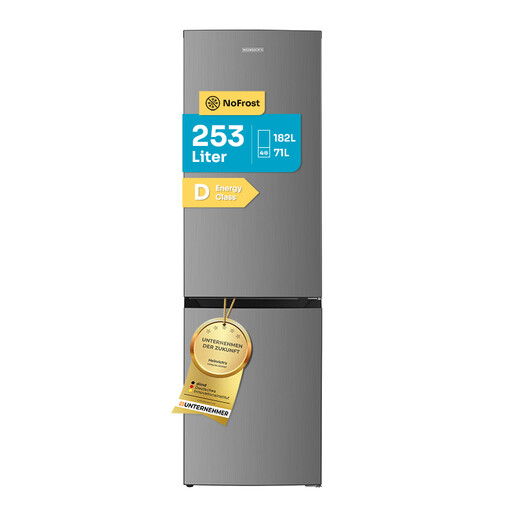 Image unavailable
Heinrich´s, 253 L fridge-freezer, stainless steel finish
The stated capacity split may suit you if you want more room for chilled meals than frozen portions, depending on how much you prepare.
The product name indicates 182 L of fridge capacity, 71 L of freezer capacity, No Frost and 39 dB. Before choosing this model, check its width, depth, clearances, annual kWh consumption and storage temperature.
View on Joybuy
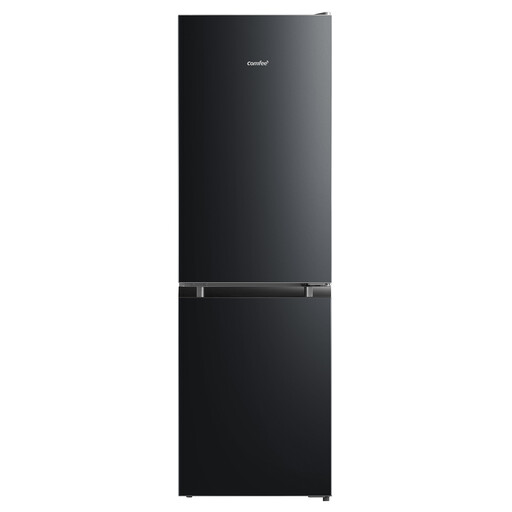 Image unavailable
Comfee' by Midea RCB230BL2EU(E), 174 L fridge-freezer
If you batch-cook smaller amounts, compare the space available in each compartment with the number of containers you plan to store.
The model name indicates Low Frost, an adjustable thermostat and a reversible door. Check the separate fridge and freezer capacities, annual energy consumption and the temperature in the coldest zone.
View on Joybuy
Frequently asked questions
How should you store batch-cooked meals in the fridge ?
Put your meals in the cold zone of the fridge and follow the storage guidance for the ingredients and dishes. Anses recommends keeping food between 0 and +4 °C in the coldest part of the fridge and not overfilling the appliance. Check the temperature rather than relying on the setting shown on the dial or display.
Is a small freezer compartment enough for batch-cooked meals ?
It may be suitable if you’ll eat most of your meals within the next few days and only freeze a small amount. If you regularly freeze several portions, compare the usable capacity of a fridge-freezer or consider adding a separate appliance. UFC-Que Choisir points out that a small freezer compartment may not be enough if you eat a lot of frozen food.
What should you look for on a fridge’s energy label ?
As well as the energy rating, check the storage capacities, annual kWh consumption and noise level. According to the European Commission, household fridges and freezers in the European Union are labelled on a scale from A to G. Comparing appliances of a similar size and capacity makes this information more useful when deciding which one to choose.
Can you put a freezer in a cellar or garage ?
First check that the model’s climate class covers the actual temperature range in the room, then follow its ventilation and installation instructions. UFC-Que Choisir gives 16 to 32 °C as an example range for climate class N. This range does not apply to all freezers.


