What should you check before choosing?
Start with what you actually store in each compartment, then rule out appliances that won’t fit in your kitchen or along the delivery route. Finally, compare energy consumption and noise levels between models with capacities that suit your needs.
| Consideration |
What to check |
Your needs |
| Compartment capacity |
Compare the usable litres in the fridge and freezer separately, then look at the drawer layout. UFC-Que Choisir suggests 100 to 150 L for one person as a starting point, plus 50 L for each additional person. Adjust this guide to suit the amount you store. |
I want enough room for a week’s worth of fresh and frozen food without choosing a total capacity that leaves too little space in the compartment I use most. |
| After a big shop |
If comparable test results are available, check how the temperature rises and how quickly the appliance returns to the right temperature after being loaded. UFC-Que Choisir’s testing protocol includes a simulated full weekly shop; the name of a cooling technology is no substitute for these results. |
After a big shop, I want to know how the appliance copes when food is added, beyond what the product specifications claim. |
| Installation and delivery |
Measure the appliance, the space where it will go and the narrowest point on the delivery route, using the packaged dimensions. For a built-in model, check the housing dimensions, door fixing and ventilation requirements in the model’s instructions. |
My kitchen may have a housing unit or narrow access, so the fridge freezer needs to be deliverable and installable as specified. |
| Energy consumption |
Check the energy rating and kWh/year on the label, then compare similar appliances of a similar type and capacity. Also allow for the clearances specified by the manufacturer. |
As the appliance runs all year round, I want to compare its energy consumption without confusing differences in size with differences in efficiency. |
| Noise |
Check the noise level in dB on the label or product information, and consider where the appliance will be placed. Separately, make sure its dimensions and capacity suit your needs. |
In an open-plan kitchen or a small home, the stated noise level matters as much as storage capacity. |
A few brands and models to consider
These examples show different formats and installation requirements. The specifications apply to the models mentioned, not to every model in each brand’s range.
LG
The freestanding GBF3102EEV fridge freezer is an example of how capacity can be divided for a shop that includes frozen food.
- For this model, LG lists a total capacity of 343 L, including a 110 L freezer, a width of 595 mm and a noise level of 35 dB.
- Its stated depth is 682 mm, so check the space available, the required clearances and the delivery route.
Beko
The B7BCNA296HS is a built-in fridge freezer to consider if your kitchen has a housing unit.
- For this model, Beko lists fan-assisted cooling, an energy rating of C and spare parts availability for 12 years from the first consumer purchase date.
- Before choosing this appliance, confirm the required housing dimensions, door front and ventilation.
Liebherr
The freestanding CBNsdc 765i Prime fridge freezer is aimed at shoppers looking for more capacity.
- Liebherr lists a capacity of 423 L and a noise level of 34 dB for this model.
- At a stated width of 74.7 cm, you’ll need to check the space available and the entire delivery route.
Samsung
The RF65DG960ESLEF is an example of a large multi-door model for storing substantial quantities.
- Samsung lists a capacity of 646 L for this model.
- Its stated width is 912 mm. Samsung advises measuring doorways, lifts and corridors to make sure the packaged appliance can get through.
Fridge freezers and a side-by-side model on Joybuy
These options include freestanding fridge freezers, a built-in fridge freezer and a side-by-side model. Compare the capacity split with what you buy, then check the installation requirements for each format.
 Image unavailable
Haier HTW5618ENMG three-door, 360 L
For a shop that includes both fresh and frozen food, this three-door fridge freezer has a stated capacity of 360 L, Total No Frost and an energy rating of E. Check the packaged dimensions, the space available and the required installation clearances.
View on Joybuy
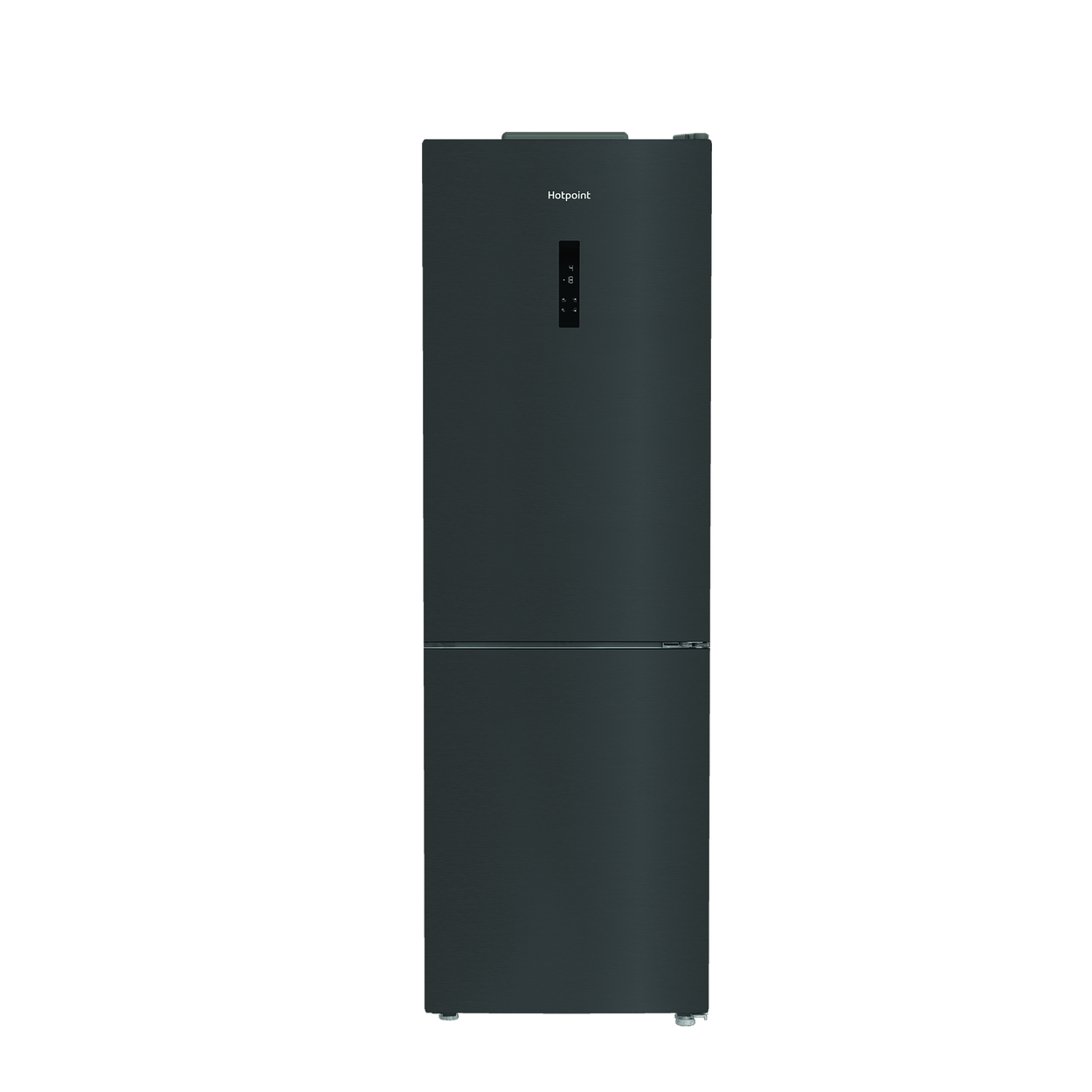 Image unavailable
Hotpoint HPK26363XBR5E, 316 L
This 316 L fridge freezer gives you separate compartments for fresh and frozen food. Its product title lists Dual No Frost and an energy rating of D. If noise matters in your kitchen, check the noise level as well as the packaged dimensions before delivery.
View on Joybuy
 Image unavailable
CHiQ JR263LGE, 262 L, 54 cm wide
With a stated width of 54 cm, this model may suit a household with limited space, but remember to check its depth and the delivery route too. This 262 L fridge freezer has a stated 70/30 split and a Low Frost system, so don’t confuse it with a No Frost model.
View on Joybuy
 Image unavailable
AEG NSC6M18FES built-in, 249 L
This 249 L built-in fridge freezer is designed for a fitted kitchen, rather than a space intended for a freestanding appliance. Its product title lists TwinTech No Frost and an energy rating of E. Check the instructions for the required housing, door front and ventilation, and check the kWh/year on the energy label.
View on Joybuy
 Image unavailable
CHiQ JR525WSE side-by-side, 525 L
For larger reserves, this side-by-side model has a stated 333 L fridge compartment and 192 L freezer compartment, giving 525 L in total. Its product title lists No Frost, 37 dB and an energy rating of E. Confirm the appliance and packaged dimensions, then check the kWh/year on the energy label.
View on Joybuy
Frequently asked questions
What capacity do I need for a week’s shop?
UFC-Que Choisir suggests 100 to 150 L of usable capacity for one person as a starting point, plus 50 L for each additional person. Adjust this guide if you shop less often or store a lot of frozen food, and compare the fridge and freezer capacities separately.
Is a fridge with a freezer compartment enough for frozen food?
If frozen food makes up a significant part of your weekly shop, consider an appliance with a separate freezer compartment instead. Check its usable capacity and drawer layout: the appliance’s total capacity alone won’t tell you how much room is available for freezing.
What should I check on a built-in model?
Check the exact housing dimensions, door fixing and ventilation requirements in the model’s instructions. Bosch notes that the required housing height for its built-in appliances varies by model, so a stated housing width alone isn’t enough to confirm compatibility.
What should I measure before arranging delivery?
Measure the final space and the entire route to it: doorways, corridors, lifts or stairs, using the dimensions of the packaged appliance. Tell the seller or delivery company about any access issues before the delivery appointment; UFC-Que Choisir notes that some large fridges can weigh over 100 kg.
How do I compare the energy consumption of two fridges?
Compare the kWh/year shown on the EU energy label for models of a similar type and capacity, rather than looking only at their A to G rating. Usable capacity and noise level will also help you weigh up what each appliance offers for your shopping and kitchen.


