What should you look for before choosing?
For less frequent shopping trips, your choice mainly depends on how much chilled storage you need, how much food you want to freeze and how much space you have.
Fridge-freezer
Consider this if: you regularly store fresh and frozen food, but don’t plan to build up a large stock of frozen meals.
Bear in mind: one appliance takes up less space, but the split between the two compartments is fixed.
Fridge with a small freezer compartment
Consider this if: you mainly buy fresh food and only keep a few items that are already frozen.
Bear in mind: a freezer compartment can’t freeze freshly prepared meals, as the Ministry of Agriculture points out.
Fridge and upright freezer
Consider this if: you often freeze portions and want to organise them in accessible drawers or compartments.
Bear in mind: you’ll need to install and run two appliances. An upright freezer also needs a suitable spot with enough height and ventilation.
Fridge and chest freezer
Consider this if: you need to freeze large quantities and have enough floor space.
Bear in mind: according to UFC-Que Choisir, a chest freezer may offer more capacity than an upright model, but it takes up more floor space and makes food at the bottom harder to reach.
| What to consider |
What to check |
What matters to shoppers |
| Chilled and frozen storage split |
Compare the usable capacity in litres of each compartment, rather than looking at the total capacity alone. |
Between shops, I want to keep fresh food without losing space for frozen food. Around 33% of shoppers prioritise this balance. |
| Freezing prepared meals |
Check whether the appliance can freeze fresh food, as well as the freezer’s capacity and internal layout. |
When I prepare several meals in advance, I need space to regularly freeze new portions. This ability comes first for around 27% of shoppers. |
| Space for chilled food |
First, work out how much fridge space you need, then check what the small freezer compartment can actually do. |
I mainly buy fresh food and only keep a few frozen items as a backup. Around 20% of shoppers similarly prioritise fridge space. |
| Positioning and noise |
Check the dimensions with the doors open, the specified ventilation clearance, the climate class and the stated noise level in dB(A). |
In an alcove, a room where the temperature varies or an open-plan kitchen, I need to be able to install the appliance without overlooking how it will work day to day. These considerations come first for around 20% of shoppers. |
When choosing between models with a similar format and capacity, also compare the kWh/year and noise levels shown on the energy label, which lists the compartment capacities. Two separate appliances both run continuously, so compare their stated energy consumption together rather than judging by their energy class alone.
Brands to consider
These examples from different ranges can help you identify features to compare; the specifications of one model don’t apply to every appliance in the brand’s range.
Bosch
The range includes freestanding fridge-freezers and fridges with an integrated freezer compartment.
- Bosch lists 260 L of fridge space, 103 L of freezer space, 35 dB(A) and energy class C for the KGN39EXCF fridge-freezer. These figures apply to this specific model.
- The KUL22VFD0 built-in fridge offers a different split, with 93 L of fridge space according to Bosch. Check the capacity of each compartment and the installation type before comparing these formats.
Whirlpool
The range includes freestanding and built-in fridge-freezers, some of which feature No Frost systems.
- Whirlpool describes the W9C841COX as a class C fridge-freezer with Dual No Frost technology and FreshBox drawers. These features apply to this model.
- The required clearances vary depending on the installation, so check the model specifications, especially if it’s built in.
Liebherr
The range covers freestanding and built-in refrigeration and freezing appliances.
- Liebherr says the climate class is shown on the rating plate. This is worth checking if you plan to install the appliance in a room where the temperature varies.
- The climate class alone isn’t enough to plan the installation. Check the temperature range and installation instructions for your chosen model.
Fridge-freezers for chilled and frozen storage
These Joybuy models combine refrigeration and freezing in one appliance. If you shop less frequently, compare their storage capacity split and overall size. If you plan to regularly freeze fresh meals, also check that your chosen model can freeze them.
 Image unavailable
CHiQ JR227LSE, 227 L silver fridge-freezer
Worth considering if you’re looking for a 54 cm-wide fridge-freezer for chilled food and freezing meals. The title lists 153 L of fridge space, 74 L of freezer space, a 4-star compartment, Low Frost, a reversible door and energy class E.
Check the full dimensions, ventilation clearances and climate class for your chosen location. Low Frost may not eliminate the need for manual defrosting.
View on Joybuy
 Image unavailable
Bosch KGN33NLEB, 282 L fridge-freezer with bottom freezer
This bottom-freezer fridge-freezer may suit you if you want chilled and frozen storage in one 282 L appliance. The title lists energy class E.
Before choosing it for make-ahead meals, check its freezing capacity. Also check its dimensions, climate class and stated noise level for your intended location.
View on Joybuy
 Image unavailable
Samsung RF50C530EB1, 495 L multi-door fridge-freezer
This 495 L multi-door model is for households considering a large-capacity appliance for fresh and frozen food. The title lists energy class E.
Compare the usable capacities of its compartments rather than looking at the total alone. Also check its freezing capacity, dimensions with the required clearances and climate class.
View on Joybuy
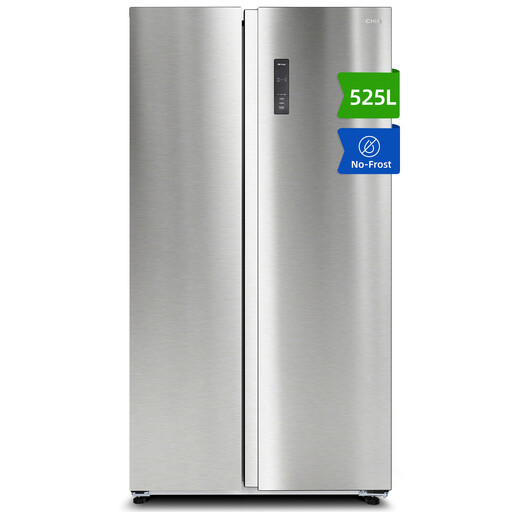 Image unavailable
CHiQ JR525WSE, 525 L side-by-side fridge-freezer
Worth a look if you have plenty of fresh and frozen food to store in a side-by-side appliance. The title lists 333 L of fridge space, 192 L of freezer space, No Frost, 37 dB and energy class E. The stated noise level is a declared figure, not an independent test result.
If you regularly freeze fresh meals, check the freezing capacity. Also measure the space needed for the appliance and to open the doors, then check the climate class.
View on Joybuy
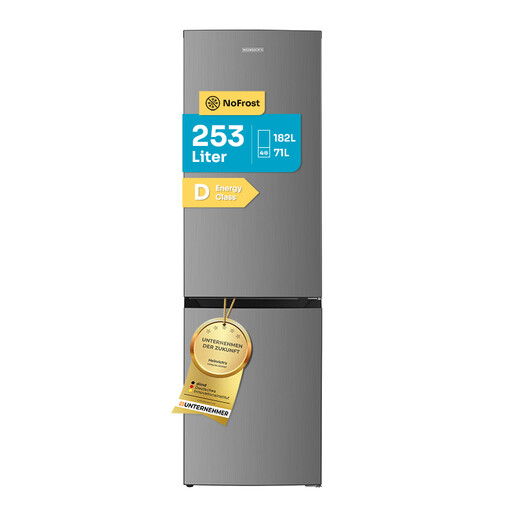 Image unavailable
Heinrich´s, 253 L fridge-freezer with stainless steel finish
This fridge-freezer may suit a household looking to split its storage between the two compartments. The title lists 182 L of fridge space, 71 L of freezer space, No Frost and a stated noise level of 39 dB.
If you prepare meals to freeze, check its freezing capacity. Also check its dimensions, ventilation requirements and climate class before deciding where to put it.
View on Joybuy
Frequently asked questions
Is a freezer compartment enough to freeze prepared meals?
No, not if you need to freeze freshly prepared meals. The Ministry of Agriculture distinguishes between a freezer compartment, intended for temporarily storing food that is already frozen, and a freezer. Check that the compartment is 4-star rated, or choose a separate freezer that’s suitable for this purpose.
What temperatures should you aim for in the fridge and freezer?
Anses recommends a temperature between 0 °C and 4 °C in the coldest part of the fridge; the Ministry of Agriculture advises −18 °C for the freezer. Also follow your appliance’s temperature settings and usage instructions.
Can you install a refrigeration appliance in a garage or cellar?
Yes, provided the room temperature falls within the range specified for the model’s climate class and you follow the installation instructions. Bosch, for example, gives a range of 10 to 32 °C for climate class SN and 18 to 43 °C for class T. Check the climate class of the product you choose rather than assuming it will suit any room.
How do you compare the energy consumption of two fridge-freezers?
Compare the kWh/year figures on their energy labels, taking into account the appliance type and the usable capacities for chilled and frozen food. The label also shows the energy class and airborne acoustical noise emissions; the letter alone isn’t enough to compare appliances with different capacities.
Does a No Frost freezer need no maintenance at all?
No. Depending on the appliance design, No Frost may reduce the need for manual defrosting, but cleaning is still necessary. Follow the model’s instructions for defrosting, cleaning and restarting it.


