Households doing a weekly shop
Prioritise separate fridge and freezer capacities, so you can accommodate a large shop without compromising your usual supplies. Que Choisir specifically assesses this scenario in its testing.


For weekly shops and a few frozen portions, a fridge freezer with separate fridge and freezer compartments is generally the most versatile starting point. Compare the usable capacity of each section, the overall dimensions and the noise level. A multi-door fridge freezer or separate freezer becomes worthwhile when your frozen stocks and available space make it practical.
Prioritise separate fridge and freezer capacities, so you can accommodate a large shop without compromising your usual supplies. Que Choisir specifically assesses this scenario in its testing.
The freezer’s usable capacity, number of drawers and ease of access matter more than the total capacity alone. Also compare the stated freezing capacity for the exact model.
Measure the installation space, access routes and door clearance. The depth, noise level and climate class can rule out an appliance that otherwise offers the right capacity.
Start by dividing your needs between fresh and frozen food, then check that the chosen format can genuinely be installed in the intended room.
| Priority | What to check | Your needs |
|---|---|---|
| Capacity split | Compare the usable litres of the fridge and freezer sections separately. Check the number, depth and accessibility of the drawers, along with the freezing capacity in kg/24 h where stated. | I want enough room for fresh food without running out of drawers for portions and frozen food. A high total capacity does not guarantee that the section you need is large enough. |
| Temperature stability | Check independent test results where available. Verify the climate class against the actual room temperature, as well as the model’s specific rapid-cooling functions. | After a large shop or frequent door openings, I want an appliance suited to my usage and to any heat in the kitchen. |
| Size and access | Record the height, width and depth, then add the clearances specified in the instructions. Check the delivery route, door swing and noise level in dB(A). | I need to be able to get the appliance into the house, open the doors comfortably and access my supplies without sacrificing the capacity I need. |
| Energy and comparable information | Compare the current A to G rating, annual consumption in kWh, compartment capacities and noise levels between appliances of the same type. The label’s QR code links to EPREL. | I want to compare data on a like-for-like basis, without treating the old A+, A++ or A+++ ratings as equivalent to the current scale. The European Commission has used the A to G scale since 1 March 2021. |
A large capacity may be concentrated mainly in the fridge section, while prepared portions require more freezer space.
Note the volume and format of your usual supplies, then compare the litres in each compartment and drawer access on the exact model’s product page.
A cold cellar, unheated utility room or hot kitchen may fall outside the temperature range intended for the appliance.
Assess the room’s minimum and maximum temperatures and choose a climate class that covers them. Also follow the ventilation clearances specified in the instructions.
High-capacity appliances can be wider and deeper than a standard fridge freezer, making them difficult to deliver or open in a small kitchen.
Measure the installation space, access routes and door clearance before ordering. For a chest freezer, also check the floor area and access to the bottom of the compartment.
Fridges and freezers now use the A to G scale; the former designations do not allow for a direct comparison.
Compare the current rating, annual consumption in kWh and usable capacities between appliances of a similar category and size.
Worth considering for a 60 cm freestanding fridge freezer with clearly documented capacity distribution and storage or fan-assisted cooling features.
An option to explore for organising fresh food and separating cooling circuits in a standard-width fridge freezer.
Consider it if you want plenty of capacity within a standard kitchen width and depth, without moving to a multi-door model.
Worth exploring when the available space can accommodate the high capacity of a wide fridge freezer.
Joybuy options including fridge freezers for weekly shops and prepared portions, a multi-door model for larger supplies, and an upright freezer to provide separate freezer capacity.
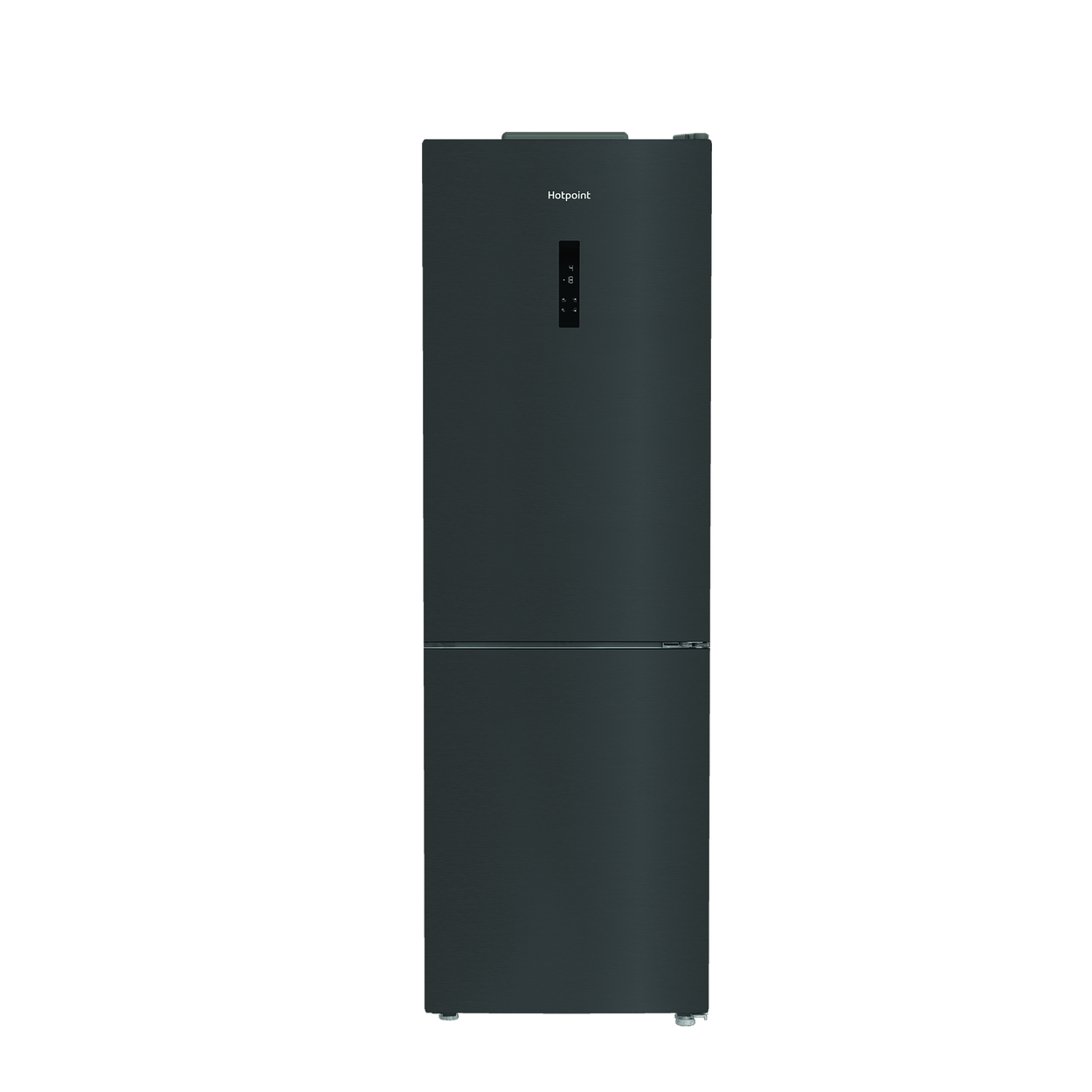 Image unavailable
A fridge freezer that separates fresh shopping from frozen portions, with 210 L of fridge capacity and 106 L of freezer capacity.
Three freezer drawers, a stated freezing capacity of 6 kg/24 h, 198 kWh/year, a D rating and a width of 59.5 cm. Check the climate class before installing it in a cellar, utility room or very warm kitchen.
 Image unavailable
A 54 cm-wide format for a narrow kitchen and moderate supplies, with 187 L of fridge capacity and 75 L of freezer capacity.
Three drawers, a 4-star freezer, a stated freezing capacity of 3.5 kg/24 h and an N-ST climate class from 16 to 38 °C. The freezer requires periodic manual defrosting.
 Image unavailable
A compact 54 cm-wide option for everyday shopping, with 153 L of fridge capacity and 74 L of freezer capacity.
4-star compartment, reversible door and adjustable feet. The freezer capacity is better suited to moderate supplies; allow time for defrosting the freezer.
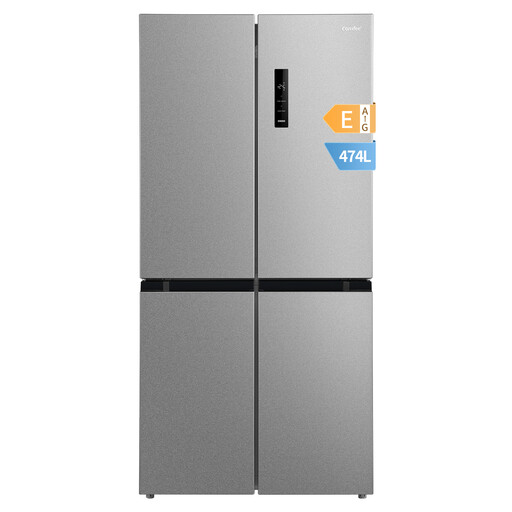 Image unavailable
A multi-door model that increases storage in a single appliance, with a stated total capacity of 474 L and separate compartments.
Width of 83.8 cm, depth of 65.3 cm and height of 177.5 cm. Check the split between fridge and freezer capacity, as well as the space required for delivery and door opening.
 Image unavailable
Separate freezer capacity to complement an existing fridge, with 161 L dedicated to frozen food and portions.
Three drawers, two shelves, a Fast Freeze function advertised down to −22 °C, an alarm and a reversible door. Check the dimensions and climate class before choosing where to install it.
First separate your needs for fresh and frozen food. Que Choisir gives an average guide of 100 to 150 L for one person, then 50 L per additional person for the fridge; adjust this if you shop for one or two weeks at a time or store a lot of frozen food. Then check the freezer capacity and drawer sizes for your boxes and bags.
No. A fridge freezer is suitable when your frozen supplies remain moderate, while an upright freezer makes access easier with its drawers. A chest freezer prioritises capacity, but takes up more floor space and requires more hands-on organisation.
Check the exact model’s climate class and compare it with the room’s actual temperatures. Que Choisir gives the following guidelines: SN from +10 to +32 °C, N from +16 to +32 °C, ST from +16 to +38 °C and T from +16 to +43 °C. An appliance designed for a temperate kitchen is not automatically suitable for a cold cellar or a very hot room.
The A to G European label displays the annual consumption in kWh, the capacities of the fresh and frozen compartments, and the noise level. The QR code provides access to EPREL, allowing you to check the model’s detailed data before buying.
No. Depending on the model, No Frost mainly relates to frost formation and defrosting; it does not guarantee sufficient freezer capacity or drawers suited to your supplies. Also check the freezer litres, internal layout and temperature-stability results where available.