Households doing a big weekly shop
If you buy fresh and frozen food every week, compare the usable capacity of each compartment. The total capacity won’t tell you how much room there is for frozen food.


For a weekly shop that regularly includes fresh and frozen food, a fridge freezer is a good starting point: its two compartments make it easy to check how much space is available for each. A multi-door model is worth considering if your storage needs and available space justify it; a compact appliance with a freezer compartment is better suited to occasional frozen food. Before choosing, compare the usable capacities with your shopping needs, then check the model’s dimensions, ventilation requirements and energy consumption.
If you buy fresh and frozen food every week, compare the usable capacity of each compartment. The total capacity won’t tell you how much room there is for frozen food.
An appliance designed for an alcove or under-counter space needs to fit while still allowing the doors to open. The room available for a few frozen items matters just as much as the external dimensions.
A large capacity can accommodate a bigger shop, but you’ll also need to check the balance between fresh and frozen storage, the route into your kitchen and the ventilation requirements.
First decide how much space you need for frozen and fresh food, then rule out any formats that can’t be installed properly. The roomiest option isn’t necessarily the one whose every compartment you’ll use.
Consider it if: your weekly shop regularly includes fresh and frozen food, and you’d like two compartments in one appliance.
Bear in mind: freezer capacity varies by model, even when the total capacity is similar.
Consider it if: most of your shopping is fresh food and you only keep frozen food occasionally.
Bear in mind: a freezer compartment isn’t automatically a substitute for a freezer designed for regular storage.
Consider it if: space is very limited and you don’t buy large quantities.
Bear in mind: its compact size limits the space available for groceries, particularly frozen food.
Consider it if: you store plenty of food and both your kitchen and delivery access can accommodate its size.
Bear in mind: check the dimensions and energy consumption of the specific model, rather than relying on its stated capacity alone.
| Factor | What to check | Who it matters to |
|---|---|---|
| Frozen food storage | Compare the freezer’s usable capacity in litres and the compartment’s star rating. If you freeze fresh food, also check its stated freezing capacity. | When I need frozen food to last until my next shop, I want a dedicated storage space rather than just a small extra compartment; around 33% of consumers put this need first. |
| Space for fresh food | Check the fridge’s usable capacity in litres and the layout of its shelves, drawers and door storage. | If I need to store meals, fruit and vegetables for the whole week, how they fit determines my choice; this is the top priority for around 27% of consumers. |
| Fitting it in your kitchen | Measure the space and access route, then check the manual for door clearance and ventilation requirements. | In a narrow kitchen, I need to be able to get the appliance in and open its doors every day; around 27% of consumers prioritise this constraint. |
| Energy use and maintenance | When comparing appliances that meet the same storage needs, check their stated kWh/year and defrosting method. | For an appliance that runs constantly, I’d rather keep an eye on its energy use and how often it needs defrosting; this is the top priority for around 13% of consumers. |
Two fridges with the same total capacity can divide the space differently between fresh and frozen food. For example, the product details for the Whirlpool WHK2 6493 X4E fridge freezer list 340 L of fridge space and 150 L of freezer space, out of 490 L in total.
Think about what you store between shops, then compare the separate usable capacities and the freezer compartment’s specifications.
A multi-door model might fit its intended space but still be too large to get through a doorway, along a corridor or up a staircase. Its doors may also be obstructed once it’s in place.
Measure the delivery route, the space where it will go and the clearance needed to open its doors, using the dimensions and installation diagram for the model you’ve chosen.
A route that’s too narrow or a space that won’t work can make delivery and installation difficult.
Ventilation requirements depend on the appliance and how it’s installed. Bosch’s general advice doesn’t replace the measurements specified for a particular freestanding or built-in model.
Check the manual for the model you’re considering before committing to an alcove or tight-fitting space.
According to ADEME, fridges and freezers run constantly, while their size and extra features can affect energy consumption.
Compare the energy labels and kWh/year of appliances that meet similar storage needs, then decide which extra features you’ll actually use.
These ranges offer a starting point for comparing formats and features. Capacity, functions and installation requirements vary from one model to another.
A range that includes freestanding, built-in, single-door and fridge-freezer models, worth exploring if format or built-in installation is a key consideration.
Fridge freezers to compare if you’re looking for separate compartments for fresh and frozen food.
Freestanding and built-in fridge freezers to compare by how they divide capacity between fridge and freezer space.
Multi-door and large-capacity appliances to consider if you do a big shop and your kitchen can accommodate a larger model.
Fridge freezers and multi-door models to explore if you’re looking to balance stated capacity with a size that suits your kitchen.
These Joybuy models include a fridge freezer for shops that combine fresh and frozen food, as well as a multi-door option for larger quantities. Before choosing a format, compare the space you need in each compartment with the constraints of your kitchen.
 Image unavailable
Worth considering if you want to store fresh and frozen food in a three-door appliance; check that the capacity split suits your shopping needs.
The model name lists Total No Frost, an E rating and Wi-Fi. Check the dimensions and clearance requirements in its manual.
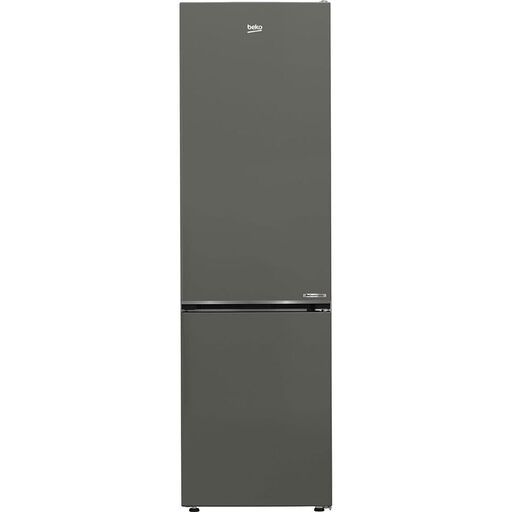 Image unavailable
Worth considering for regular shops that include fresh and frozen food; compare the capacity of each compartment.
The model is listed with Total No Frost and a C rating. Check its overall dimensions and the installation requirements in the manual.
 Image unavailable
Consider it if your shop calls for more space for both fresh and frozen food, and your kitchen can accommodate a multi-door model.
The model is listed with Total No Frost and an E rating. Measure the access route and the space needed to open all four doors.
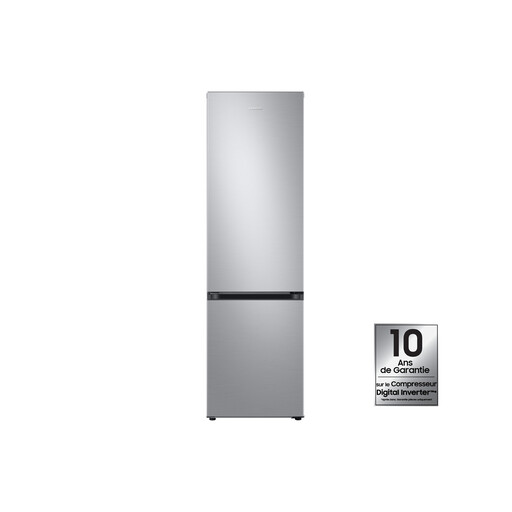 Image unavailable
Compare it with other fridge freezers if you store fresh and frozen food every week; check how much space is allocated to the freezer.
The model name lists a C rating. If you plan to keep a regular supply of frozen food, also check the compartment’s star rating and the installation instructions.
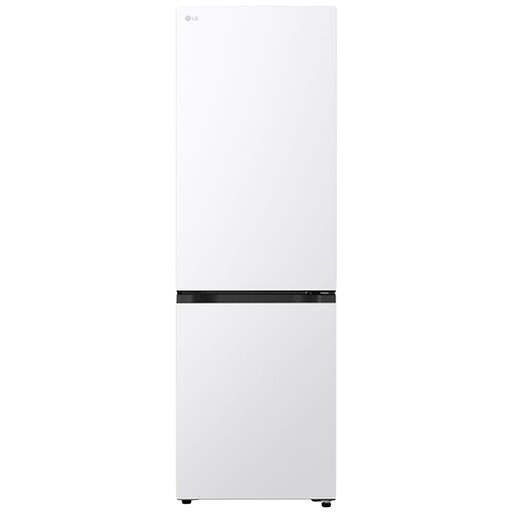 Image unavailable
Worth considering if you’re looking for a fridge freezer to divide your shopping between fresh and frozen food; compare the usable capacity of each compartment.
The model name lists NatureFRESH™, DoorCooling+™, LinearCooling™ and a C rating. Check the freezing specifications and clearance requirements in its manual.
Start by separating the fridge’s usable capacity from the freezer’s. Que Choisir gives an average guide of 100 to 150 L of fridge space for one person, plus 50 L for each additional person. Adjust this to suit the meals, fresh food and frozen items you keep between shops.
A freezer compartment won’t necessarily provide enough space for a regular supply of frozen food. Check its star rating and capacity; if you plan to freeze fresh food yourself, also check the freezing capacity specified for this use.
Measure the space where it will go and the entire delivery route, including the clearance needed to open the doors. For a built-in model or one fitted into an alcove, follow the dimensions and ventilation requirements in its own manual rather than relying on general clearance guidance.
Once you’ve shortlisted appliances with similar capacity and freezing performance, compare their energy ratings and kWh/year. ADEME points out that an appliance’s size and features can affect its energy use, even though it runs constantly.