What should you check before choosing?
Small fridge or larder fridge
Consider this: if your kitchen is very small, you shop frequently and you only freeze food occasionally.
Trade-off: compare its storage capacity and any freezer compartment with the groceries and portions you actually need to keep.
Fridge-freezer
Consider this: if you store both fresh and frozen food but don’t have room for two appliances.
Trade-off: the capacity is split between compartments. A suitable total capacity can still mean one compartment is too small for your portions or groceries.
Two separate appliances
Consider this: if you regularly freeze large quantities and have space for a separate freezer.
Trade-off: you’ll need to allow for the space, ventilation and ongoing energy use of both appliances.
Once you’ve chosen a setup, start with your containers and the space available, then compare the features of models that could suit your needs.
| Consideration |
What to check |
For my needs |
| Capacity and storage |
Compare the usable capacity of the fridge and freezer separately. Check the shelf layout and whether the available dimensions will accommodate your containers and dishes. |
My groceries need to fit alongside my prepared meals, without the frozen food compartment taking up space needed for fresh food. |
| Temperature |
Check how the temperature is set and controlled, and leave room for air to circulate inside. Anses recommends monitoring a temperature of 4 °C in the coldest part of the fridge. |
After a big shop, I want to be able to store perishable food in the right area without overfilling the appliance. |
| Energy and noise |
Check the kWh/year figure and noise level for the exact model. Compare energy use between appliances with similar layouts and usable capacities, rather than looking at their energy ratings in isolation. |
Noise matters in an open-plan kitchen too. ADEME points out that fridges and freezers run continuously, and that choosing a model that’s too large can increase energy use. |
| Installation |
Measure the height, width and depth, the delivery route and the space needed to open the doors. Check the manual for ventilation requirements and make sure the model’s ambient temperature range suits the room. |
I need to be able to open the doors and install the appliance in line with its manual, whether it’s going in an alcove, a warm kitchen or a utility room. |
Brands and models worth considering
These examples highlight features to compare on specific models. They don’t represent every range from these brands or the products featured below.
Bosch
The KGN33NWEB is an example of a freestanding fridge-freezer with separate capacities listed for the fridge and freezer.
- Bosch lists 193 L of fridge capacity, 89 L of freezer capacity and 42 dB(A) for this model.
- Its stated dimensions of 1 760 × 600 × 660 mm should be checked against your available space and the model’s installation requirements.
Whirlpool
The French range includes both freestanding and built-in fridge-freezers, so the type of installation is a useful first way to narrow down your options.
- Whirlpool lists an energy class C rating and Dual No Frost technology for its freestanding W9C841COX fridge-freezer.
- These features apply to the W9C841COX. Check the specifications for the model and layout you’re considering.
Electrolux
The built-in KNR7TE75S shows why it’s important to check the required niche dimensions before choosing a model.
- Electrolux lists 287 L for the fridge and 89 L for the freezer on this model.
- The stated niche dimensions for the KNR7TE75S are 1 894 × 710 × 560 mm. Don’t assume these will suit another built-in space.
Joybuy fridge-freezers for your weekly shop
These five fridge-freezers combine refrigeration and freezing in one appliance. Compare their total capacity with the containers you usually use, then check how the space is divided between compartments and the installation requirements for the model you’re interested in.
 Image unavailable
Candy CFQQ5T817EPS, 4-door fridge-freezer, 467 L
Consider how much room this four-door design takes up alongside your groceries and frozen portions. The model name lists a total capacity of 467 L, Total No Frost and an E rating. Check how the capacity is split between compartments and allow enough space to open the doors.
View on Joybuy
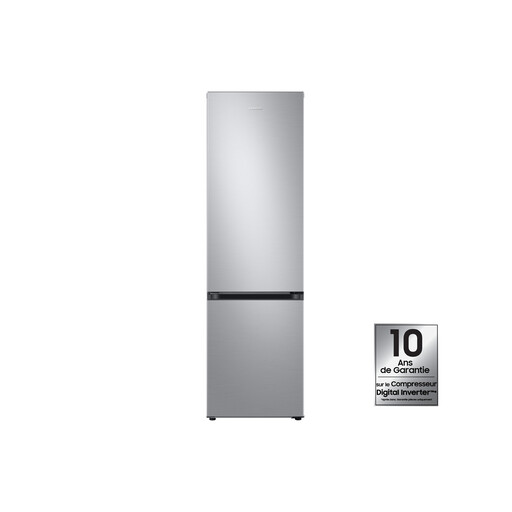 Image unavailable
Samsung RL38C602CSA, fridge-freezer, 390 L
If your weekly shop includes both fresh and frozen food, check that each compartment can hold the quantities you need, rather than relying on the total capacity alone. This fridge-freezer is listed with a total capacity of 390 L and a C rating. Check the manual for the required installation clearances too.
View on Joybuy
 Image unavailable
Haier HTW5618ENMG, 3-door fridge-freezer, 360 L
If you alternate between dishes to keep chilled and portions to freeze, look at the usable space in each section and how the drawers are arranged. This model is listed with a total capacity of 360 L, Total No Frost, an E rating and My Zone. Check the space needed for installation too.
View on Joybuy
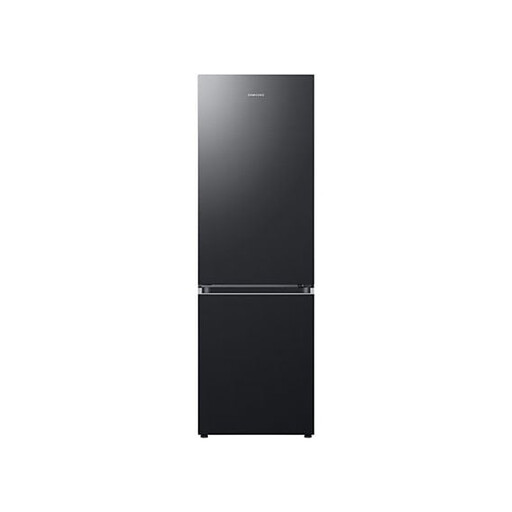 Image unavailable
Samsung RB34C704DB1, fridge-freezer, 344 L
For storing groceries over several days, compare the space for fresh food with the space for frozen items. The model name lists a total capacity of 344 L and a D rating. Check the energy label and manual to compare energy use and confirm the installation requirements.
View on Joybuy
 Image unavailable
CHiQ JR263LGE, Low Frost fridge-freezer, 262 L
Its stated width of 54 cm may be worth considering for a narrow space, provided there’s also enough room for the doors to open and for ventilation. The model is listed with a total capacity of 262 L and a Low Frost freezer. Allow for occasional manual defrosting.
View on Joybuy
Frequently asked questions
How can I estimate the capacity I need for a weekly shop?
Take stock of what actually fills your compartments: vegetables, bottles, dishes, containers and frozen food, then check how much space each needs. UFC-Que Choisir gives an average guide of 100 to 150 L for one person and 50 L for each additional person, but also recommends considering how often you shop. Use this as a guide, not a substitute for checking your own quantities and containers.
What temperature should I monitor in the fridge?
Anses recommends monitoring 4 °C in the coldest part of the fridge. Check your model’s manual to find this area, and avoid overfilling the fridge so air can circulate.
Do all fridges need the same amount of clearance around them?
No. As Electrolux Support France points out, ventilation requirements are listed in the manual or installation guide for each model. Also check that the doors can open fully and that the appliance’s permitted ambient temperature range suits the room, especially if you plan to install it in a utility room or a warm space.
Is No Frost essential for storing prepared meals?
No. Start by checking how much fridge and freezer space you need. If defrosting is an important consideration for you, check the maintenance requirements for the model you’re looking at. The CHiQ JR263LGE Low Frost, for example, requires occasional manual defrosting.
What should I do with my old fridge?
Take it to an appropriate collection point for electrical and electronic equipment rather than putting it out with general waste. The Ministry for the Ecological Transition points out that this equipment may contain components with environmental implications as well as recyclable materials. Ask the retailer or a collection point how to hand it in.


