Households that prepare several meals in advance
If you keep some portions chilled for the next few days and freeze others, compare the capacity of each compartment rather than just the total capacity of the fridge-freezer.


To keep both fresh meals and frozen portions in one appliance, choose a fridge-freezer with enough space in each compartment for your containers. A fridge on its own is better suited to storing fresh food, while a separate freezer makes sense if your frozen supplies exceed the practical capacity of a fridge-freezer and you have room for a second appliance. In every case, check the installation dimensions and the specific model’s annual energy consumption.
If you keep some portions chilled for the next few days and freeze others, compare the capacity of each compartment rather than just the total capacity of the fridge-freezer.
An alcove, narrow doorway or door close to a wall can determine which model is right for you. Check the delivery route, installation dimensions and clearance needed to open the door.
If you regularly freeze batches of meals, a separate freezer could give you the extra space you need, provided you have room to install a second appliance.
First decide how much space you need for fresh and frozen food, then make sure the format you choose suits your home and everyday routine.
Consider this if: you regularly store fresh food and frozen portions, but only have room for one large appliance.
Bear in mind: the two compartments share the available capacity, so check each one separately.
Consider this if: you mainly keep portions chilled and rarely freeze food, or already have a freezer.
Bear in mind: on its own, this format won’t provide the capacity you need to build up regular stocks of frozen food.
Consider this if: you often freeze batches of meals to supplement your fridge.
Bear in mind: you’ll need space for a second appliance and it will need to run continuously. UFC-Que Choisir also notes that a chest freezer takes up more floor space than an upright model.
| Consideration | What to check | Who this matters to |
|---|---|---|
| Space for portions | Compare the net capacities of the fridge and freezer separately, then check whether the drawers and shelves will fit the containers you normally use. | I prepare containers of food for the next few days, as well as batches to freeze, so I need enough space in both compartments. Around 38% of consumers would prioritise this capacity and how it is organised. |
| Size and installation | Measure the space and the delivery route. For a built-in model, also check the housing, fixing method and required clearances. | If my kitchen is narrow or the appliance has to be carried up stairs, its capacity won’t help if it can’t be installed. Access and the space it takes up would be priorities for around 37% of consumers. |
| Everyday use | Check the annual energy consumption in kWh, noise level and defrosting method for the exact model. Compare appliances with a format and capacity that suit your needs. | In a kitchen close to the living area, I want to consider noise and maintenance, as well as the electricity used by an appliance that runs continuously. These practical considerations would come first for around 25% of consumers. |
A fridge-freezer may offer plenty of litres overall, but too little space in the compartment where you plan to store most of your portions.
Work out how much room your usual containers, dishes and bags take up, then compare the net capacity and layout of each compartment.
An appliance may fit in its final spot but still be difficult to get through a doorway, up a staircase or into a built-in housing.
Measure the entire route before ordering. For a built-in model, also check the housing dimensions and the fixing system required for the model you’ve chosen.
Installation or commissioning may be offered as a separate service, depending on the seller’s offer.
According to ADEME, fridges and freezers run continuously, so their size and the combined number of appliances matter when choosing. An average for a particular format won’t tell you how much the model you’re considering will use.
Compare the annual energy consumption shown on the energy label, as well as the usable capacity, for models you could realistically install.
Getting rid of a bulky old appliance takes some advance planning. In France, Article R541-161 of the Environmental Code provides for a used appliance to be taken back at the delivery point when a product is sold with delivery.
Check the take-back procedure that applies to your order and confirm the arrangements before delivery.
The freestanding KGN36VLED is one fridge-freezer to consider, with separate fresh and frozen food compartments.
The CNgbc 5723 Plus is a freestanding model to consider if you’re looking for a high-capacity fridge-freezer.
The freestanding WFNF82EOXFR and built-in WHC18T132FR show how installation requirements can vary.
The KNT6ME18S4 is a useful model to compare when replacing a built-in fridge-freezer and the unit dimensions determine your options.
These Joybuy models combine a fridge compartment and a freezer compartment in one appliance. To choose between them, first check whether your kitchen needs a freestanding or built-in model, then compare the stated capacities with the portions you plan to store.
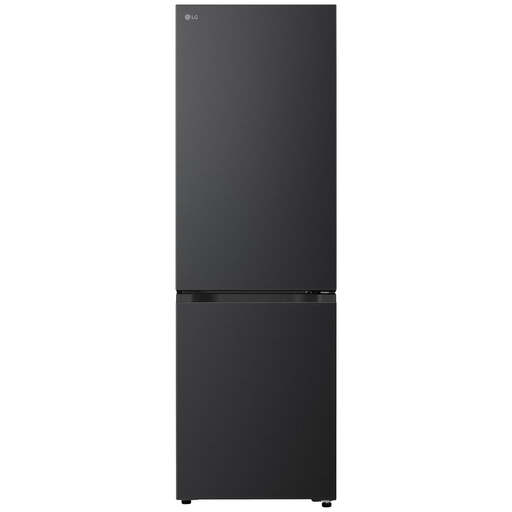 Image unavailable
Worth considering if you want to keep fresh and frozen portions in one fridge-freezer. The title states a total capacity of 333 L and a C energy rating. Check the capacity of each compartment, as well as the space needed for installation and delivery.
 Image unavailable
Consider this if your fresh and frozen portions need to fit into a unit designed for a built-in appliance. The title states a capacity of 252 L and No Frost. Check the housing dimensions, fixing method and required clearances before choosing this model.
 Image unavailable
Worth considering if you’re planning to store plenty of fresh and frozen portions in one appliance. The title states a total capacity of 495 L. Check the door and compartment layout, then measure the route into your home and the space available.
 Image unavailable
Consider this for keeping fresh and frozen food in a fitted kitchen designed for a built-in appliance. The title states a total capacity of 249 L and TwinTech No Frost. Check the detailed capacity of both compartments, the annual energy consumption and the housing dimensions for this model.
 Image unavailable
Worth considering if you want to divide your meals between chilled and frozen storage in a fridge-freezer with a bottom freezer. The title states a total capacity of 282 L. Check the capacity of each compartment and the noise level if the appliance will be near a living area.
First, work out which portions will stay chilled and which you’ll freeze. UFC-Que Choisir suggests 100 to 150 L as a general guide for one person, plus 50 L for each additional person. Adjust this to suit your containers and how often you shop, and, for a fridge-freezer, take account of the net capacity of each compartment.
Add a separate freezer if your batches of frozen food regularly exceed the practical space available in a fridge-freezer and you have room for a second appliance. If you need both compartments in one space, look instead at how the capacity is divided in a fridge-freezer. For a separate freezer, UFC-Que Choisir notes that a chest freezer takes up more floor space than an upright model.
Measure the final space and every part of the route the appliance will need to take, including doorways, corridors, stairs and lifts. Compare these measurements with the dimensions of your chosen model and check the delivery requirements. For a built-in model, also measure the housing and check the fixing system.
In France, when a product is sold with delivery, Article R541-161 of the Environmental Code provides for the used product to be taken back at the delivery point. Before ordering, check how the retailer will arrange this for your delivery and confirm the agreed procedure.