Households that plan their shopping
If you shop for several days at a time, check that the shelves and drawers are still practical once everything is put away. Que Choisir recommends considering how often you shop when choosing a fridge.


First, work out whether you’re short of space for fresh food, frozen food or simply a better way to organise your supplies. Taking stock and arranging everything more clearly may be enough if you have adequate space. If you do need to buy an appliance, compare the capacity of each compartment, the dimensions and the annual energy consumption separately. A separate freezer gives you more capacity, but it’s another appliance to install and keep running.
If you shop for several days at a time, check that the shelves and drawers are still practical once everything is put away. Que Choisir recommends considering how often you shop when choosing a fridge.
If you prepare meals in advance or regularly buy frozen food, the capacity actually available in the freezer matters more than the total capacity shown.
If you find food long after you bought it or buy items you already have, ADEME recommends checking your supplies before shopping and regularly organising your fridge.
Start by identifying where you’re short of space: for fresh food, frozen food or keeping track of what you have. ADEME recommends checking your supplies and planning meals. If you still need more space, compare appliances based on your household’s specific needs.
Worth considering: if it’s hard to find food or you’re buying duplicate items.
The trade-off: better organisation won’t add capacity if the compartments are genuinely too small.
Worth considering: if kitchen space is limited and you only freeze small amounts.
The trade-off: check the compartment’s capacity, as it may not suit larger frozen food supplies.
Worth considering: if you regularly use both functions and have enough space for the appliance.
The trade-off: the balance between fridge and freezer space needs to suit the way you use it, so compare the two capacities separately.
Worth considering: if your fridge has enough room for fresh food, but frozen portions or shopping are taking up too much space.
The trade-off: you’ll need to make room for it and account for the ongoing electricity use of an additional appliance.
| What matters to you | What to check | Who is it for? |
|---|---|---|
| Space for fresh food | Fridge capacity in litres, dimensions, and the layout of the shelves and drawers. | After doing a big shop, I want to put fresh food away without blocking the drawers or wasting useful space. Around 40% of consumers prioritise capacity and storage for fresh shopping. |
| Freezing capacity | Freezer compartment capacity, access to drawers or the chest, and the stated defrosting method. | If I prepare portions in advance or regularly buy frozen food, I want to know what will really fit in the compartment. Around 30% of consumers prioritise space for frozen food. |
| Keeping track of supplies | How easy it is to see and reach food, and whether you can check what you have before shopping. | If food gets forgotten at the back or accidentally bought again, I want to make it easier to keep track of what I have first. Around 20% of consumers prioritise being able to see the food they already have. |
| Energy use and installation | Stated consumption in kWh/year, dimensions and clearance requirements in the instructions. | If space is limited or I’m keeping an eye on my electricity use, I want to check the installation requirements and estimate the running costs of an appliance that operates continuously. Around 10% of consumers prioritise running costs and the space an appliance takes up. |
When comparing eligible new appliances sold in France, check the energy label and product information sheet, including online. The French Ministry of the Economy explains that this is a requirement, while Regulation (EU) 2019/2016 sets out its scope and exclusions. Compare the kWh/year figure and the model’s dimensions, rather than estimating actual costs from the energy rating alone.
A large total capacity doesn’t tell you how much room there is for fresh food and how much is for frozen food. The split may not suit the way you usually shop.
Compare the stated capacity in litres for each compartment and the layout inside the specific model.
Forgetting food or buying it again doesn’t necessarily mean your appliance lacks capacity. ADEME recommends checking your supplies and regularly organising your fridge.
First, try arranging things more clearly and checking what you have before you shop. Then reassess whether you really need more space.
An additional appliance needs space and runs continuously, but won’t by itself solve the problem of losing track of what you have.
Extra capacity doesn’t mean you can skip checking the dimensions, installation requirements and stated annual energy consumption. ADEME points out that fridges and freezers run continuously.
Measure the space, read the model’s instructions and compare its consumption in kWh/year.
A second appliance adds to your ongoing electricity use. A manual-defrost chest freezer also needs defrosting as part of its upkeep.
The ARG7342FR is an example of a built-in, single-door fridge with a freezer compartment, worth considering if you only freeze food occasionally.
The KGN39VLEB is an example of a freestanding fridge-freezer, with two capacities to consider in light of your household’s needs.
The HCE200EFR chest freezer is a useful example to consider when looking at adding separate frozen food storage.
The FNd 522i Plus NoFrost is an example of a separate upright freezer to consider if you’re short of space for frozen food supplies.
These fridge-freezers offer a range of compartment capacities and configurations to compare, depending on how you shop, your freezing needs and the space available.
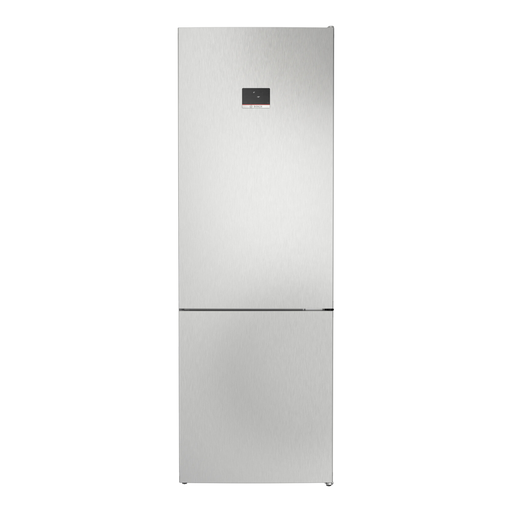 Image unavailable
Worth considering if you want to compare the space for fresh food and frozen food supplies separately.
311 L fridge and 129 L freezer capacity; stated dimensions: 70 × 203 × 66,7 cm. Five shelves, a meat and fish zone and a VitaFresh drawer are listed.
 Image unavailable
Worth considering if you’re looking for a built-in appliance with separate capacities for fresh and frozen food.
Listed capacities are 186 L for the fridge and 62 L for the freezer. TwinTech Total No Frost, MultiFlow, an ExtraChill drawer, five shelves and three freezer drawers are listed; sliding-door installation.
 Image unavailable
Worth considering if you want to compare the fridge and freezer capacities, as well as the storage layout, in this freestanding model.
235 L fridge and 125 L freezer capacity; stated dimensions: 185 × 59,5 × 66,7 cm. My Zone, Humidity Zone and three freezer drawers are listed.
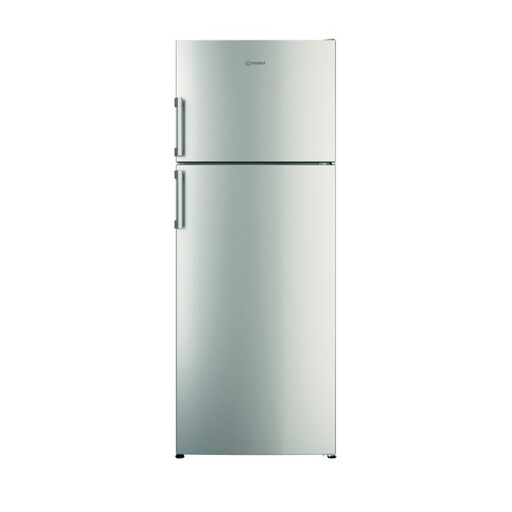 Image unavailable
Worth considering if you want to compare a large total capacity with the split between fridge and freezer space.
322 L fridge and 115 L freezer capacity; stated dimensions: 70 × 65,5 × 185 cm. Four shelves, three door balconies, a salad drawer and manual freezer defrosting are listed.
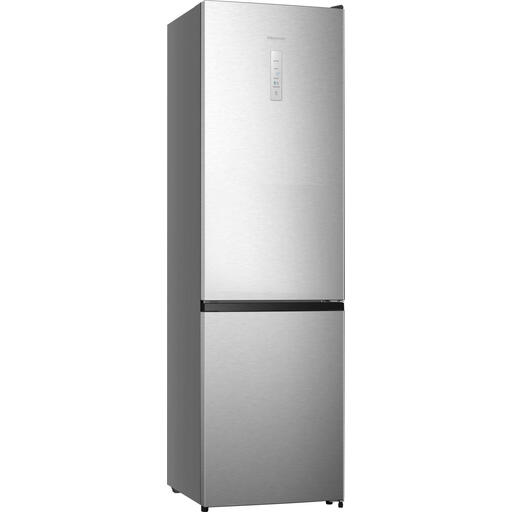 Image unavailable
Worth considering if you want to assess the capacity of each compartment and the internal layout separately.
238 L fridge and 98 L freezer capacity. Total No Frost, Multi Air Flow, five shelves, four door balconies, freshness drawers and three freezer drawers are listed. The product name also mentions 35 dB.
Take stock of what you have and notice which foods become difficult to find after you’ve been shopping. ADEME recommends checking your supplies before shopping. If you still run short of space once everything is organised more clearly, compare the fridge and freezer capacities separately.
Check its stated consumption in kWh/year and compare it using your electricity tariff and the same time period. Also check its dimensions and any installation requirements. ADEME points out that fridges and freezers run continuously.
Yes. Energy labelling also applies to online sales of new domestic appliances covered by Regulation (EU) 2019/2016. The regulation applies in particular to electric refrigeration appliances with a capacity greater than 10 L and less than or equal to 1 500 L, subject to its exclusions. Check the label and the model’s product information sheet. This rule does not automatically apply to second-hand appliances.
The DGCCRF explains that retailers must offer free take-back on a “one-for-one” basis when you buy an equivalent new appliance, including online. Check the arrangements offered by the retailer and distinguish take-back from any disconnection or installation services.