What to compare
Fridge-freezer
Consider this if: you want to keep fresh and frozen food in one appliance, and both compartments have enough capacity after your shop.
Bear in mind: a large total capacity doesn’t guarantee that the compartment you need most will be big enough.
Separate fridge and freezer
Consider this if: your current fridge meets your needs, but frozen food or meals you want to freeze regularly overflow.
Bear in mind: you’ll need space for a second appliance, which will use extra electricity as it runs continuously.
Reorganise before replacing
Consider this if: food is hard to find, but your compartments still hold your shopping and the doors close properly.
Bear in mind: reorganising your storage won’t solve a recurring lack of capacity, and it doesn’t replace checking the temperature.
To compare your options, start with a typical shop and assess your needs for fresh and frozen food separately. Then check the kWh/an and the space available.
| What matters to you |
What to check |
Who it matters most to |
| Space for fresh food |
Fridge capacity in litres; layout and access to shelves, drawers and door storage. |
If your fresh shopping fills the fridge between shops, accessible space is your first priority. Around 40% of consumers prioritise fresh food storage. |
| Capacity for frozen food |
Freezer capacity in litres; drawers or chest, floor space and climate class if the appliance will be kept in a cold room. |
If frozen food or meals you want to freeze are overflowing, you need suitable storage that’s easy to access. Around 30% of consumers prioritise frozen food storage. |
| Electricity use |
kWh/an shown for each appliance; combined consumption if you run two. |
If you want to limit the electricity used to keep your shopping fresh, compare the annual consumption of the complete set-up. Around 20% of consumers put kWh/an at the top of their list. |
| Space and installation |
Appliance and packaging dimensions, access routes, door clearance and ventilation gaps specified in the instructions. |
If space or the delivery route is restricted, check that the appliance can be installed and used in the intended location. Around 10% of consumers prioritise how well an appliance fits into their home and how storage is organised. |
Fridge-freezers on Joybuy
This selection brings together fridge-freezers. Compare their stated capacities for fresh and frozen food, as well as their annual consumption where listed.
 No image available
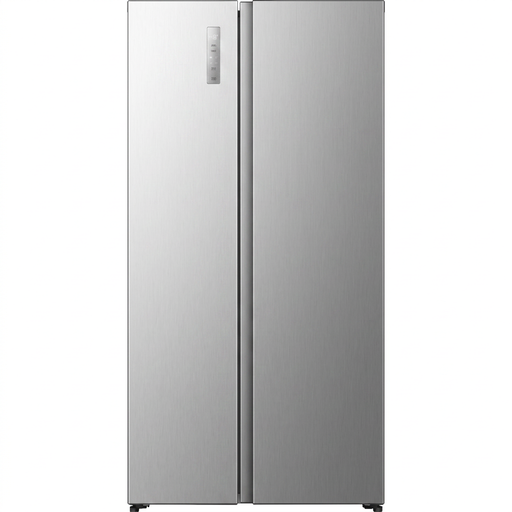
Hisense RS3P558NEID American Side-by-Side, 544 l
Worth a look if you want to compare a large amount of space for fresh and frozen food in one appliance.
Stated capacities: 347 l for the fridge and 197 l for the freezer. The product details list 254 kWh/an and a D energy rating; they also mention No Frost and Multi Air Flow.
Joybuy
 No image available
Haier HTW5618ENMG, 3 doors, 360 l
Compare this model if you’re looking for several zones and drawers to organise fresh and frozen food.
Stated capacities: 235 l for the fridge and 125 l for the freezer. The product details list 271 kWh/an, an E energy rating and three freezer drawers; they also mention Total No Frost, My Zone and Humidity Zone.
Joybuy
 No image available
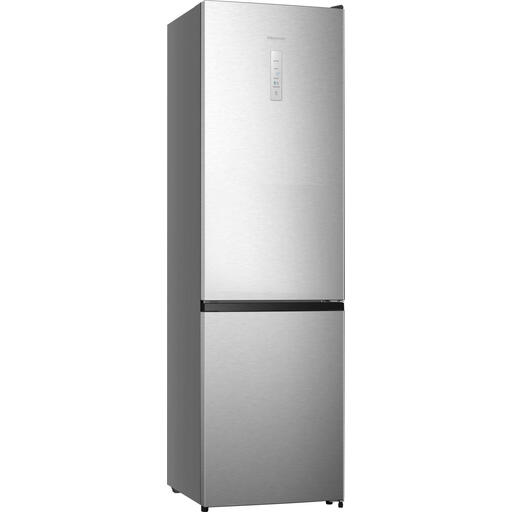
Hisense RB440N4CCB, 336 l
Worth a look if you want to compare the space for fresh and frozen food, as well as the kWh/an.
Stated capacities: 238 l for the fridge and 98 l for the freezer. The product details list 135 kWh/an and a B energy rating, along with No Frost, five shelves and three freezer drawers.
Joybuy
 No image available
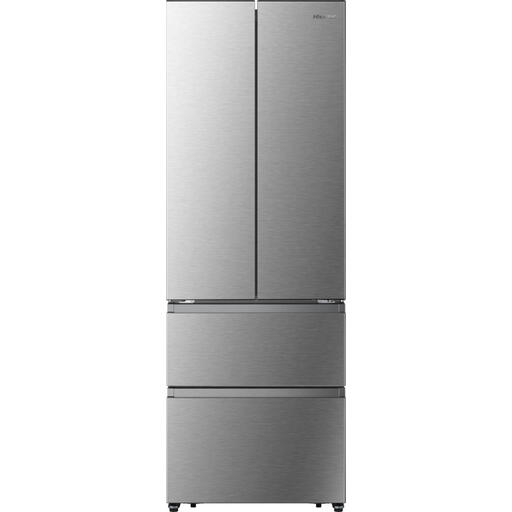
Hisense RF632N4BCE French Door, 485 l
Compare this model if you want to assess how a large fridge compartment and a freezer compartment share the space in one appliance.
Stated capacities: 336 l for the fridge and 149 l for the freezer. The product details list 295 kWh/an and mention Total No Frost and Multi Air Flow.
Joybuy
 No image available
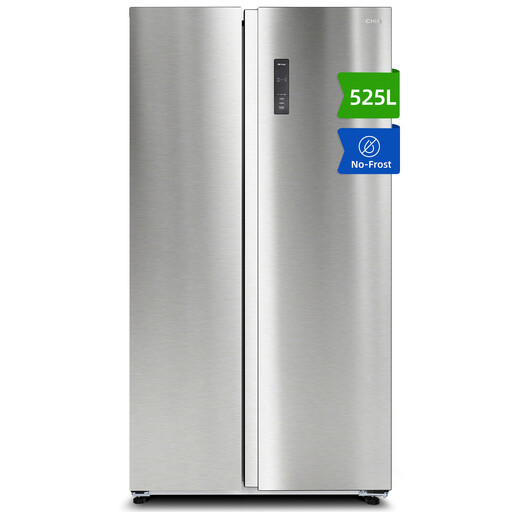
CHiQ JR525WSE, Side-by-Side, 525 l
Worth a look if you want to compare the capacities of two side-by-side compartments and the interior storage options.
Stated capacities: 333 l for the fridge and 192 l for the freezer; the product details list an E energy rating. They also mention adjustable shelves, freezer drawers, a reversible door and a ventilated installation.
Joybuy
Frequently asked questions
How do you choose the right capacity without using a rule of thumb per person?
After a typical shop, note how much space your food takes up, then compare the capacities for fresh and frozen food separately, as well as how easy the storage is to access. The EU energy label lists these capacities separately: a large total capacity doesn’t guarantee a split that suits your shopping, as the European Commission points out.
What should you check before installing an appliance in a kitchen or utility room?
Measure the delivery route and the space where the appliance will go, including room for the doors to open, then check the model’s instructions for ventilation clearances. If the freezer is going in a cold room, also check the ambient temperature range specified for that model: it varies by appliance.
Does a larger capacity necessarily keep food fresher for longer?
No: a larger capacity doesn’t guarantee better food preservation. According to Anses, this depends in particular on the temperature and how evenly it’s maintained. The agency gives an ideal temperature of between 0 and +4 °C at the coldest point. Check the actual temperature and follow the food storage guidance.
How can you estimate the energy use of a fridge-freezer compared with two separate appliances?
Check the kWh/an listed for each appliance. For a two-appliance set-up, add together the stated annual consumption before comparing it with that of a fridge-freezer that meets a similar storage need. ADEME points out that cooling appliances run continuously; the European Commission explains that the label provides information on energy use and capacity.
Is collection of your old appliance free when you replace it in France?
Under the “one-for-one” take-back scheme, the DGCCRF states that when you buy a new appliance, the retailer must take back an equivalent used appliance free of charge. Ask how the collection will be arranged before delivery.


