Households that prepare meals in advance
If you regularly have several portions in the freezer, compare your usual stock with the freezer capacity of a fridge freezer before considering a separate appliance.


If you mainly store fresh food, start by working out how much fridge space you need. A fridge freezer combines fresh and frozen storage in one appliance, provided both compartments meet your needs. If you regularly need more room for frozen meals, a separate freezer may be worth considering if you have the space. In every case, compare the usable capacity of each compartment, the dimensions and the exact model’s annual energy consumption.
If you regularly have several portions in the freezer, compare your usual stock with the freezer capacity of a fridge freezer before considering a separate appliance.
A fridge freezer can combine both functions in one space. Check the width, depth and height, as well as how the doors open, then make sure each compartment offers enough room.
Fridges and freezers run continuously, according to ADEME. To choose the right capacity without relying on the energy rating alone, check the model’s annual energy consumption too.
Consider this if: you mainly store fresh food and have little need for frozen storage, or already have it covered.
Check: if you want to store meals in a small freezer compartment, assess its capacity separately.
Consider this if: you need space for both fresh and frozen food but have room for just one appliance.
The trade-off: the space available in each compartment depends on the model you choose. Check that the freezer section can hold your usual portions.
Consider this if: you regularly need more freezer space than a fridge freezer can offer.
The trade-off: you’ll need room for a second appliance, which will use extra energy while running continuously.
| What to consider | What to check | How it fits my needs |
|---|---|---|
| Usable capacity | Compare the fridge and freezer capacities in litres separately, then consider how much space your meals take up. For fridge capacity, UFC-Que Choisir suggests 100 to 150 litres for one person, plus 50 litres for each additional person. | I prepare several portions to freeze, so the total capacity doesn’t tell me whether the freezer compartment will be big enough. |
| Fit and storage | Measure the height, width and depth, and allow for the clearances needed for installation and opening the doors. Check that the drawers and compartments fit your containers. | There’s only room for one appliance in my kitchen, so I need to be able to fit it in and reach the meals stored inside. |
| Energy consumption | Check the energy rating and annual consumption in kWh on the exact model’s label. Compare them alongside the capacity and format, rather than looking at the rating letter alone; ADEME notes that these appliances run continuously. | If I add a freezer, I want to factor in its energy use as well as my fridge’s. |
| Everyday use | Check the stated noise level if the appliance will be near a living area, and find out how the relevant compartment defrosts. Also check the installation requirements in the manual. | I often open the freezer to take out portions, so easy-to-reach storage matters just as much as the stated capacity. |
A fridge freezer may offer plenty of space overall, but the balance between fridge and freezer capacity might not suit your needs.
Think about your usual portions and shopping, then compare the usable capacity of each compartment.
A separate appliance needs a second spot; an upright freezer and a chest freezer also have different access and floor-space requirements.
Measure the space, check the model’s installation requirements and choose a second appliance only if you regularly need extra freezer capacity.
This second appliance will also run continuously, as ADEME points out for freezers.
The letter alone doesn’t tell you how much of the capacity you’ll use or what the model’s annual energy consumption is.
When comparing appliances that meet the same storage needs, check the kWh/year on the label alongside the capacity of each compartment.
Defrosting, storage options and stated features can vary from one model to another.
Note the full model reference and check the product specifications and manual for the model and compartment you’re considering.
These models show some of the formats and dimensions to compare with your available space; their features don’t apply to every model from the same brand.
The KGN39VLCT-B is an example of a freestanding fridge freezer to consider if you want to store fresh and frozen food in one tall appliance.
The FNe 4605 Pure NoFrost is an example of a separate upright freezer to consider when your frozen food needs its own dedicated space.
The W7X 82I OX is another freestanding fridge freezer to consider if you have a space around 60 cm wide.
These five appliances combine fridge and freezer storage in one unit. They let you explore this format, including freestanding models and one integrated model, but don’t replace the initial choice between a fridge freezer, a fridge and a separate freezer.
 Image unavailable
Worth considering if you want to store fresh and frozen food in one appliance. The stated total capacity is 344 L; check the capacity of each compartment and the installation clearances before you choose.
 Image unavailable
Its four-door design is worth comparing with the way you usually organise your meals. The model name indicates Total No Frost and an E energy rating; at a stated width of 83,3 cm, you’ll need to check the space, access route and door clearance.
 Image unavailable
Consider this fridge freezer if you’re looking for one appliance for fresh and frozen food. Its stated total capacity is 333 L; check how that capacity is divided between the compartments, particularly the separate cooling compartment mentioned in the product details, and allow for the stated installation clearances.
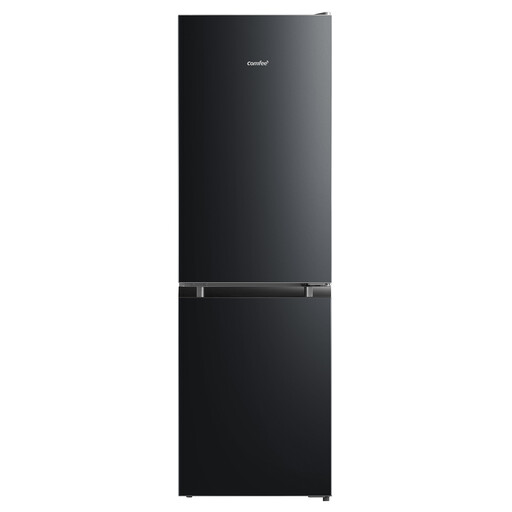 Image unavailable
Consider this format if a total capacity of 174 L is enough for your frozen food. The model is listed with a reversible door and Low Frost; check the capacity of each compartment, the installation requirements and annual energy consumption. Low Frost doesn’t mean you’ll never need to defrost it manually.
 Image unavailable
Worth considering if your kitchen has a housing space for an integrated fridge freezer. The model is listed with TwinTech No Frost and an E energy rating; check that the housing space and fixings are compatible, and review the usable capacity of each compartment before relying on the stated total capacity.
Start by thinking about how much food you usually keep frozen. A fridge freezer should be enough if its freezer compartment can hold your usual stock and the fridge meets your fresh food needs. If you regularly need more freezer space, a separate appliance may be a good option, provided you have room for a second appliance; UFC-Que Choisir highlights the benefits of traditional freezers for large families.
Check the A to G energy rating alongside annual energy consumption and the model’s specifications, rather than looking at the rating alone. The Ministry for the Ecological Transition describes the A to G scale, and the European Commission lists household refrigeration appliances in EPREL. If you’re choosing between two capacities, compare the capacity of each compartment too.
Measure the height, width and depth of the space, then compare them with the specifications for the exact model. Allow for the clearances stated in the manual, room to move around and space for the doors to open. For an integrated appliance, check that the housing space and fixings are suitable.
Check the kWh/year shown for each model and compare it with their format and usable capacity. A separate freezer is in addition to the fridge you already use, so factor in both appliances when weighing up this option. ADEME notes that fridges and freezers run continuously.