For a weekly shop and regular batches of frozen portions, a fridge freezer gives you separate space for fresh and frozen food in one appliance. A small freezer compartment is better suited to occasional freezing. If your regular stock outgrows the capacity of the fridge freezer you’re considering, a separate freezer may be a better fit, provided you have room for it and take into account the energy used by a second appliance running continuously, as ADEME points out.
Which setup is right for you?
Households that shop for the week
If fresh food takes up most of your storage space but you also freeze portions regularly, start by comparing the capacity of each compartment in a fridge freezer. The total capacity alone won’t tell you how the space is divided.
Households that freeze prepared meals
Count the portions and frozen foods you keep at the same time before choosing. UFC-Que Choisir points out that a small freezer compartment may not be enough for households that eat a lot of frozen food, so it’s worth paying close attention to its capacity.
Households building up a large frozen-food stock
A separate freezer may be worthwhile if you regularly keep more frozen food than a fridge freezer suited to your shopping can hold. You’ll also need a suitable place for it and should factor in the fact that the additional appliance runs continuously, as ADEME notes.
What should you compare before choosing?
First work out how much space you need for fresh and frozen food. Then compare the energy use and practical considerations of appliances that meet both needs.
Small freezer compartment
Choose this if: fresh food makes up most of your shopping and you only freeze a few items or portions at a time.
Keep in mind: freezer space can soon run short if you build up a stock of prepared meals and frozen food.
Fridge freezer
Choose this if: you store a weekly shop and regularly freeze portions, but don’t need to build up a large stock.
Keep in mind: the balance of fresh and frozen storage varies by model. A large total capacity doesn’t guarantee enough room in the compartment you need.
Separate freezer
Choose this if: bulk shopping or preparing lots of meals means you need dedicated freezer space on a regular basis.
Keep in mind: a second appliance needs space and runs continuously. Check that the room is suitable for its climate class, too.
| Criteria | What to check | Best suited to |
|---|
| Usable capacity |
Compare the fresh and frozen storage capacities in litres separately on the energy label. UFC-Que Choisir suggests 100 to 150 L of usable capacity for one person, plus 50 L for each additional person as a starting point. Adjust this guide to suit the food you actually store. |
After my weekly shop, I want enough room for fresh food without choosing an appliance that’s too large for the few portions I freeze. |
| Frozen-food stock |
Work out how many portions and frozen items you keep at the same time, then check the freezer compartment’s capacity in litres. If you’re considering a separate appliance, compare how easy it is to access food in an upright freezer or chest freezer. |
If I prepare several meals in advance, I need enough room to store them alongside my other frozen food. |
| Energy use |
Compare kWh/year alongside usable capacity and appliance type, rather than relying on the energy-efficiency class alone. The European energy label shows this information; ADEME reminds shoppers that fridges and freezers run continuously. |
I’d rather choose an appliance that suits my habits, especially if I’m thinking of adding a freezer that will be running all year round. |
| Noise and maintenance |
Check the noise emissions in dB and the noise class on the label. For the exact model you’re considering, check the cooling system, defrosting guidance and installation requirements. |
Noise matters to me in an open-plan kitchen. I also want to know what maintenance the freezer will need. |
What should you watch out for?
-
Looking only at the total capacity
An appliance may have a large overall capacity without offering the freezer space you need for prepared meals. The European energy label shows the capacities of the fresh and frozen compartments separately.
Estimate how much you store in each compartment, then compare your needs with the capacity shown for the model.
-
Choosing a small freezer compartment for regular freezing
UFC-Que Choisir says that a small freezer compartment may not be enough if you eat a lot of frozen food. Prepared portions you make each week also take up space at the same time.
Count the portions and frozen items you keep at once before choosing between a small compartment, a fridge freezer and a dedicated freezer.
-
Adding a freezer without checking where it will go
A chest freezer needs floor space, and the appliance must be suitable for the room temperatures specified by its climate class.
Measure the space and clearance needed to open it, then check the climate class and installation requirements for the model you choose.
An additional freezer runs continuously, as ADEME points out.
Which brands and models should you consider?
Bosch
Worth comparing if you’re looking for an integrated fridge freezer and want to explore different defrosting options.
- Bosch lists the KIN86SFE0 integrated fridge freezer with No Frost.
- Check the technology and dimensions on the product page for the model you’re considering. These features don’t apply to every Bosch appliance.
Beko
Worth a look if the freezer’s cooling system and freezing functions are among your priorities.
- Beko’s product page for the B3RCHE305HW lists Semi No Frost for the freezer and a fast-freeze mode.
- These details apply to this model, so check the specifications of the one you’re comparing.
Liebherr
A model to consider if you’re comparing the capacity and noise levels of an integrated fridge freezer.
- Liebherr lists a total capacity of 254 L and a noise level of 34 dB for the ICNd 5133 Plus NoFrost.
- These figures are for this specific model, not all fridge freezers from the brand.
Fridge freezers to explore on Joybuy
These fridge freezers combine fresh-food storage and freezing in one appliance. For weekly shopping and prepared meals, focus on how much space each compartment offers. This selection doesn’t replace the decision between a small freezer compartment, a fridge freezer and a separate freezer.
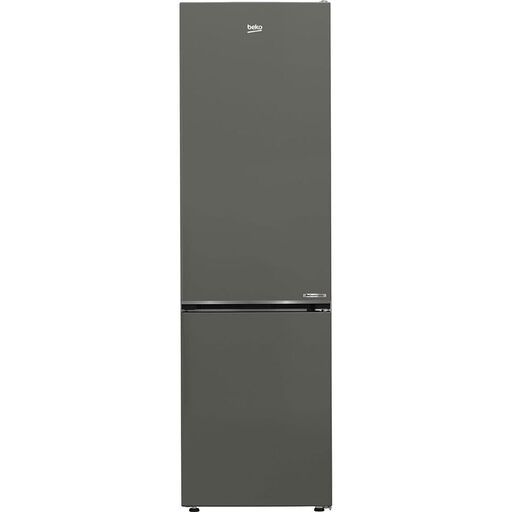 Image unavailable
Beko B5RCNE406HG, 355 L fridge freezer, Total No Frost
If you do a weekly shop and regularly freeze portions, check that the way the 355 L is divided suits the amount of fresh and frozen food you store.
Freestanding grey model, with energy class C and Total No Frost technology as listed in the product title.
View on Joybuy
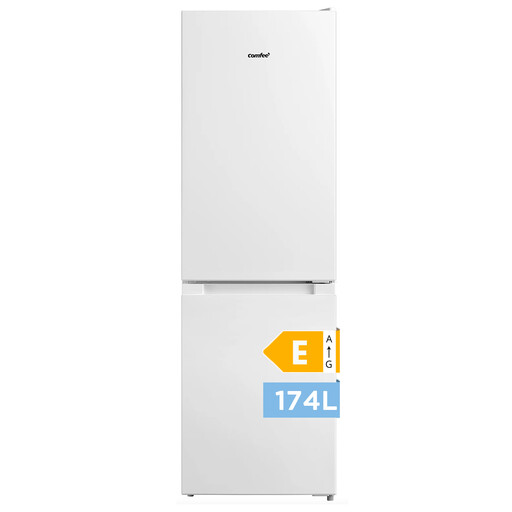 Image unavailable
Comfee' RCB169WH2(E), 174 L fridge freezer, Low Frost
If you freeze portions, check how much room the freezer compartment offers before choosing this size.
The product title lists a 70/30 split, a height of 150 cm, a 4-star freezer, 39 dB and a reversible door. Low Frost doesn’t mean you’ll never need to defrost it.
View on Joybuy
 Image unavailable
Samsung RB33B612EBN, 344 L black fridge freezer
To store fresh shopping and frozen meals together, compare the capacity of each compartment, not just the stated 344 L total.
The product title lists energy class E.
View on Joybuy
 Image unavailable
Haier HTW5618ENMG, 360 L three-door fridge freezer
If you regularly store prepared meals, check that the freezer capacity and three-door layout suit the portions you keep.
The product title lists Total No Frost, energy class E, Wi-Fi and My Zone.
View on Joybuy
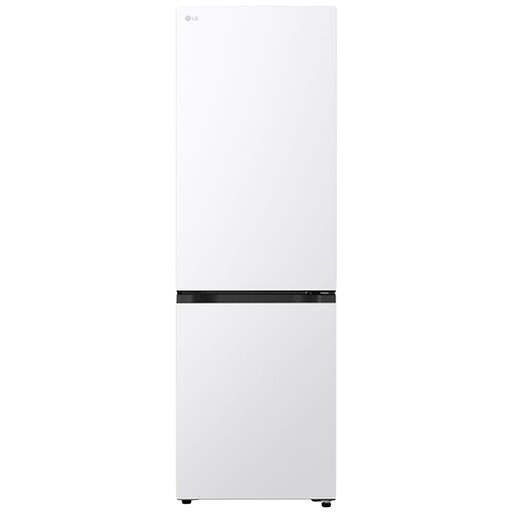 Image unavailable
LG GBBSJ1CCSW, 333 L white fridge freezer
If you’re choosing this fridge freezer to store frozen meals, compare the freezer compartment’s capacity with the number of portions you keep at once.
The product title lists energy class C and the NatureFRESH, DoorCooling+ and LinearCooling names. Check the exact specifications of the model before assuming these features affect food storage.
View on Joybuy
Frequently asked questions
What capacity do I need for a weekly shop?
UFC-Que Choisir suggests 100 to 150 L of usable capacity for one person, plus 50 L for each additional person as a starting point. Adjust this to suit your shopping and frozen portions, then check the fresh and frozen capacities separately on the model’s label.
How can I find out how much freezer space is actually available?
Check the capacity of the freezer compartment rather than the total capacity alone. The European energy label shows the fresh and frozen compartment capacities separately, so compare the relevant figure with the portions and frozen food you store at the same time.
Do I need No Frost for prepared meals?
No. The amount of food you want to store determines how much freezer space you need. No Frost is mainly about frost and maintenance, so check that the model you’re considering has this technology, but don’t let it distract you from checking its capacity.
What temperature should I set the fridge and freezer to?
France’s Ministry of Agriculture recommends +4 °C for the fridge and -18 °C for the freezer. Also follow the storage instructions on food packaging and maintain the cold chain.


