Households doing a big weekly shop
You fill the fridge and regularly add food to the freezer after your shop. Look at the freezer capacity and the model’s freezing capacity, rather than its total capacity alone.


If you need to store fresh and frozen food in one place, compare fridge-freezers by looking at the freezer capacity separately. If your fridge already meets your needs but you’re short of freezer space, consider adding a separate freezer: an upright model makes portions easier to access, while a chest freezer requires space for the lid to open and a plan for organising your food. Then check the dimensions, kWh/year and noise level of each model; ADEME points out that cooling appliances run continuously.
You fill the fridge and regularly add food to the freezer after your shop. Look at the freezer capacity and the model’s freezing capacity, rather than its total capacity alone.
If you freeze meals and bulk-bought food, access to drawers or baskets matters just as much as the space available: you need to be able to find what you’re looking for and rotate your stock.
Whether you’re choosing one appliance or adding a freezer in the kitchen, pantry or outbuilding, check its dimensions, noise level and the model’s permitted installation temperature range.
For your weekly shop, first decide whether you want one appliance or extra freezer storage, then compare the capacity actually set aside for freezing. The models mentioned by Liebherr, Haier and Whirlpool illustrate different configurations; there’s no single format that’s best for every household.
Consider this if: you need to keep fresh and frozen food in one place.
Bear in mind: the total capacity includes both compartments, so check the space allocated to the freezer and the external dimensions.
Consider this if: you only need to freeze food occasionally and the compartment is large enough for your usual additions.
Bear in mind: don’t assume this compartment can replace a separate freezer without checking its capacity and freezing capacity.
Consider this if: your current fridge is big enough and you’d like to organise portions and frozen food in easy-to-access drawers.
Bear in mind: you’ll need space for a second appliance and should check that the room temperature is suitable for the model.
Consider this if: you want separate freezer storage and have room to access the appliance from above.
Bear in mind: opening the lid and organising your food require space and a suitable storage system.
| Feature | What to check before you buy | What shoppers say |
|---|---|---|
| Freezer capacity | Freezer capacity in litres, separate from fridge capacity; freezing capacity in kg/24 h for larger additions. | After a big shop, I want enough room for frozen food without relying on the appliance’s total capacity. Around 31% of consumers prioritise this storage space. |
| Adding food to the freezer | Freezing capacity in kg/24 h and whether the specific model has a fast-freeze function. | When I’m freezing several meals or shopping-basket items on the same day, I look for an appliance that can handle the extra food. For around 31% of consumers, freezing capacity is the top priority. |
| Storage and access | How accessible the drawers or baskets are; the space needed in front of a door or above a lid. | I sort portions by category and want to find them without rummaging through the whole freezer. Easy access comes first for around 23% of consumers. |
| Energy use and installation | Energy consumption in kWh/year, noise level in dB(A), dimensions and the permitted temperature range for the room. | If the appliance is near living areas or in an outbuilding, I need to balance energy use and noise with where it can go. Around 15% of consumers prioritise these considerations. |
On a fridge-freezer, this figure combines the fridge and freezer compartments, so a large appliance may leave you with less freezer space than you expect.
Compare the capacity of each compartment in litres and, if you often freeze large amounts at once, check the freezing capacity in kg/24 h.
NoFrost refers to a feature related to frost; it doesn’t tell you how noisy the appliance is, how long food stays frozen during a power cut or how much energy it uses. ADEME notes that cooling appliances run continuously.
For the models you’re considering, compare the kWh/year, dB(A), capacities and stated storage times rather than relying on feature names alone.
The lid opens upwards, and food stored at the bottom can be harder to find day to day.
Measure the route in and the space available, then work out how you’ll organise food in baskets or compartments.
The minimum permitted room temperature depends on the model. Haier says the H4F226SEH1 can be used at temperatures as low as −15 °C; this doesn’t apply to other appliances.
Check the permitted installation temperature range or climate class in the manual for your chosen model and make sure it suits the conditions in your space.
Worth considering if you’re looking for a large-capacity fridge-freezer and it fits your space.
Worth considering if you want to add a drawer-style upright freezer while keeping your existing fridge.
Worth considering if you want extra storage in a chest freezer.
Worth considering if you want to compare the stated capacities and features of different types of freezer.
Worth considering for appliances that, depending on the model, have separate compartments and air-circulation systems.
These appliances suit three ways of organising your weekly shop: keeping fresh and frozen food together in a fridge-freezer, or adding a chest or upright freezer to your existing appliances. Compare freezer capacity with your usual needs before choosing a format.
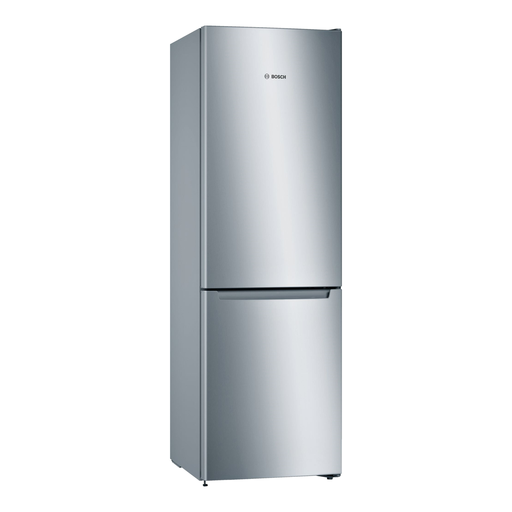 Image unavailable
Keep fresh and frozen food in one appliance for your weekly shop.
Listed total capacity: 282 L; energy class E. Compare the freezer capacity and freezing capacity with the amount you usually add.
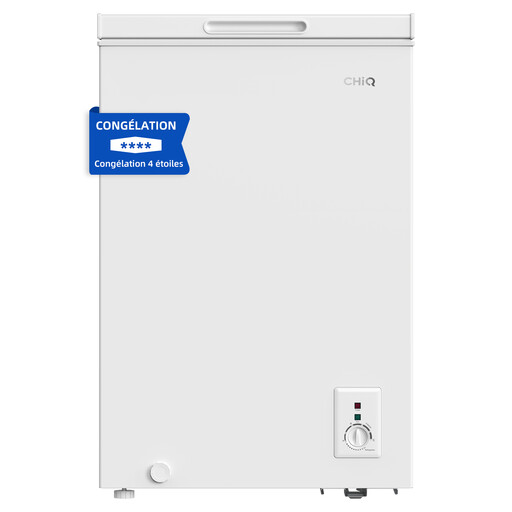 Image unavailable
Add extra frozen-food storage with easy access from above.
The model name indicates a removable basket, adjustable thermostat and energy class E. Check the space needed to open the lid, as well as the kWh/year and storage time for this model.
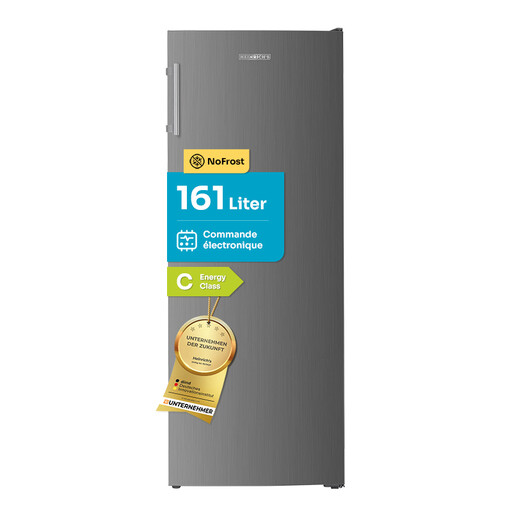 Image unavailable
Add separate freezer storage and organise portions in drawers.
This model is listed with a capacity of 161 L, three drawers and a stated temperature setting range of −14 °C to −22 °C. Check its dimensions, kWh/year and installation requirements before deciding where to put it.
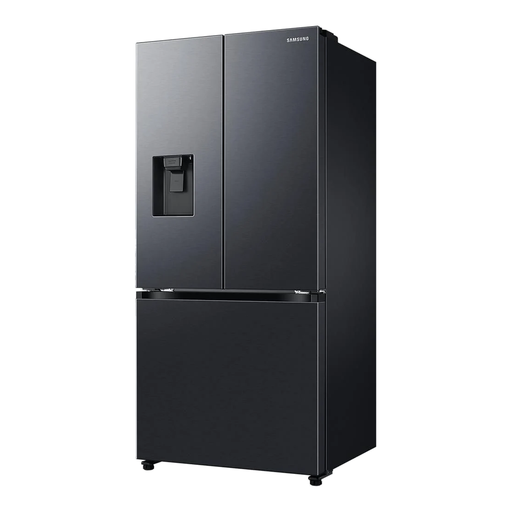 Image unavailable
For households looking to combine refrigeration and freezing in a multi-door appliance.
The listed total capacity is 495 L: check how much of it is allocated to the freezer. Measure the space available too, and compare the model’s freezing capacity with what you add each week.
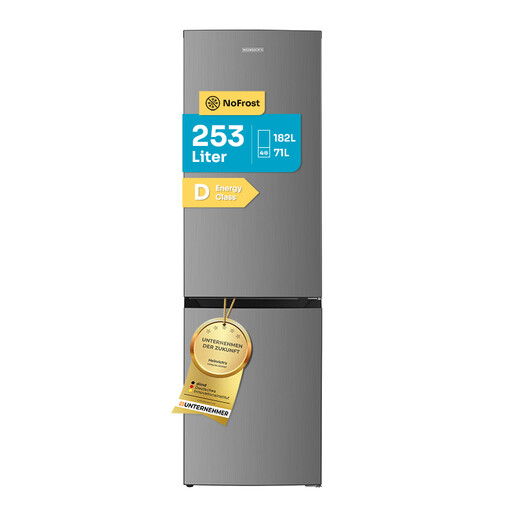 Image unavailable
Keep fresh and frozen food in one appliance, if 71 L of freezer space is enough for your usual needs.
The model is listed with NoFrost and a noise level of 39 dB. Compare its 71 L freezer with the capacity of other fridge-freezers, and check the freezing capacity if you often add several items at once.
Compare the A to G energy rating, kWh/year, compartment capacities and noise level. The ministry responsible for the ecological transition explains the A to G energy scale; Electrolux also details the capacities and noise levels stated for its freezers. For a fridge-freezer, pay particular attention to the freezer capacity separately from the total.
Yes, as long as the model’s permitted installation temperature range covers the conditions in your garage. Haier says the H4F226SEH1 can be used at temperatures as low as −15 °C, but this doesn’t apply to all freezers: check the manual for the model you’re considering.
Compare the kWh/year figures for the models you’re considering. If you keep your existing fridge and add a freezer, take the energy use of both appliances into account. ADEME points out that they run continuously and that a larger size or extra features can increase energy use.
Arrange for it to be taken back or taken to an appropriate electrical and electronic equipment recycling scheme. The ministry responsible for the ecological transition describes the ‘one-for-one’ take-back option in shops when buying a product of the same type; check the practical arrangements with the retailer.