Households that regularly fill the freezer
If you shop less often and buy lots of frozen food, check the freezer capacity in litres, not just the appliance’s total capacity. Drawer access matters too when you’re storing several batches of food.


If you shop less often, start by considering how much freezer space your shopping really needs. A fridge-freezer is a good choice if you need fresh and frozen food in one appliance, while a separate freezer is worth considering if you keep a large stock of frozen food and have room for two appliances. If you freeze very little, a fridge with a freezer compartment may be enough. In every case, compare the capacity of each compartment, the space needed for installation and the kWh/year figure, rather than looking at the energy rating alone.
If you shop less often and buy lots of frozen food, check the freezer capacity in litres, not just the appliance’s total capacity. Drawer access matters too when you’re storing several batches of food.
A single appliance can meet this need if both compartments have enough room for the food you usually buy. Compare how the space is divided before choosing a fridge-freezer.
In a compact kitchen or an alcove, check the route into the room, door clearance and the gaps specified in the manual. As ADEME points out, refrigeration appliances run continuously, so check the kWh/year figure for the model you’re considering too.
Start by working out how much fresh and frozen food you need to store between shopping trips. The configuration then determines how much space is available in each section and what’s involved in installing the appliance.
Consider this if: you regularly use both compartments and only have space for one appliance.
Bear in mind: the space available for frozen food depends on how each model is divided, even if its total capacity looks generous.
Consider this if: most of your bulk shopping is fresh food and you freeze very little.
Bear in mind: the compartment may limit how much frozen food you can store, so check its capacity.
Consider this if: storing frozen food is a priority and you have room for two appliances.
Bear in mind: you’ll need space for both appliances, and both run continuously, as ADEME highlights.
| Criteria | What to check | Who this matters to |
|---|---|---|
| Frozen food capacity | Compare the freezer compartment’s capacity in litres with the amount you need to store after your biggest shop. The energy label shows this separately from the capacity of the unfrozen sections, according to the European Commission. | When I shop less often, I want to keep a good stock of frozen food without having to change what I buy because there isn’t enough room. Around 42% of consumers would prioritise this need. |
| Balance of fresh and frozen food | Check the fridge and freezer capacities separately: the total capacity doesn’t show how the space is divided. | If I store fresh food every day as well as keeping frozen food, I need enough room in both sections. This would be the main priority for around 33% of consumers. |
| Space and energy use | Measure the route into the room and the installation space, then check the clearances in the manual. Compare the kWh/year figures on the labels of models that meet your needs. | In a kitchen where every centimetre counts, I’m looking for an appliance that can be installed properly without choosing more capacity than I need. Around 25% of consumers would prioritise this constraint and continuous energy use. |
Two appliances with a similar total capacity can offer different amounts of space for fresh and frozen food. So a large total capacity doesn’t tell you whether all your shopping will fit in the freezer.
Think about what you buy on your biggest shopping trips, then compare the capacity of each compartment in litres on the energy label and product details.
The energy rating doesn’t replace the stated annual energy consumption. ADEME reminds shoppers that refrigeration appliances run continuously, so the size you choose matters too.
Consider the kWh/year figure alongside the usable capacity, and compare appliances that meet similar storage needs.
The appliance dimensions don’t account for the route into the kitchen, door clearance or ventilation gaps. A Bosch manual, for example, warns against blocking the ventilation openings.
Before ordering, measure the route into the room and check the manual for the exact model number to find out what’s required for installation.
The average figures by appliance category published by ADEME don’t compare appliances with the same capacities. On their own, they can’t tell you whether a separate setup or a particular fridge-freezer is the better choice.
Add together the kWh/year figures for the fridge and freezer you’re considering, then compare the total with that of a fridge-freezer offering suitable usable capacity for your shopping.
These examples show the features to compare against your shopping needs and available space; their specifications don’t represent every appliance from that brand.
The freestanding KGN39VLCT fridge-freezer is an example of how space can be divided: Bosch lists 260 L for the fridge and 103 L for the freezer.
Samsung France lists the RB34C602DSA/EF fridge-freezer with a total capacity of 344 L and a D energy rating.
Haier lists the freestanding HDPW5618CNPK fridge-freezer with a total capacity of 352 L and a C energy rating.
These fridge-freezers combine both sections in one appliance. If you shop less often, total capacity is a useful starting point. Also check how much space is allocated to each compartment, the kWh/year figure and the installation requirements for your chosen model.
 Image unavailable
Worth considering if you want to keep fresh and frozen food in one three-door appliance. The model name indicates Total No Frost and an E energy rating. Check how the 360 L is divided and review the installation requirements before choosing.
 Image unavailable
Worth considering if you’re looking for a fridge-freezer for fresh food and a supply of frozen food. The model name indicates a C energy rating. Check the exact model and the capacity of each compartment on its energy label, along with the installation requirements.
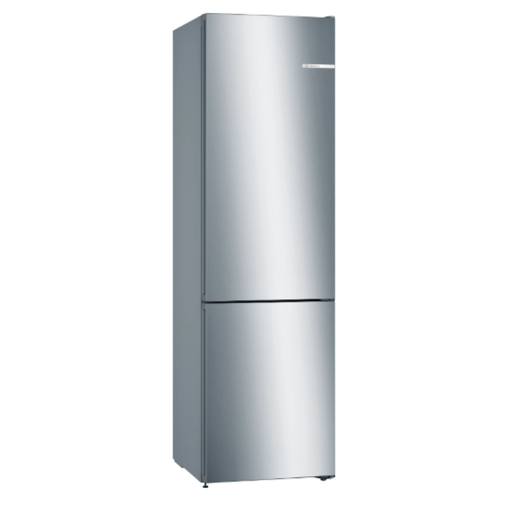 Image unavailable
Compare this model if you want to keep fresh and frozen food together in one appliance. The model name indicates an E energy rating. Check how many litres are allocated to the freezer, and the dimensions needed for access and installation.
 Image unavailable
Worth considering if your shopping calls for a multi-door appliance with a total capacity of 467 L. The model name indicates Total No Frost and an E energy rating. Measure the installation space and check the fridge and freezer capacities separately.
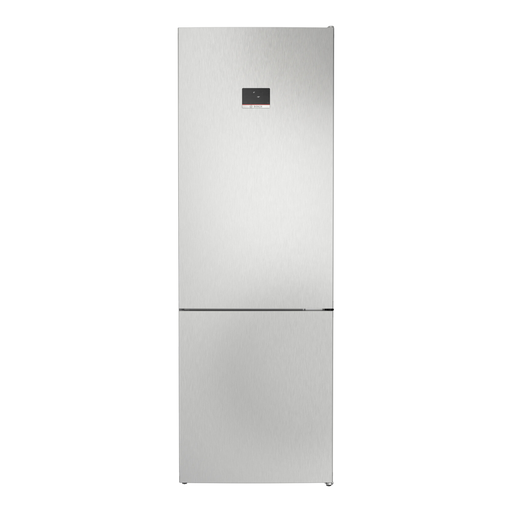 Image unavailable
Worth considering if you’re looking for a 440 L fridge-freezer to store fresh and frozen food between shopping trips. The model name indicates a D energy rating. Check the capacity of each section, the kWh/year figure and the manual for freezer maintenance and ventilation requirements.
Start by comparing the kWh/year figures and the capacities of the fridge and freezer compartments, then consider the noise level and rating for your chosen location. The European Commission says this information appears on the energy labels of refrigeration appliances. It’s most useful when you compare it with the space you need.
No. The energy rating alone doesn’t tell you whether an appliance will use less energy in absolute terms than another with a different size or configuration. Check the kWh/year figures on their labels and compare them with the usable capacity you need for your shopping, following the guidance from ADEME and the European Commission.
Measure the appliance and the entire route to its intended location, then check the door clearance and the available socket. Check the manual for the exact model number to find out what ventilation clearances are needed. A Bosch manual, for example, says that the ventilation openings must not be blocked.