Households short on freezer space
If you buy in bulk, prepare meals in advance or regularly store frozen food, start by checking the freezer capacity, then consider how much room a separate appliance would need.


If you store fresh and frozen food in one space every day, choose a fridge freezer with compartments that suit your habits. A fridge is a good choice if you rarely freeze food or already have a freezer. A separate freezer may be worth considering if your stocks regularly exceed the capacity of a fridge freezer, provided you have room for a second appliance that runs continuously. Then check the dimensions and, for appliances of similar size and capacity, compare the kWh/year shown on the energy label.
If you buy in bulk, prepare meals in advance or regularly store frozen food, start by checking the freezer capacity, then consider how much room a separate appliance would need.
You’re replacing an appliance that runs day and night. As ADEME points out, size and features also affect energy use, so compare kWh/year across models of similar size and capacity.
If you often shop for just a few items and freeze very little, look for a capacity that suits the food you usually buy. Don’t forget to allow room to open the doors and install the appliance.
Consider this if: you mainly store fresh food and rarely freeze anything, or already have a freezer.
The trade-off: a small freezer compartment may not meet your needs if you regularly store frozen food.
Consider this if: you need to keep fresh and frozen food in one space.
The trade-off: its total capacity can make it easy to overlook a freezer compartment that’s too small for your needs.
Consider this if: your bulk shopping or batch cooking regularly takes up more space than a fridge freezer can offer.
The trade-off: it takes up a second space and also runs continuously.
Once you’ve chosen a style, check the capacity of each compartment and your kitchen’s limitations before comparing energy use or extra features.
| Criteria | What to check | Who it matters to |
|---|---|---|
| Fresh and frozen food storage | Compare the fridge and freezer capacities in litres separately. Choose sizes that suit how often you shop and prepare food. | If I often freeze meals or bulk purchases, I need enough space in the right compartment, not just a large total capacity. Around 33% of consumers prioritise storage space. |
| Annual energy use | Check the kWh/year and energy rating on the label, comparing appliances of the same type and similar capacity. | When replacing an appliance that stays on all year, I want to keep energy use under control without choosing more capacity than I need. This is a priority for around 27% of consumers. |
| Space and installation | Measure the space, delivery route and door clearance. Follow the clearances specified in the manual. | In a compact kitchen, I need to be able to get the appliance into place and open its doors without obstruction, even if that limits its capacity. Space is the top priority for around 27% of consumers. |
| Defrosting and specific storage features | Check which compartments have No Frost and what storage zones are included on the specific model. | If I’m mainly concerned about defrosting or organising certain foods, I look at the features of the compartment I’ll use. Around 13% of consumers prioritise these features. |
According to the European Commission, the energy label for the domestic refrigeration appliances covered includes information such as annual energy use, capacity and noise. Extra features don’t replace the need to check this information for the model you’re considering.
A small fridge, a large fridge freezer and two separate appliances don’t offer the same solution. The energy rating alone won’t tell you which setup is right for you.
Work out how much fridge and freezer space you need, then compare kWh/year across appliances of similar size and capacity.
ADEME points out that a larger size and unnecessary extra features can increase the energy use of an appliance that runs continuously.
Think about a typical weekly shop: how much space do your fresh food, frozen food and home-cooked meals actually take up? Check the capacity of each compartment rather than looking only at the total.
An appliance that suits your storage needs may still be difficult to deliver or use if its dimensions and clearances aren’t right for your kitchen.
Measure the delivery route and the space where the appliance will go. Also check its depth, door opening and the installation instructions for the exact model.
Taking away your old appliance, delivery, unpacking and connecting the new one are separate services. Ecosystem, for example, offers free “one-for-one” collection when you buy an equivalent new appliance.
Before you order, check the collection terms and confirm the delivery location and any installation services separately.
The range includes fridges, fridge freezers and freezers.
The range includes fridges and fridge freezers, with some models listed as No Frost.
Some fridge freezers in the range combine BioFresh zones with NoFrost.
The range includes three-door fridge freezers and models listed as No Frost.
These models combine fridge and freezer storage in one appliance. Compare their total capacity with your actual needs, then check the space in each compartment, the dimensions and the energy label before replacing your appliance.
 Image unavailable
Worth considering if you’re looking for a large-capacity fridge freezer for fresh and frozen food. The model name lists a capacity of 467 L, Total No Frost and an E rating. Also check that it will fit in your kitchen and that its compartments suit your storage needs.
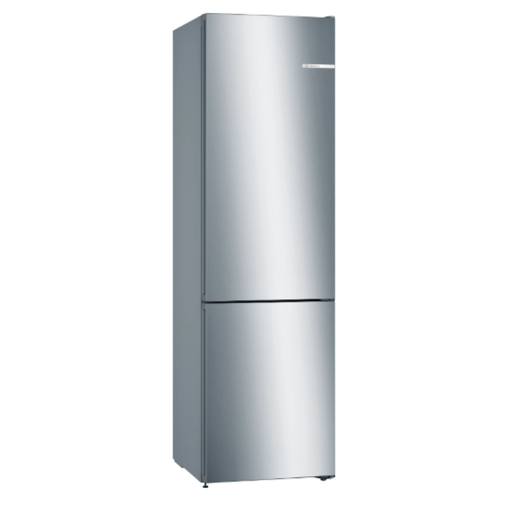 Image unavailable
Worth a look if you want to store fresh and frozen food in one appliance. The model name lists a capacity of 368 L and an E rating. Make sure the capacity of each compartment, door clearance and installation space meet your needs.
 Image unavailable
Worth a look if you’d prefer a more compact fridge freezer with the freezer at the bottom. The model name lists a capacity of 282 L and an E rating. Check the space available in each compartment and the installation dimensions.
 Image unavailable
Worth considering if your lifestyle calls for plenty of space for fresh and frozen food. The model name lists a capacity of 495 L and an E rating. Check the width, door clearance and installation requirements for any features you plan to use.
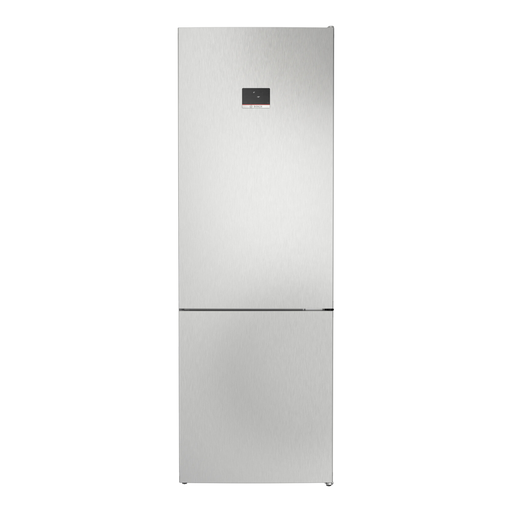 Image unavailable
Worth a look if you need a large-capacity fridge freezer. The model name lists a capacity of 440 L and a D rating. Check how the space is divided, the dimensions and how the freezer defrosts before you choose.
As well as the A to G rating, check the annual energy use in kWh, compartment capacities and noise level. The European Commission says the label for the domestic refrigeration appliances covered includes this information. Its QR code links to the model’s entry in EPREL.
It can be useful if your frozen food and batch-cooked meals regularly exceed the capacity of a fridge freezer, and you have room for a second appliance. According to the Que Choisir guide, an upright freezer makes it easy to access food in drawers, while a chest freezer can offer plenty of capacity but takes up more floor space.
No. Always check the model’s annual energy use and the capacity you need. No Frost relates to frost build-up in the compartments it covers, so check the appliance specifications to see which compartments have this feature.
No, you’ll need to check these services separately. Ecosystem offers free “one-for-one” collection of an old equivalent appliance when you buy a new one. Before ordering, check the retailer’s collection terms and confirm separately whether you want delivery, unpacking and installation.