Which option is right for you?
How much space you need for fresh and frozen food depends on what you actually store between shops, not just the size of your household.
Households that prepare several meals in advance
If you need to keep several meal containers chilled before eating them, look at the fridge’s capacity and layout before considering the appliance’s total volume. Compare the space for chilled meals and frozen portions separately.
Households that stock up on frozen food
If you regularly buy or freeze large quantities of food, freezer capacity and easy access become key considerations. A separate freezer could meet your needs if you have a suitable place for it.
Households considering an appliance outside the kitchen
A garage, cellar or utility room could free up space in the kitchen, but the location needs to suit your chosen model. Check its dimensions and the manufacturer’s specified ambient temperature range before deciding where to install it.
What should you look at first?
To choose between a fridge-freezer, a fridge with more space for fresh food and a separate freezer, work out which compartment is short on space. UFC-Que Choisir distinguishes between formats based in particular on shopping habits and the amount of frozen food people store.
Fridge-freezer
Consider it if: you regularly store chilled meals and frozen food, and have room for just one appliance.
Bear in mind: the capacity of each compartment depends on the model. A large total capacity doesn’t guarantee the right balance for your needs.
Fridge with more space for fresh food
Consider it if: meal containers and fresh ingredients take up more space than your frozen food.
Bear in mind: extra storage or a dedicated fresh-food zone won’t increase your freezer capacity.
Upright freezer
Consider it if: you want to add to your existing freezer and store portions across several drawers or shelves.
Bear in mind: a second appliance needs its own space and power supply.
Chest freezer
Consider it if: frozen food is your priority and you can dedicate some floor space to the appliance.
Bear in mind: make sure the top-opening lid and the way you organise your food will be practical in your chosen location.
| What to consider |
What to check |
Consumers concerned |
| Balance between fridge and freezer space |
Compare the usable litres in each compartment and the space available for your containers. |
If I keep ready meals chilled while also stocking up on frozen food, I need enough room for both. Around 33% of consumers rank this balance as their top priority. |
| Space for chilled meals |
Check the fridge capacity and the layout of its shelves and drawers. |
When my meal containers take up more space than my frozen food, I first look for a way to store them without overcrowding the fridge. Around 27% of consumers prioritise fridge space. |
| Access to frozen food |
Check the freezer capacity and how its drawers or compartments are arranged. |
When I want to find the portions I regularly freeze, I need to be able to tell them apart rather than stack them without any clear organisation. Around 20% of consumers prioritise having an organised freezer. |
| Freezer capacity and installation |
Measure the space, including room to open the appliance, and check its climate class. |
If I’m planning to store a large amount of frozen food, I also need to be able to install and open the appliance in the room I’ve chosen. Around 20% of consumers prioritise freezer capacity. |
When comparing similar models, also look at their annual energy consumption and noise levels. If you plan to keep a freezer outside the kitchen, compare the room temperature with the conditions in the appliance’s instructions. Don’t assume it will be suitable just because of the type of room.
Brands to compare
These brands offer ranges worth exploring for different formats and compartment layouts. The features mentioned below apply to the specific models or ranges stated, not to every appliance they make.
Bosch
Bosch offers freestanding fridge-freezers. The KGN36VLED is one example, with separate fridge and freezer compartments.
- For the KGN36VLED, Bosch lists 237 l of fridge capacity, 89 l of freezer capacity and NoFrost.
- These capacities and features apply to the KGN36VLED. Check the compartment split and dimensions of any other Bosch model.
Whirlpool
Whirlpool offers refrigeration appliances in a range of formats, including fridge-freezers and some freezers with No Frost.
- The range lets you compare different formats based on how much space you need for chilled and frozen food.
- Don’t assume every model has No Frost. Check that the model you’re considering includes it, as well as its compartment capacities and dimensions.
Liebherr
Liebherr offers fridge-freezers and separate freezers. The brand lists a total capacity of 359 l for its CNd 5704 fridge-freezer.
- Its ranges let you compare an appliance with both fridge and freezer sections against a dedicated freezer.
- The total capacity of the CNd 5704 doesn’t tell you how much space is available in each compartment. Check the split and the installation conditions for the model you choose.
Joybuy products for fresh and frozen food
These appliances offer different ways to store chilled and frozen food: fridge-freezers in various capacities and a convertible chest freezer for separate storage. Choose based on how much space you need in each compartment and the room you have available.
 Image unavailable
Bosch KGN33NLEB, 282 L fridge-freezer, E energy rating
Worth considering if you want to keep chilled meals and frozen food in one appliance. This 282 L fridge-freezer has a freezer compartment at the bottom. Check that the split between the two compartments suits the amount you usually store, and consider the noise level and installation conditions if they matter for your chosen location.
View on Joybuy
 Image unavailable
Samsung RF50C530EB1, 495 L multi-door fridge-freezer, E energy rating
Consider this if you regularly plan to store chilled meals and frozen food in a multi-door appliance. Its stated total capacity is 495 L. Measure the access routes and the space where it will go, then check that the interior layout works for your containers and dishes.
View on Joybuy
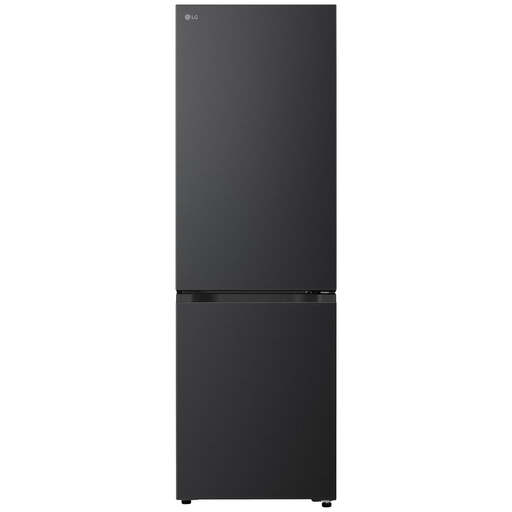 Image unavailable
LG GBBS312CEV, 333 L fridge-freezer, C energy rating
Worth considering if storage for meals and fresh ingredients matters as much as your frozen food capacity. This fridge-freezer has a stated total capacity of 333 L. Check the capacity of each compartment and whether the shelves offer enough room for your containers. If you plan to install it outside the kitchen, check the model’s ambient temperature requirements.
View on Joybuy
 Image unavailable
AUCMA, 291 L convertible chest freezer, E energy rating
Consider this if you prioritise having a separate freezer and have room for a chest model. This 291 L appliance can switch between freezer and fridge modes and has a removable basket. Check the usable capacity in your preferred mode, the space needed to open the lid and the room’s temperature conditions.
View on Joybuy
 Image unavailable
CHiQ JR525WSE, 525 L side-by-side fridge-freezer, E energy rating
Consider this if you’re looking for a large stated capacity for chilled and frozen food in one appliance. The 525 L is split between 333 L of fridge capacity and 192 L of freezer capacity. Check the external dimensions, interior layout and annual energy consumption before comparing it with other formats.
View on Joybuy
Frequently asked questions
How can I choose the right capacity without using a fixed number of litres per person?
Think about what you store during a typical week: containers that need to stay chilled, frozen portions, large packs and how often you shop. Then compare fridge and freezer capacity separately and check that your containers fit in the storage spaces.
Can you install a freezer in an unheated garage or cellar?
Yes, as long as the room temperature stays within the range specified for the model and you meet its other installation requirements. Check the climate class and instructions, taking into account the possible temperatures throughout the year. A product listing that says “garage” isn’t enough to confirm it’s suitable.
What should you compare on a fridge or freezer energy label?
First compare appliances of the same type and with similar capacities, then look at the energy rating, annual energy consumption, storage volumes and noise levels. The European Commission says this information appears on the energy label for refrigeration appliances. You’ll also need to check the interior layout and whether there’s room for your containers.
Is NoFrost essential for storing prepared meals and frozen food?
No. Choose this feature if avoiding frost build-up and defrosting matters to you, but don’t prioritise it over capacity and installation requirements. Bosch, Whirlpool and Liebherr describe NoFrost in their own ranges. Check whether it’s included on the specific model you’re considering.


