For a weekly shop that includes fresh food, leftovers and a few frozen items, choose an appliance with fridge and freezer capacities that suit the amount you usually store. A fridge-freezer can cover both needs, while a small freezer compartment is best suited to households that mainly store fresh food. Consider a separate freezer if you regularly freeze meals or buy in bulk, after checking you have room for it and taking both appliances’ energy consumption into account.
Who are these configurations for?
Households that plan meals around fresh food
If you keep several days’ worth of ingredients and leftovers, choose a fridge where containers are easy to see and reach. ADEME recommends checking what you already have before shopping to avoid buying duplicates.
Households that stock both fresh and frozen food
If your weekly shop regularly includes both, compare the space in each compartment rather than looking only at the total capacity. Beko’s guide recommends tailoring this balance to your household’s eating habits.
Households that batch-cook and freeze meals
If you often prepare portions to freeze or keep a large stock of frozen food, a separate freezer could meet a distinct need. Make sure you have somewhere to put it, too: ADEME points out that fridges and freezers run continuously.
What sets these appliances apart?
Start by working out what you need to keep chilled and what you actually plan to freeze. Then check that the configuration will fit in your kitchen and suit your everyday needs.
Fridge-freezer
Worth considering: if your weekly shop includes fresh food and a moderate amount of frozen food.
Trade-off: the freezer space may not be enough if you regularly batch-cook and freeze meals.
Small freezer compartment
Worth considering: if most of what you store is fresh and you buy very little frozen food.
Trade-off: an icebox is not a substitute for a compartment designed to freeze home-cooked meals; check its star rating.
Separate freezer
Worth considering: if batch-cooked portions or bulk buys mean you regularly need extra freezer space.
Trade-off: you’ll need room for a second appliance and should consider the combined annual energy consumption of both.
| What to consider |
What to check |
Best suited to |
| Visibility of fresh food |
Fridge capacity and accessible space for leftover containers, ingredients and produce drawers. |
When I prepare several meals in advance, I want to find opened food and leftovers without having to stack containers. Around 33% of consumers would prioritise being able to see what’s inside. |
| Balance of fresh and frozen storage |
The separate capacities of each compartment, rather than the total capacity alone. |
If my weekly shop includes both fresh and frozen food, I want enough room for each in one appliance. Around 27% of consumers would prioritise this balance. |
| Freezing home-cooked meals |
Star rating and usable capacity; for a separate appliance, access to drawers or baskets. |
If I regularly store home-cooked meals or bulk buys, I need enough freezing capacity—not just space for food that’s already frozen. Around 20% of consumers would prioritise this need. |
| Energy consumption and installation |
Annual energy consumption in kWh, dimensions, door clearance and the gaps specified in the instructions. |
In a kitchen where space is limited, I need to be able to install the appliance properly without overlooking its everyday energy use. Around 20% of consumers would put these considerations first. |
Common mistakes to avoid
-
Choosing based on total capacity alone
Two appliances with a similar total capacity can divide their space very differently between the fridge and freezer. So a large overall capacity doesn’t guarantee enough room for your leftovers or frozen food.
Think about what you typically buy in a week, then compare the capacity of each compartment separately.
-
Confusing an icebox with a freezer
France’s Ministry of Agriculture distinguishes between keeping food that’s already frozen in an icebox and freezing food in a freezer. This matters if you prepare meals at home to freeze.
Before relying on a small compartment to freeze meals, check its star rating and the uses specified in the instructions.
-
Measuring the space but not the whole installation
The door needs to open freely and the recommended ventilation gaps must remain clear. For example, for its freestanding fridges, Whirlpool requires 5 cm above and 10 cm behind the appliance.
Measure the space, the delivery route and the door swing. Follow the clearance requirements in the instructions for the model you choose, rather than using those for another brand.
-
Buying a freezer for occasional use
A second appliance gives you extra storage, but it takes up room and runs continuously. Occasional use may not justify having one.
Work out how much you regularly freeze and compare the combined annual energy consumption of the appliances you’re considering.
Brands to compare
Beko
Beko’s guides can help you think about the capacity of a fridge-freezer based on your eating habits and how much space you need for fresh and frozen food.
- The brand offers sizing guidance you can compare with your usual shopping needs.
- Features listed for the B5RCNE405HG, including Freezer Guard, apply to this specific model and not to all Beko appliances.
Bosch
A model worth looking at if you want to compare the capacities of the two compartments in a freestanding fridge-freezer.
- Bosch lists the KGN392XCF as having 260 L of fridge capacity, 103 L of freezer capacity and a noise level of 35 dB(A).
- These specifications are specific to the KGN392XCF. Check its dimensions and installation requirements before choosing it, too.
Whirlpool
Whirlpool’s installation guidance is a useful reminder to allow for ventilation around your fridge.
- For its freestanding fridges, Whirlpool recommends leaving 5 cm clear above and 10 cm behind the appliance.
- For a built-in model or a different configuration, check the specifications for the appliance in question.
Electrolux
Electrolux’s guide outlines two types of separate freezer, depending on how you want to store your food.
- According to Electrolux, an upright freezer makes it easier to organise food, while a chest freezer is better suited to storing large quantities.
- Before choosing a style, compare the usable capacity, access to food, dimensions and defrosting requirements of each model.
Appliances for storing fresh and frozen food
These fridge-freezers provide space for fresh food and a separate freezer compartment. Compare how the space is divided and how much room each appliance takes up against your usual shopping needs. A separate freezer is better suited to a different pattern of use.
 Image unavailable
Candy CFQQ5T817EPS, 467 L, four-door
Worth considering if you’re looking for a multi-door appliance to keep fresh and frozen food separate.
The product name lists a total capacity of 467 L, four doors, Total No Frost and an E energy rating.
Check the delivery route and the required installation clearances before choosing this style.
View on Joybuy
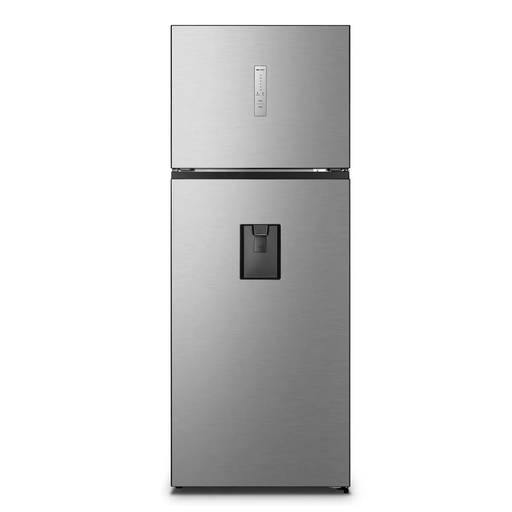 Image unavailable
Hisense FTN461WCE1, 467 L
Worth considering if your shopping needs call for a fridge-freezer with a large total capacity.
The product name lists a capacity of 467 L, Total No Frost and an E energy rating.
If you want to freeze home-cooked meals, check the compartment’s star rating. Also check the clearances required for installation.
View on Joybuy
 Image unavailable
CHiQ JR227LSE, 227 L
Worth comparing if you have limited width but still want separate spaces for fresh and frozen food.
The product name specifies 153 L for the fridge, 74 L for the freezer, a width of 54 cm, 4-star freezing and Low Frost.
Check the other dimensions, installation clearances and annual energy consumption in kWh.
View on Joybuy
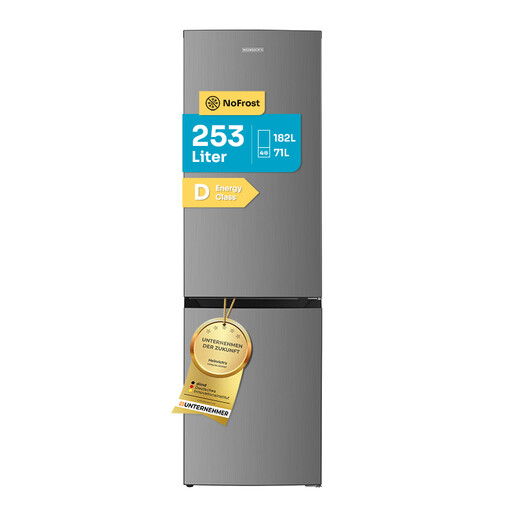 Image unavailable
Heinrich´s, 253 L fridge-freezer
Worth considering if you want more fridge space than freezer space in a fridge-freezer.
The product name lists 182 L of fridge capacity, 71 L of freezer capacity, No Frost and 39 dB.
Check the star rating before freezing home-cooked meals, as well as the dimensions, ventilation requirements and annual energy consumption.
View on Joybuy
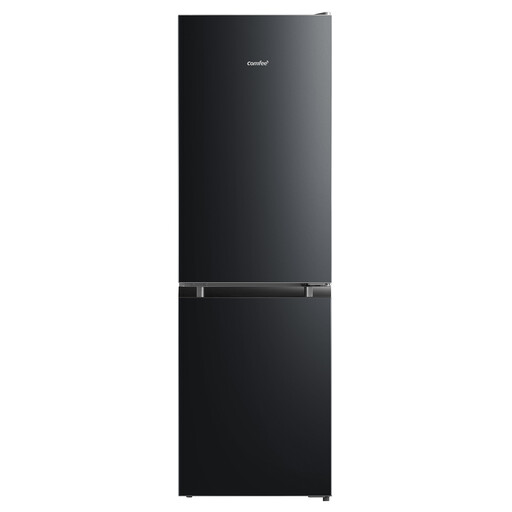 Image unavailable
Comfee' by Midea RCB230BL2EU(E), 174 L
Worth comparing if you’re looking for a 174 L fridge-freezer for a smaller shop.
The product name lists Low Frost, an adjustable thermostat, LED lighting and a reversible door.
Check the dimensions and installation clearances, as well as annual energy consumption and noise level if these are important to you.
View on Joybuy
Frequently asked questions
Is a small freezer compartment enough to freeze homemade leftovers?
First, check its star rating: an icebox intended for temporarily storing food that’s already frozen is not designed for this purpose. France’s Ministry of Agriculture says that a 4-star compartment can freeze food; check the instructions for the appliance you’re considering, too.
How much space should you leave around a freestanding fridge?
Follow the clearances specified in the instructions for the model you choose. For its freestanding fridges, Whirlpool recommends 5 cm above and 10 cm behind the appliance; don’t automatically apply these measurements to other appliances.
How can you use the energy label to compare two appliances?
Compare appliances with similar configurations and capacities, looking at their annual energy consumption in kWh and the capacity of each compartment—not just the rating. The European Commission says that the energy label for household fridges and freezers uses a scale from A to G.
What should you do if the delivered appliance doesn’t match its description?
Contact the seller, clearly explaining the discrepancy, and keep a copy of your order and the product description. In France, the DGCCRF points out that the statutory guarantee of conformity applies to new, second-hand and refurbished goods sold by a business to a consumer. This is separate from a retailer’s returns policy.


