What to look for
Start by assessing your needs for fresh and frozen food separately, then check that the format you choose can genuinely be installed and used comfortably every day.
| Priority |
What to check |
Your needs |
| Usable capacity |
Compare the net litres of the fridge and freezer separately. Que Choisir recommends using 100 to 150 L of refrigeration capacity for one person as a guide, then adding around 50 L per additional person. |
I want enough room for fresh groceries without sacrificing the space needed for cooked portions and frozen food. Total capacity alone is not enough to assess this balance. |
| Footprint and access |
Measure the width, depth, height, clearances and delivery route. Check how the doors or lid open, as well as the number of drawers or baskets. |
I need to be able to reach frequently used food without having to move the entire stock. A chest freezer suits large volumes, but requires internal organisation for smaller portions. |
| Energy label and noise |
For appliances of a similar type and capacity, check the A to G rating, annual energy consumption in kWh, compartment capacities and airborne acoustical noise emissions shown on the EU energy label. |
I am looking for an appliance that runs continuously without overlooking noise if it is near a living area. Consumption should be compared between similar formats. |
| Room temperature |
Match the room’s minimum and maximum temperatures to the model’s climate class. Common ranges stated by manufacturers include SN from 10 to 32 °C and SN-T from 10 to 43 °C. |
My appliance may be placed in a garage, cellar or conservatory. I therefore check the exact model rather than assuming it is suitable for use outside the kitchen. |
| Storage time and everyday use |
Compare the stated storage time in the event of a power cut, drawer layout, ease of opening and return to temperature after adding groceries. Depending on the model, these details can be found in the technical specifications. |
I want some leeway during a power cut and to be able to find my food easily. The drawers in an upright freezer make sorting easier, whereas a chest freezer requires more careful organisation. |
Joybuy options
Joybuy options for organising weekly shops, fresh food and frozen-food stocks, including fridge freezers, chest freezers and an upright freezer.
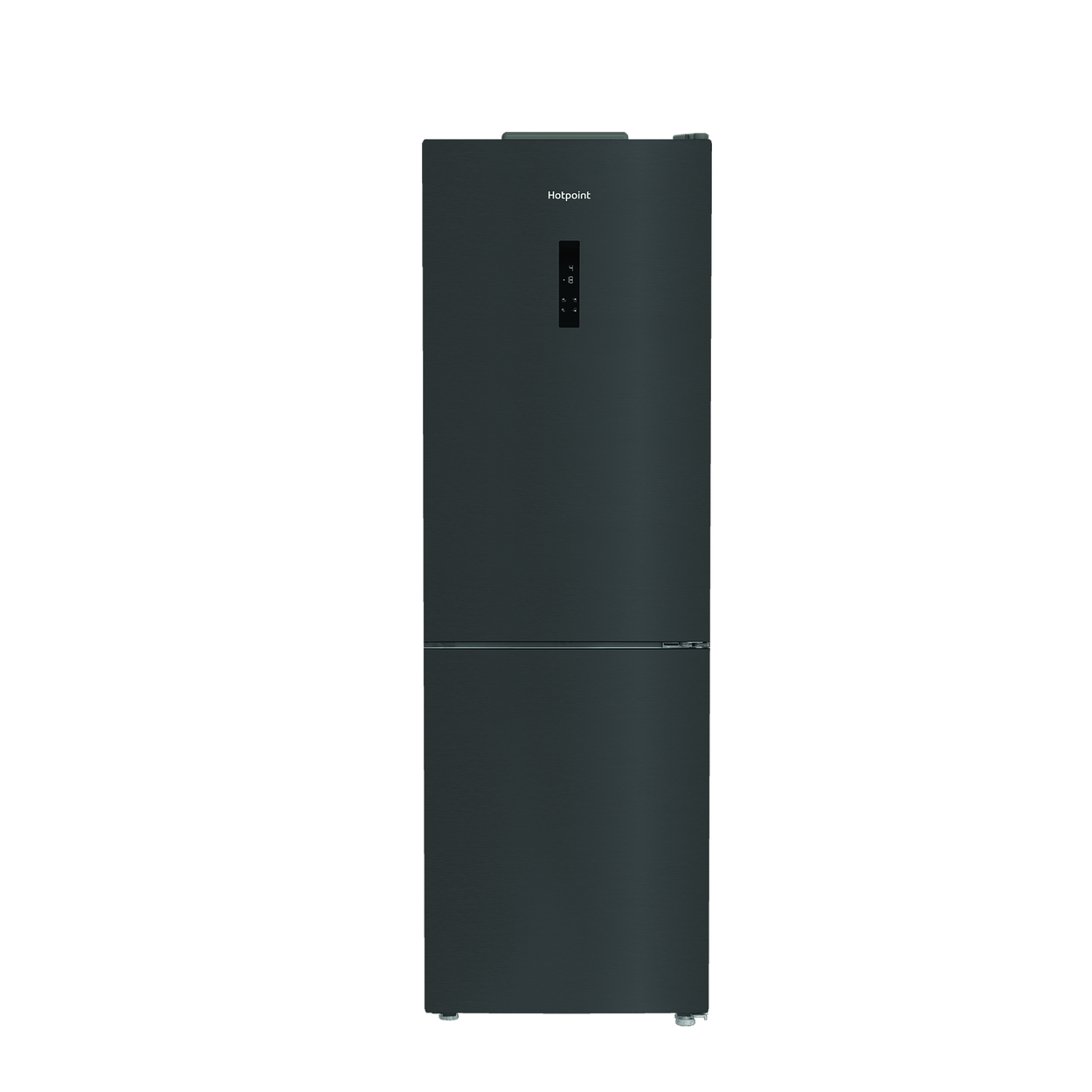 Image unavailable
Hotpoint HPK26363XBR5E 316 L fridge freezer
For a household looking to store fresh and frozen food in one appliance.
210 L of refrigeration capacity and 106 L of freezer capacity; 4-star freezer with three drawers, a stated freezing capacity of 6 kg/24 h and a stated storage time of 11 h.
Check the depth of 66.3 cm, the stated ventilation clearances and the climate class before installing it in an unheated room.
Joybuy
 Image unavailable
CHiQ JR263LGE 262 L fridge freezer
A compact option for regular shopping with a moderate supply of frozen food.
187 L of refrigeration capacity, 75 L of freezer capacity, three drawers, 4-star rating, Low Frost and a width of 54 cm.
The stated range of 16 to 38 °C is not suitable for an outbuilding where the temperature falls below 16 °C. The freezer compartment may be too limited for a large stock of portions.
Joybuy
 Image unavailable
AUCMA 291 L convertible chest freezer
For building up a substantial supply of batch-cooked meals or frozen food in a chest-freezer format.
291 L capacity, stated 4-star freezing mode, removable basket, five-level digital control and dimensions of 1100 × 597 × 872 mm.
The appliance operates in either refrigeration or freezing mode, but not both at the same time. Check the climate class, floor space and clearance needed to open the lid.
Joybuy
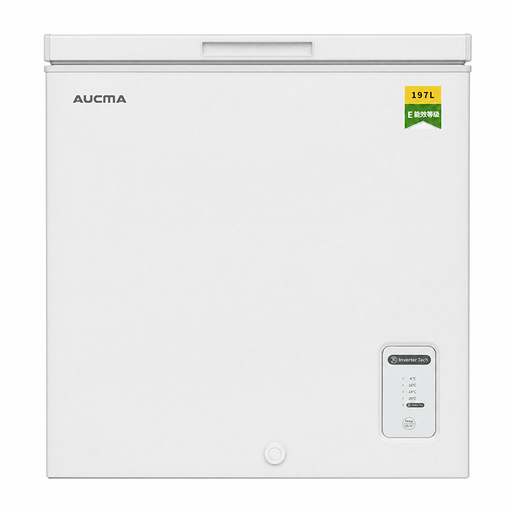 Image unavailable
AUCMA 197 L convertible chest freezer
An additional supply of frozen food for a more limited space than a large chest freezer requires.
197 L capacity, stated 4-star mode, removable basket, five-level digital control and dimensions of 816 × 554 × 848 mm.
It switches between refrigeration and freezing, so it does not replace two separate appliances. Plan a sorting system for smaller portions.
Joybuy
 Image unavailable
Heinrich's 161 L No Frost upright freezer
For storing prepared portions and frozen food by category in an upright appliance.
161 L, three drawers, two upper compartments, No Frost, LED display, alarm, reversible door and a stated Fast Freeze function reaching -22 °C.
Check the dimensions, annual consumption, storage time in the event of a power cut and the climate class specific to this model before buying.
Joybuy
Frequently asked questions
How do you estimate the fridge capacity a household needs?
As a starting point, Que Choisir recommends 100 to 150 litres of usable capacity for one person, then around 50 litres per additional person. This guide relates to fridge capacity: assess prepared portions, batches of frozen food and bulky items separately.
Is a chest freezer necessarily better than an upright freezer?
No. A chest freezer prioritises capacity and large packages, with capacities of up to 600 L according to Que Choisir, but takes up more floor space and requires internal organisation. An upright freezer usually offers around 200 L, rising to 400 L for larger models, with practical drawers for sorting and frequent access.
What can the energy label be used to compare in France?
For domestic refrigeration appliances sold in the European Union, the energy label shows the A to G rating, annual consumption in kWh, compartment capacities and airborne acoustical noise emissions. The European Commission explains that these details allow appliances to be compared, provided they are assessed against similar formats and capacities.
Which climate class should you choose for a garage or cellar?
First record the actual minimum and maximum temperatures in the room, then check that they fall within the model’s specified range. Manufacturers may state, for example, SN from 10 to 32 °C, SN-ST from 10 to 38 °C and SN-T from 10 to 43 °C; below 10 °C, the specific model must be explicitly approved for those conditions.
Why compare storage time in the event of a power cut?
Storage time indicates how long the manufacturer states that food can remain frozen during a breakdown or power cut. It is worth comparing alongside capacity, internal organisation and how often you stock up, particularly if your freezer regularly contains prepared portions.


