If your weekly shop includes fresh food and frozen items on a regular basis, a fridge-freezer combines both storage spaces in one appliance. If you don’t freeze much, check the capacity of a small freezer compartment. If you regularly stock up on larger quantities, compare a separate freezer, taking into account the space required and the combined annual energy consumption of both appliances.
Which set-up is right for you?
How much space you need for fresh and frozen food depends mainly on what you usually bring home from your weekly shop.
Households shopping for the week
If you buy both fresh and frozen food to last several days, a fridge-freezer gives you two compartments in one appliance. Compare their capacities separately: the total capacity doesn’t tell you how much room is available for frozen food.
Smaller households that freeze very little
If most of your shopping goes in the fridge, a model with a small freezer compartment may suit your needs. Check its capacity if you think you might buy more frozen food in future.
Households that regularly freeze larger quantities
A separate freezer can give you the space you need for batch-cooked meals or a regular stock of frozen food. You’ll need room for two appliances, and should check their combined annual energy consumption.
What should you check before choosing?
Start by choosing the set-up that suits your usual shopping habits, then compare the capacity of each compartment, the space the appliance will take up and the information on its energy label.
Fridge-freezer
Worth considering: your shopping regularly includes fresh and frozen food, but you don’t need to keep a large stock in the freezer.
Limitation: the split between the two compartments is fixed for each model, and there may not be enough room in the freezer.
Fridge with a small freezer compartment
Worth considering: you rarely freeze food and mainly need space for fresh produce.
Limitation: check the freezer capacity in litres before planning to store a week’s worth of frozen food in it.
Separate fridge and freezer
Worth considering: you regularly freeze larger quantities and have suitable space for two appliances.
Trade-off: two appliances take up more room. Compare their combined annual energy consumption too.
| Factor | What to check | Depending on your needs |
|---|
| Usable capacity |
Check the fridge and freezer capacities in litres separately. Que Choisir suggests starting with 100 to 150 L for one person, then adding 50 L for each additional person. Adjust this guide to suit your shopping habits. |
I want to fit in a week’s shopping without choosing a large appliance based on its total capacity alone. |
| Electricity use |
Compare the A to G energy rating, kWh/year and storage capacities shown for each model. For two appliances, add their kWh/year figures together. The European Commission explains the A to G scale for refrigeration appliances. |
If either set-up could store my shopping, I want to compare their annual energy use at a suitable capacity. |
| Space and noise |
Measure the height, width and depth, the doorway clearance and the installation clearances specified in the manual. Also check the stated noise level in dB(A). |
My kitchen needs to fit the appliance and allow its door to open. Noise also matters if the kitchen is close to a living area. |
| Storage and maintenance |
Check the layout of the compartments and which section is covered by any No Frost or Low Frost function. For chilled food, Anses recommends a storage temperature between 0 and +4 °C at the coldest point. |
I want to organise fresh and frozen food in a way that suits my habits, then check the temperature and maintenance required. |
What pitfalls should you avoid?
-
Choosing based on total capacity alone
Two fridge-freezers with similar total capacities can have different amounts of freezer space. A larger total capacity doesn’t necessarily mean there’s enough room for your frozen food.
Estimate how much you buy in a typical week, then compare the capacity of each compartment in the specifications for the models you’re considering.
-
Looking only at the energy rating letter
The A to G rating doesn’t replace checking the annual energy consumption in kWh or the capacity you get.
Read these figures together on the energy label. If you’re considering a separate fridge and freezer, add their stated annual energy consumption figures together.
-
Measuring the width only
The height, depth, door opening and installation clearances can also affect whether the appliance will fit in your kitchen.
Measure the space and the route to it, then check these measurements against the model’s dimensions and manual.
-
Buying a large freezer for occasional use
A separate appliance needs a second space and runs alongside your fridge, even when you have very little frozen food in stock.
Base your choice on what you usually keep in the freezer. Consider a separate freezer if the food you buy or prepare to freeze regularly takes up more space than a suitable fridge-freezer can offer.
Which brand models offer a useful comparison?
These features apply to the models listed, not to every appliance from each brand.
Bosch
The freestanding KGN39VLCT fridge-freezer is one example of a model with 260 L of fridge space and 103 L of freezer space, according to Bosch Electroménager France.
- Bosch lists this model as energy rating C, with a noise level of 35 dB(A) and dimensions of 2030 × 600 × 665 mm.
- At 203 cm tall, it’s important to check the available space and installation clearances.
Whirlpool
Whirlpool offers both fridge-freezers and separate fridges and freezers. The right choice here depends on how much freezer space you need over the long term.
- According to Whirlpool France, the WHK 26404 XP7E fridge-freezer has a total capacity of 355 L, including 106 L of freezer space. It has an energy rating of B and a stated noise level of 31 dB.
- The separate WHMLF 6442 FXP4 (365 L) and WHMFF 6312 W5E (286 L) models need two spaces. Compare their combined annual energy consumption too.
Electrolux
The ENG7TD18S is a built-in fridge-freezer. Electrolux France lists its total capacity as 256 L, with 194 L for the fridge and 62 L for the freezer.
- Electrolux lists this model as energy rating D, with an annual energy consumption of 172 kWh/year.
- Check the dimensions of the housing unit and whether 62 L of freezer space is enough for the frozen food you usually keep.
Fridge-freezers on Joybuy
These models combine refrigeration and freezing in one appliance, making them suitable for shops that include both fresh and frozen food. Compare their capacity with what you usually keep in stock, then check the installation requirements and annual energy consumption.
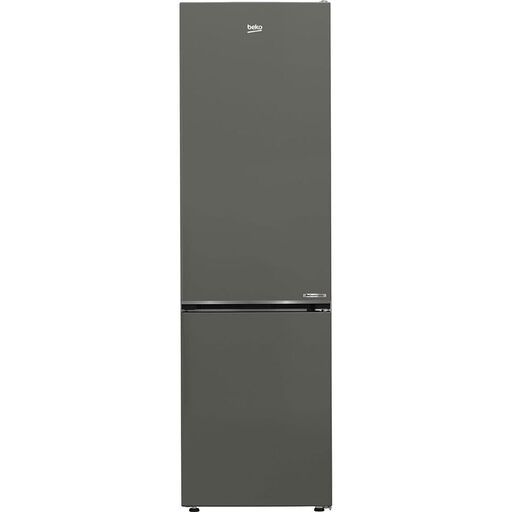 Image unavailable
Beko B5RCNE406HG, 355 L fridge-freezer
If you want to store fresh and frozen food in one appliance, compare its 355 L capacity with the amount you usually buy. The model name specifies Total No Frost and an energy rating of C. Check the dimensions and the space available in each compartment before choosing.
View on Joybuy
 Image unavailable
LG GBBSJ1CCSW, 333 L fridge-freezer
This 333 L fridge-freezer gives you the option of storing fresh and frozen food in one appliance. The model is listed as energy rating C. Check the capacity of each compartment and the clearances needed in your kitchen.
View on Joybuy
 Image unavailable
CHiQ JR263LGE, 262 L fridge-freezer
Compare its 262 L capacity with the amount of fresh and frozen food you buy each week. The model name specifies a width of 54 cm, a height of 176 cm and a Low Frost system. Check the manual for clearance requirements and freezer maintenance.
View on Joybuy
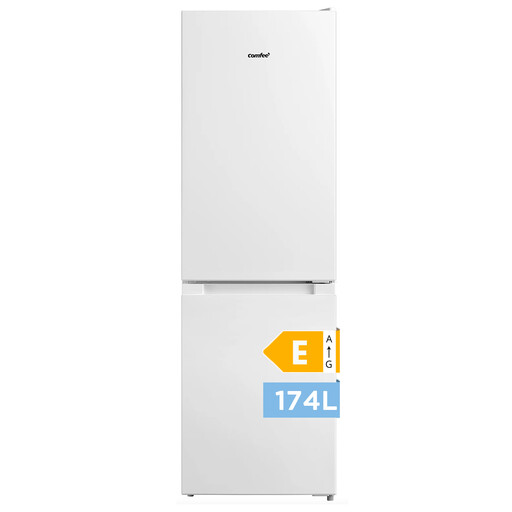 Image unavailable
Comfee' RCB169WH2(E), 174 L fridge-freezer
If you don’t freeze much, check whether its 174 L total capacity is enough for your fresh and frozen food. The model name specifies a height of 150 cm, Low Frost, 39 dB and an energy rating of E. Check the kWh/year figure on its energy label too.
View on Joybuy
 Image unavailable
CHiQ JR227LSE, 227 L fridge-freezer
If your shopping includes fresh and frozen food, compare its 153 L fridge capacity and 74 L freezer capacity with your needs. The model name specifies a width of 54 cm, Low Frost and an energy rating of E. Check the other dimensions, kWh/year and defrosting instructions before deciding.
View on Joybuy
Frequently asked questions
What capacity do I need for a week’s shopping?
Que Choisir suggests starting with 100 to 150 L for one person, then adding 50 L for each additional person. Adjust this according to what you buy, and check the capacity for fresh and frozen food separately: total capacity alone doesn’t tell you how much room there is for frozen food.
How do I compare two appliances with different capacities?
Look at their A to G energy ratings, annual energy consumption in kWh and storage capacities together. The European Commission says you can use the EPREL database to view the information declared for the models concerned. For a separate fridge and freezer, add the kWh/year figures for both appliances together.
What temperature should I keep food at in the fridge?
Anses recommends keeping food between 0 and +4 °C at the coldest point in the fridge. Check this point with a suitable indicator or thermometer, and follow your appliance’s instructions.
Does No Frost mean you don’t need to do any maintenance?
No. First check whether the function applies to the fridge, the freezer or both, then follow the manual for maintenance. You’ll still need to organise and clean the appliance and check the temperature. For chilled food, Anses recommends 0 to +4 °C at the coldest point.


