What should you compare?
A fridge freezer saves you trips to another room if both compartments offer enough space. With separate appliances, choose an upright freezer for easy access to drawer storage, or consider a chest freezer if you have room for bulkier items and enough floor space.
Fridge freezer in the kitchen
Choose this if: you often reach for frozen food while preparing meals, and the fresh and frozen compartments each meet your needs.
Bear in mind: the freezer takes up some of the total capacity. Measure the space available and allow for the doors to open.
Separate fridge and upright freezer
Choose this if: you want to use your kitchen appliance for fresh food and keep frozen food in drawers in an accessible utility room.
Bear in mind: two appliances need two spaces, and getting food from the freezer means making a trip. How inconvenient that is depends on how you use it.
Separate fridge and chest freezer
Choose this if: you stock up on larger quantities and have enough floor space in your utility room.
Bear in mind: it can take up more floor space, and reaching items at the bottom may be less convenient than in an upright freezer with drawers.
| What to consider |
What to check before buying |
Who it matters most to |
| Space for fresh food |
Compare the fridge and freezer capacities separately; measure the space available and the clearance needed for the doors. |
If my fridge is already overflowing, I want to work out how much fridge space I need before comparing total capacity. Around 33% of consumers are thought to prioritise this. |
| Access to frozen food |
Consider how often you take food out, the trip to the utility room, and how easy it is to reach drawers, baskets or items at the bottom. |
If I often take out frozen portions, I want to find them quickly, even if I have to go to another room. Around 27% of consumers are thought to prioritise easy access. |
| Stocking up and floor space |
Compare freezer capacity, external dimensions and the space needed to open the lid or door. |
If I store large packs or containers, I want to check that my utility room can fit the model I choose and that its contents will be easy to reach. Around 20% of consumers are thought to prioritise storage capacity. |
| Use and location |
For two appliances, add together their stated energy use in kWh/year; check the permitted temperature range for each model installed in the utility room. |
If I’m comparing two appliances with a fridge freezer, I want to look at their combined energy use and check that the room meets their operating requirements. Around 20% of consumers are thought to put running costs first. |
ADEME advises checking the permitted ambient temperature for the room where an appliance will be installed. If you’re putting a refrigeration appliance in a utility room or garage, compare this range with the room’s actual temperatures and check the documentation for the exact model.
Joybuy products for these options
This selection includes fridge freezers that keep fresh and frozen food in the kitchen, as well as separate appliances you can pair to suit your space and how you organise your food stocks.
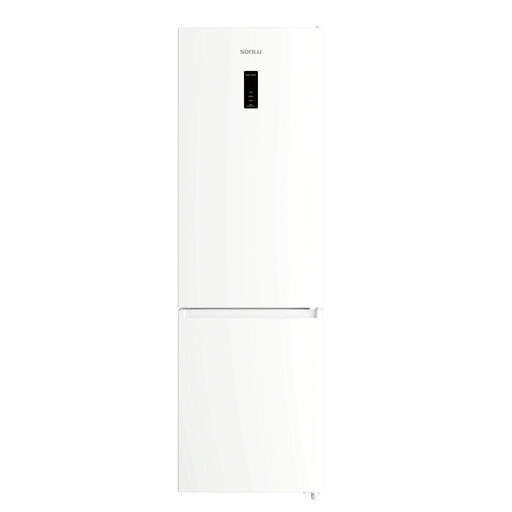 Image unavailable
Sonlu CD-400RW, 355 L fridge freezer
This all-in-one appliance combines a fridge and freezer for use in the kitchen.
Stated capacity: 355 L in total, including 252 L for the fridge and 103 L for the freezer; 60 cm wide; frost-free system; energy rating E.
View on Joybuy
 Image unavailable
CHiQ JR263LGE, 262 L Low Frost fridge freezer
This model combines both compartments in an appliance that’s 54 cm wide, making it worth considering if your kitchen space is tight.
Stated capacity: 262 L; 70/30 split; height of 176 cm; black finish. The product description states an ambient temperature range of 16 to 38 °C and advises against installing it in a garage or outbuilding.
View on Joybuy
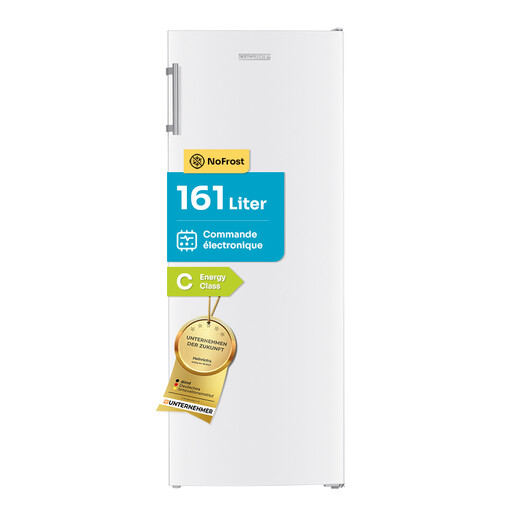 Image unavailable
Heinrich’s, 161 L No-Frost upright freezer
This standalone freezer can be paired with a separate fridge if you want to organise frozen food vertically.
Stated capacity: 161 L; three freezer drawers and two drawers; reversible door; LED display; alarm; stated temperature range from −14 °C to −22 °C; energy rating C.
View on Joybuy
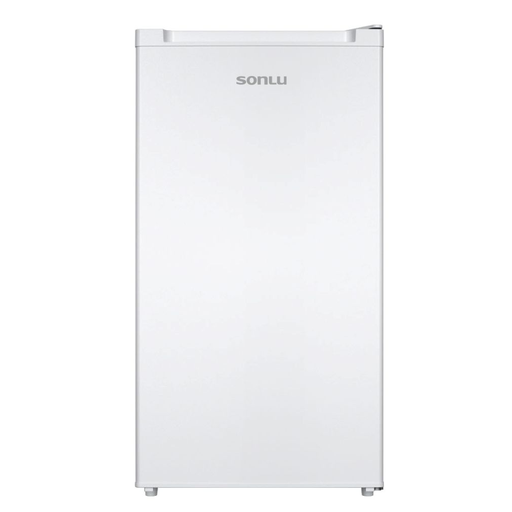 Image unavailable
Sonlu CS-100L, 82 L fridge
This fridge, which has no freezer compartment, can provide the fresh food storage in a separate-appliance setup; you’ll need another appliance for frozen food.
Stated capacity: 82 L; adjustable shelves; salad drawer; energy rating E.
View on Joybuy
 Image unavailable
AUCMA, 291 L convertible chest freezer
A chest freezer could suit larger food stocks if you have enough floor space and can easily reach items at the bottom.
Stated capacity: 291 L; selectable fridge and freezer modes, but they can’t be used at the same time; removable basket; interior light; five-level digital control.
View on Joybuy
Frequently asked questions
Can you put a freezer in any garage?
No. It depends on the permitted ambient temperature range for the specific model. Check its documentation and compare the range with the temperatures in your garage. Some manufacturers state a lower limit of −15 °C for certain models, but this doesn’t apply to all freezers.
How do you compare the energy use of two appliances with a fridge freezer?
Add together the annual energy use in kWh stated for the separate fridge and freezer, then compare the total with that of a fridge freezer suited to similar needs. ADEME points out that refrigeration appliances run continuously, so compare the energy use of the models you’re considering as a whole.
How do you choose between an upright and a chest freezer?
An upright freezer with drawers can make it easier to organise and reach portions. A chest freezer is worth considering if you store larger quantities and have enough floor space. Que Choisir recommends checking how easy it is to use the drawers and access food in the compartments.
What temperature should your fridge be?
Anses recommends keeping the coldest part of your fridge between 0 and +4 °C. It also advises checking the temperature regularly, not overfilling the appliance, and cleaning it regularly and whenever it gets dirty.
What should you compare on the energy label?
For relevant fridges, freezers and fridge freezers, the label includes information such as the energy efficiency class, energy use, compartment capacity and noise level. The European Commission explains these details. Compare the information for the specific models you’re considering, and add together their annual energy use if you’re looking at two separate appliances.


