Households preparing meals for the week
You keep fresh food to hand every day and regularly freeze portions. The question is whether a fridge freezer’s drawers can hold your usual supply without needing a second appliance.


If you regularly prepare and freeze meals, start by comparing the usable space in the fresh-food and freezer compartments of a fridge freezer. One appliance may be enough if your portions fit in its drawers. Consider a multi-door model if larger dishes and keeping everything organised require more space, or a separate freezer if your frozen food regularly exceeds the capacity of an integrated compartment. In every case, check the dimensions, noise level and energy consumption of the specific model.
You keep fresh food to hand every day and regularly freeze portions. The question is whether a fridge freezer’s drawers can hold your usual supply without needing a second appliance.
You need to store family-sized dishes, fresh food and frozen items for several people. How the space is divided and how easy it is to access each compartment matter just as much as the total capacity.
If your kitchen is open-plan or close to living areas, compare the stated noise level and kWh/year with the usable capacity. The European Commission says these details appear on the energy label for the appliances concerned.
First, choose a configuration that can hold your fresh food and frozen portions without overfilling the compartments. Then check that it fits in your kitchen and that its noise level and energy consumption suit the way you use it.
Choose one when: your frozen meals fit in the integrated drawers and you want to keep fresh and frozen food in a single appliance.
Bear in mind: the total capacity can disguise a freezer compartment that’s too small for a supply that keeps growing.
Consider one when: larger containers and the need to organise a family shop make easy access to the compartments a priority.
Bear in mind: its width, depth and door clearance can make installation more difficult.
Choose this option if: your frozen-food supplies regularly take up more space than a single appliance’s freezer compartment can offer.
Bear in mind: you’ll need space for a second appliance and should compare the combined energy consumption of both.
| Criterion | What to check | Who is it for? |
|---|---|---|
| Freezer space | Compare the usable fresh-food and freezer capacities separately, then check the shape of the drawers and how easy they are to access. | If I prepare several meals in advance, I want to find my portions without filling the drawers beyond their capacity; around 42% of consumers put freezer space first. |
| Storage and temperature | Check there’s room for your containers, that you can see what’s in each area and that the temperature can be controlled. | With family-sized dishes and a variety of fresh foods, I want to be able to store everything and find it easily; organisation would be the priority for around 33% of consumers. |
| Noise and continuous operation | Check the kWh/year and noise level stated for the exact model. If you keep a lot of frozen food, also check how long it can maintain its temperature during a power cut. | In a kitchen close to living areas, I want to take account of noise and the electricity used day after day; around 25% of consumers would prioritise these running considerations. |
A spacious appliance may offer less room than expected for frozen portions. The energy label shows the capacity of the fresh-food and freezer compartments separately.
Make a note of the portions, bags and larger dishes you usually freeze, then compare them with the freezer’s capacity and layout. A separate appliance may be worth considering if the integrated compartment is regularly full.
Having space in the kitchen isn’t enough if the appliance won’t fit through the route used for delivery or its doors can’t open properly. For this specific model, Haier gives the dimensions of the HCR39F19EWMM as 908 × 748 × 1905 mm.
Measure the space where it will go, the delivery route and the clearance needed for the doors. If you’re installing it in a cellar or pantry, also check the ambient temperatures the model can operate in.
A feature that manages frost doesn’t replace the need for the right temperature setting or sufficient airflow. Anses advises that the coldest part of the fridge should be between 0 and +4 °C to keep food safely.
Check the temperature after installation, avoid overfilling the appliance and store sensitive foods in the appropriate area.
A fridge and, where applicable, a separate freezer run continuously. ADEME points out that the size and number of appliances affect electricity consumption.
Compare the kWh/year figures for the models you’re considering, taking their capacities and your actual storage needs into account. If you’re choosing two separate appliances, compare their energy consumption together.
A range of fridge freezers to consider if you’re looking for a freestanding or built-in model and want to compare installation requirements in detail.
Fridge freezers to compare if separating fresh and frozen areas or organising your food is important to you.
A brand to consider when comparing fridge freezers and multi-door models, especially if capacity and layout are key.
Multi-door models to consider if four doors and separate storage areas suit the way you store family meals.
These appliances combine fresh-food and freezer space in a single unit, in the form of a fridge freezer, a multi-door model or a side-by-side model. Compare the internal layout with the dishes you usually store before choosing a total capacity.
 Image unavailable
Worth considering if you want to store the family food shop and prepared meals in a four-door appliance.
Stated total capacity of 467 l; Total No Frost, energy rating E and a silver finish. Check the separate capacities of the fresh-food and freezer compartments, as well as whether the doors have room to open in your home.
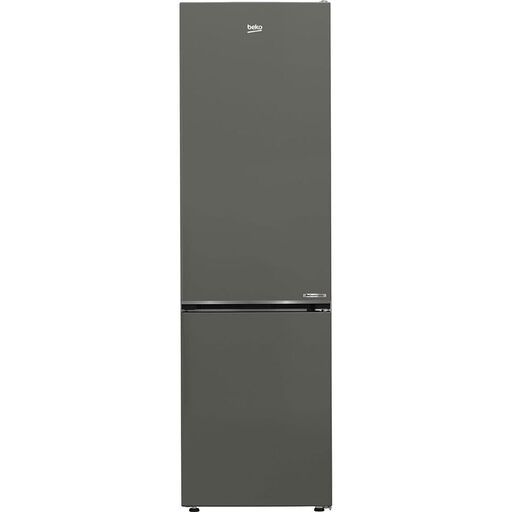 Image unavailable
A configuration to consider if you’d rather keep fresh and frozen food in a single fridge freezer.
Stated total capacity of 355 l; Total No Frost and energy rating C. Compare the space actually allocated to the freezer with your usual portions, and check the installation dimensions.
 Image unavailable
Worth comparing if larger dishes and keeping your food shop organised point you towards a multi-door model.
Stated total capacity of 495 l and energy rating E. Check the amount of space given to freezing, the clearance needed for the doors and the noise level if your kitchen is close to living areas.
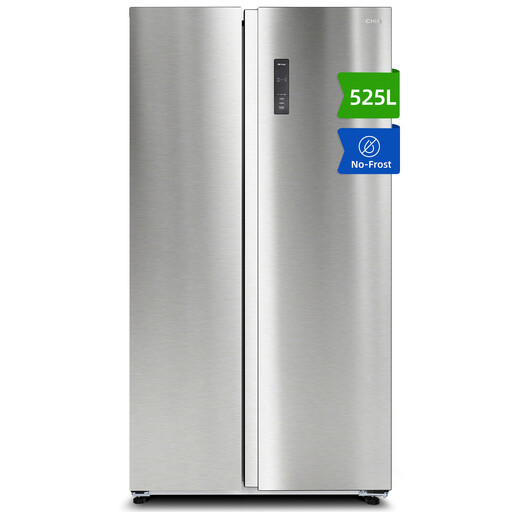 Image unavailable
A layout to consider if you want separate access to a large fresh-food compartment and an integrated freezer compartment.
The product description gives capacities of 333 l for the fridge and 192 l for the freezer, a noise level of 37 dB and energy rating E. Measure the delivery route and the space needed to open the doors before choosing this format.
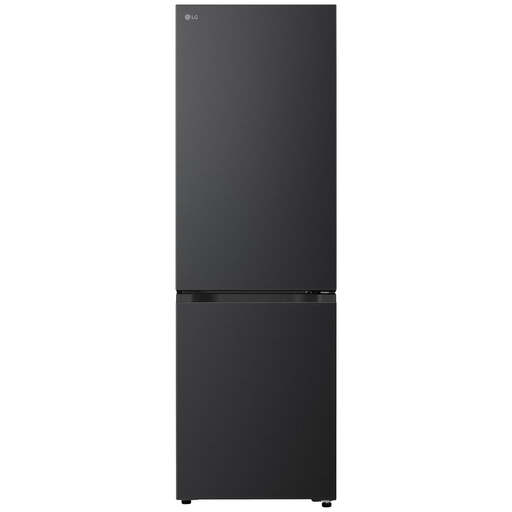 Image unavailable
Worth considering if you’re looking for a fridge freezer and want to see how its internal layout suits the meals you prepare.
Stated total capacity of 333 l, energy rating C and a black finish. Check the separate capacities of the compartments and the drawer layout before deciding whether there’s enough room for your portions.
Anses recommends a temperature of 0 to +4 °C in the coldest part of the fridge. Check the temperature, put sensitive foods in the right area and avoid overfilling the compartments so that cold air can circulate.
Compare the energy rating, kWh/year, fresh-food and freezer capacities, and noise emissions stated for each model. The European Commission says this information appears on the energy labels for the appliances concerned. In particular, compare the energy use of models with capacities and intended uses that suit your household.
Look up how long the freezer can maintain its temperature for the exact model, either in its technical details or an independent test. Que Choisir uses this measure to assess how long food stays frozen without power; its testing protocol for fridge freezers includes measuring the temperature rise from −17 °C to −9 °C.