Which households suit each type?
Your choice mainly depends on how much fresh and frozen food you need to store between shops.
Households that rarely freeze food
A larder fridge can give you more room for fresh food without taking up space with a large freezer compartment. However, if you plan to freeze fresh food, check that the appliance has a suitable compartment: the Ministry of Agriculture distinguishes this from using a freezer to store food that is already frozen.
Households that do a weekly shop
A fridge-freezer keeps fresh and frozen food in one appliance. Compare the capacity of each compartment separately: a suitable total capacity doesn’t guarantee enough room in the section you use most.
Households that freeze food in bulk
A separate freezer is worth considering if you regularly store batches of home-cooked food or bulk buys. Check how much space you have and add together the kWh/year figures for both appliances; ADEME points out that fridges and freezers run continuously.
What should you check before choosing?
Start by deciding what you need to store, then compare appliances with features that meet the same needs.
| Criteria |
What to check |
My needs |
| Fridge capacity |
Check the capacity in litres set aside for refrigeration, not just the total capacity. UFC-Que Choisir gives 100 to 150 L as a general guide for one person; adjust this to suit how often you shop. |
I want enough room for my usual shopping without choosing an appliance that’s much bigger than I need. |
| Freezing |
Compare the freezer capacity and the compartment’s function. According to the Ministry of Agriculture, a freezer compartment isn’t suitable for freezing fresh food, unlike a 4-star compartment. |
I don’t need the same capacity for a few ready-frozen products as I do for regularly freezing meals or bulk buys. |
| Energy consumption |
Compare the kWh/year figures on the energy labels of appliances with similar capacities and functions. The European Commission also provides an A to G rating, storage capacities and noise emissions; the rating alone doesn’t show annual energy consumption. |
I’m looking for an appliance that suits my storage needs, then I’ll compare its stated energy consumption with other models that meet the same needs. |
| Installation and noise |
Measure the space and check the door opening, installation clearances and noise level stated for the model. For a built-in appliance, check the niche dimensions and door-fixing type. |
For an open-plan kitchen or a fitted niche, I need an appliance that will fit properly and has a noise level I’m happy with. |
Which branded models should you compare?
These models show some of the configurations you could compare; their features aren’t necessarily representative of every appliance from each brand.
Bosch
The freestanding KGN39EXCF fridge-freezer lets you compare the balance between fridge and freezer capacity.
- Bosch lists 260 L of fridge capacity, 103 L of freezer capacity, a C rating and 35 dB for this model.
- These figures apply to the KGN39EXCF. Check the energy label for any other Bosch model you’re considering.
Liebherr
Liebherr’s larder fridges and fridge-freezers let you compare a mainly refrigeration-based need with one that calls for both fridge and freezer space.
- The brand offers models in both formats.
- Check the capacity of each compartment, its freezing function and the kWh/year figure for the specific model, rather than assuming its energy consumption based on its format.
Electrolux
The LNA7CE18S0 built-in fridge-freezer is one to consider if your kitchen requires an appliance to be fitted into a niche.
- Electrolux lists 186 L of fridge capacity, 62 L of freezer capacity, 217 kWh/year and 37 dB for this model.
- Before choosing it, compare the capacities with your shopping needs and check that it’s suitable for your kitchen installation.
Which fridges should you look at on Joybuy?
This selection includes fridge-freezers for keeping fresh and frozen food in one appliance, as well as a larder fridge for households that mainly need fridge space. Compare their capacities and energy labels before choosing.
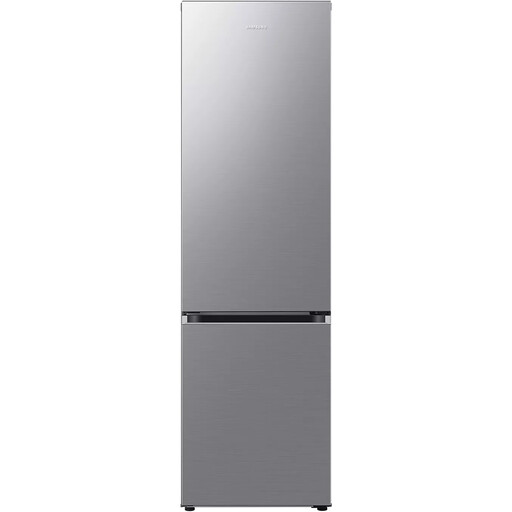 Image unavailable
Samsung RB38C603CS9, 390 L fridge-freezer, C rating
Worth considering if you need fridge and freezer space in one appliance. The stated total capacity is 390 L: check how this is divided between the compartments, the space available and the kWh/year figure on the label of the model being sold.
View on Joybuy
 Image unavailable
LG GBBSJ1CCSW, 333 L fridge-freezer, C rating
This fridge-freezer suits a household that uses both fridge and freezer space. Its product name lists a total capacity of 333 L; check the capacity of each compartment and the kWh/year figure on the energy label. If you’re planning a built-in installation, also confirm the niche dimensions and door fixing.
View on Joybuy
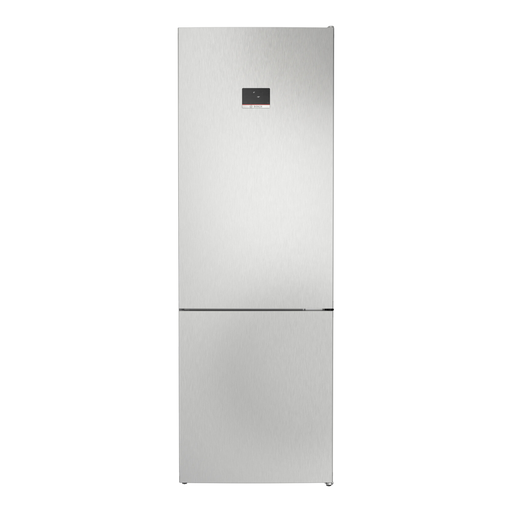 Image unavailable
Bosch KGN497LDF, 440 L fridge-freezer, D rating
The stated 440 L capacity is worth comparing with your needs if you require plenty of storage, rather than choosing the appliance based on its total capacity alone. Check the capacity of each compartment, the space it takes up and the kWh/year figure on the label of the model being sold.
View on Joybuy
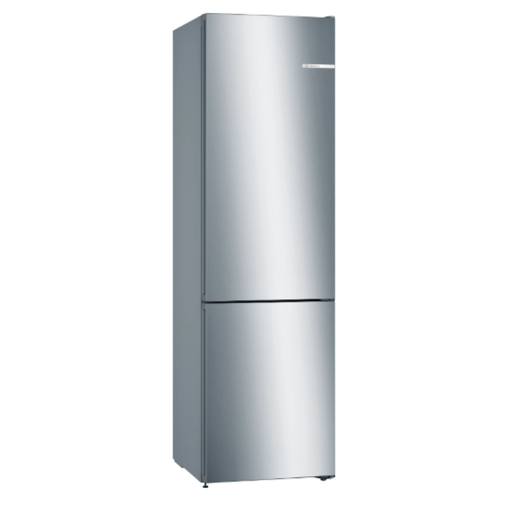 Image unavailable
Bosch KGN39VLEB, 368 L fridge-freezer, E rating
This fridge-freezer combines both types of storage in one appliance with a stated capacity of 368 L. To see if it suits your shopping needs, compare the fridge and freezer capacities separately, then check the kWh/year figure on the energy label. Also make sure you have enough space for installation.
View on Joybuy
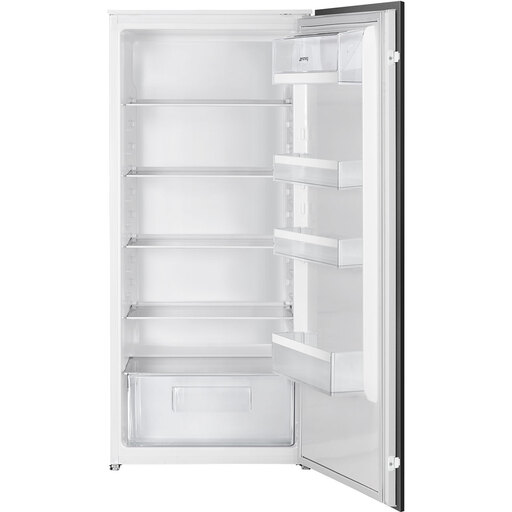 Image unavailable
SMEG S4L120E, built-in larder fridge
Consider this if you mainly store fresh food and have a fitted kitchen. Before comparing it with fridge-freezers, check the exact usable capacity, niche dimensions and kWh/year figure in the documentation for the model being sold; its product name lists an E rating.
View on Joybuy
Frequently asked questions
How do you compare the energy consumption of two fridges?
Compare the kWh/year figures on their energy labels after checking that their fridge and freezer capacities meet the same needs. The A to G rating adds to the comparison, but doesn’t replace the annual energy consumption figure when capacities differ.
Is a freezer compartment enough to freeze fresh food?
No. The Ministry of Agriculture distinguishes a freezer, intended for temporarily storing food that is already frozen, from a 4-star compartment that can freeze food. Check for this function if you prepare food at home to freeze.
What temperatures should you set for chilled and frozen food?
The Ministry of Agriculture recommends setting your fridge to +4 °C and your freezer to −18 °C. Check the temperatures after installation and adjust the settings in line with the appliance’s instructions.
Do new fridges sold online also have an energy label?
Yes. The Ministry of the Economy states that energy labels apply to fridges sold both in shops and online. For the household cooling appliances covered, the European Commission provides an A to G scale and information on kWh/year, capacities and noise.
Should No Frost determine whether you replace your fridge?
No. First, look at the usable capacity, freezing function and kWh/year figure for your needs. Then check how the model needs to be defrosted if maintenance is an important factor in your choice.


