Households that mainly store fresh food
You mainly store fresh groceries, leftovers and a few frozen portions. Fridge capacity and the space the appliance takes up in your kitchen matter more to you than a large freezer compartment.


If you mainly store fresh food and only a few frozen items, consider a fridge with a freezer compartment. If you use both compartments regularly but don’t want a second appliance, a fridge-freezer could be a better fit. A separate freezer is more suited to larger stocks of food, provided you have room for it and a fridge for fresh items. Compare the capacity of each compartment, the installation options and the model’s annual energy consumption: ADEME points out that refrigeration appliances run continuously.
You mainly store fresh groceries, leftovers and a few frozen portions. Fridge capacity and the space the appliance takes up in your kitchen matter more to you than a large freezer compartment.
You use both compartments every week but don’t want a separate freezer. When comparing fridge-freezers, look at the separate capacities of the fridge and freezer compartments, as well as the appliance’s dimensions.
You regularly freeze groceries or prepared portions. An upright or chest freezer could complement your fridge, as long as its location, accessibility and installation requirements work for you.
Worth considering if: fresh food makes up most of your groceries and you only buy frozen food occasionally.
The trade-off: the small freezer compartment may not be big enough for bulk buys or lots of prepared portions.
Worth considering if: you need space for fresh and frozen food every week, all in one appliance.
The trade-off: the split between the two compartments is fixed. A large total capacity doesn’t guarantee enough space in the compartment that matters most to you.
Worth considering if: you need a separate appliance to store larger quantities of frozen food.
The trade-off: this appliance takes up extra space and also runs continuously. A chest freezer needs room for its lid to open.
For everyday groceries and meal prep, start with the need that matters most to you, then check it against the space available.
| Priority | What to check | Who it suits |
|---|---|---|
| Everyday fresh food and limited space | Usable fridge capacity, freezer compartment capacity and star rating; dimensions and door opening. | If I mainly store fresh food and only a few frozen items, I want to save space in my kitchen without running short of fridge space. Around 42% of consumers would make this their priority. |
| A balance of fresh and frozen food | Usable capacity in each compartment; installation type and appliance dimensions. | I use both compartments every week and want everything in one appliance without compromising one for the other. This would be the priority for around 33% of consumers. |
| Large quantities of frozen food | Freezer capacity, access to drawers or the lid, and annual energy consumption; permitted ambient temperature if the room is unheated. | To store groceries bought in bulk or prepared portions, I need more freezer space than my fridge provides. Around 25% of consumers would prioritise a separate freezer. |
A fridge-freezer may offer plenty of capacity overall but too little in the compartment you use every week. Fridge and freezer capacity aren’t interchangeable.
Think about what you actually store, then compare the net capacity of each compartment rather than just the total.
Having enough width doesn’t necessarily mean the appliance will fit through doors and hallways, or that its door, drawers or lid will open properly. Ventilation requirements also depend on the model’s instructions.
Measure the delivery route and the final location. For a built-in model, check the housing space and door fitting too.
Adapting a housing space or modifying a door front may mean extra work before installation.
According to ADEME, fridges and freezers run continuously. The type of appliance, its capacity and how you use it also matter when assessing energy consumption.
For every model you’re considering, check the annual consumption in kWh on the energy label and compare it with the usable capacity you need.
According to ANSES, freezing at −18 °C stops bacteria from multiplying but doesn’t destroy most micro-organisms. It won’t make food safe if it has already been stored for too long.
Make sure you have enough freezer space to freeze food as soon as you buy or prepare it, rather than waiting until its use-by date is approaching.
Bosch’s range includes freestanding and built-in fridge-freezers, as well as freezers, giving you several kitchen configurations to compare.
Beko upright and chest freezers offer formats to consider when you need a separate appliance for storing frozen food.
Samsung’s freestanding and built-in fridge-freezers make it easier to compare dimensions and installation types.
These models include fridge-freezers for keeping fresh and frozen food in one appliance, as well as chest freezers that provide separate storage space. Start by choosing according to the capacity and space you need. A convertible chest freezer uses its fridge and freezer modes separately, not at the same time.
 Image unavailable
Worth considering if you regularly store fresh and frozen food in one appliance.
Advertised total capacity of 360 L; Total No Frost and energy rating E. Before buying, measure the route in, the location and the space needed to open the doors, then check the clearances specified in the instructions.
 Image unavailable
Worth considering if you need a separate appliance for larger quantities and have floor space available.
Advertised capacity of 291 L, top-opening lid, energy rating E and five-level digital control. The fridge and freezer modes are alternatives: also check you have enough room to open the lid.
 Image unavailable
Worth considering if you need a smaller amount of separate storage for your supplies.
Advertised capacity of 95 L, top-opening lid, energy rating E and seven-level thermostat. The fridge mode replaces the freezer mode, so they can’t run at the same time. Measure the clearance needed to open the lid and check the installation instructions.
 Image unavailable
Worth considering if you’re looking for a large-capacity fridge-freezer for fresh and frozen food.
Advertised total capacity of 467 L, Total No Frost and energy rating E. The doors are listed as non-reversible: check which way they open, how much clearance they need and whether the appliance will fit along the delivery route.
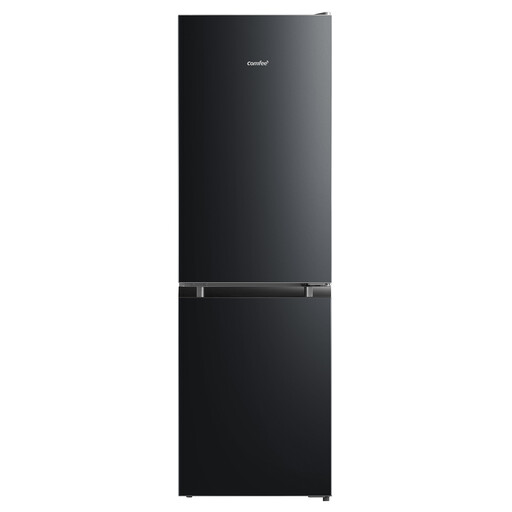 Image unavailable
Worth considering if you want to store fresh and frozen food in a more compact fridge-freezer.
Advertised total capacity of 174 L, Low Frost technology and a reversible door. Check the model’s energy label for its annual consumption, then consult the instructions for installation clearances.
Compare annual consumption in kWh and the usable capacities of the exact model, rather than looking at its energy rating alone. ADEME points out that you can check the energy label for fridges in shops and online. When comparing appliances of different types or sizes, also consider how much of the capacity you’ll actually use.
Place them in the coldest part of the fridge. ANSES recommends keeping this area between 0 and +4 °C, particularly for meat, fish and homemade dishes containing animal products. Check the temperature and avoid overfilling the appliance.
According to ANSES, it’s better to freeze food as soon as you buy or prepare it rather than waiting until its use-by date is approaching. At −18 °C, bacteria stop multiplying, but most micro-organisms survive. Freezing therefore doesn’t replace proper storage before or after defrosting.
Measure the space and the whole delivery route, then check the dimensions of the appliance and its packaging. Allow for doors, drawers or lids to open, as well as the ventilation clearances specified in the instructions. For a built-in appliance, check the housing space and door front too.