Which features should you prioritise?
Fridge-freezer
Consider one: if your weekly shop includes fresh food and a regular supply of frozen food, which you can store in two separate compartments in the same appliance.
Bear in mind: the total capacity may seem sufficient, but the freezer compartment might not have room for all your frozen food.
Fridge with a freezer compartment
Consider one: if you mainly buy fresh food and only freeze small amounts occasionally.
Bear in mind: according to Que Choisir, a small freezer compartment won’t be enough for a household that eats a lot of frozen food.
Separate freezer
Consider one: if you regularly have more frozen food and prepared portions than your fridge-freezer’s freezer compartment can hold.
Bear in mind: you’ll need space for an additional appliance which, as ADEME reminds us, runs continuously.
For your weekly shop and planned meals, work out separately how much space you need for fresh and frozen food. Then look at the internal layout and compare the annual energy consumption of appliances with a suitable capacity.
| Criteria |
What to check |
Who it matters to |
| Fresh food space and storage |
Compare the fridge’s usable capacity, then look at the layout of the shelves and drawers. |
If I plan meals for the week, I want to find food I’ve already opened and put away my new shopping without cramming everything in. Around 40% of consumers would prioritise this need to organise fresh food. |
| Frozen food storage |
Check the usable capacity of the freezer compartment and the layout of its drawers, independently of the total capacity. |
If I freeze portions in advance or regularly buy frozen food, I need a freezer where I can find everything easily. Around 30% of consumers would put this need for freezer space first. |
| Size and energy use |
Compare the stated annual energy consumption of appliances of the same type and with similar usable capacities. |
If my shopping fits in a smaller appliance, I’d rather avoid capacity I won’t use, especially when it runs continuously. Around 30% of consumers would prioritise size and energy use. |
Brands to know
There are no brands to feature in this section.
Fridge-freezers for the weekly shop
These models combine a fridge and a freezer in one appliance. To find the right one for your shopping, compare the space available for each type of food, the overall dimensions and the stated annual energy consumption.
 Image unavailable
Haier HTW5618ENMG, 360 L 3-door fridge-freezer
Worth considering if you’d like to store fresh and frozen food in a three-door appliance.
The model name indicates a total capacity of 360 L, an E energy rating, Total No Frost, Wi-Fi and My Zone. Check the usable capacity of each compartment and the space needed to install it.
View on Joybuy
 Image unavailable
Bosch KGN33NLEB, 282 L fridge-freezer
Worth a look if you’d prefer a fridge-freezer with the freezer at the bottom for your fresh and frozen shopping.
This model is listed with a total capacity of 282 L and an E energy rating. Compare the usable capacity of each compartment with your usual shopping and check that it will fit in your kitchen.
View on Joybuy
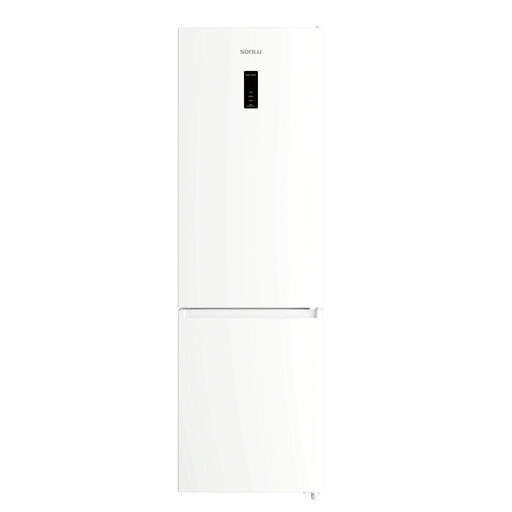 Image unavailable
Sonlu CD‑400RW, 355 L fridge-freezer
Worth a look if you need clearly specified, separate spaces for fresh and frozen food.
The model name indicates 252 L for the fridge and 103 L for the freezer, giving 355 L in total, as well as a width of 60 cm and an E energy rating. Check the other dimensions and stated annual energy consumption before comparing appliances.
View on Joybuy
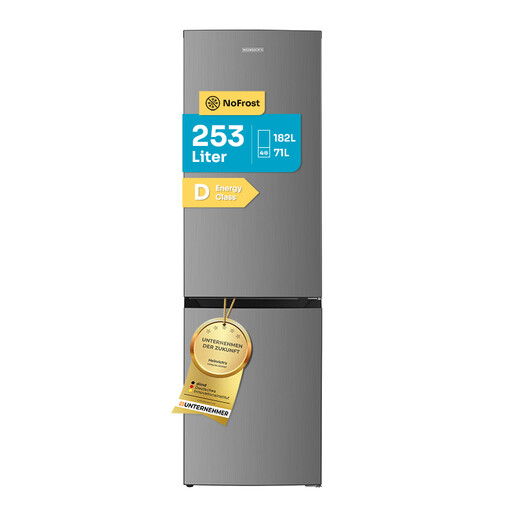 Image unavailable
Heinrich´s, 253 L fridge-freezer
Worth considering if you’d like to compare the space for fresh food with the space for frozen food separately.
The product name indicates 182 L for the fridge and 71 L for the freezer, along with LED lighting and No Frost. Check that these capacities will be enough between shops. This model is described as freestanding, not built-in.
View on Joybuy
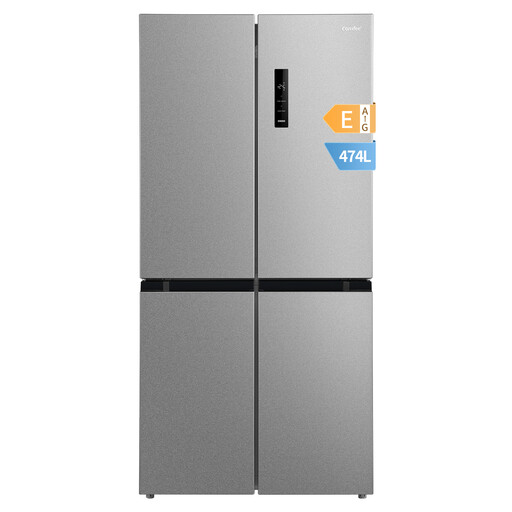 Image unavailable
COMFEE' RCF470LS2EU(E), 474 L four-door fridge-freezer
Worth a look if you’re after several access points for storing your weekly shopping and keeping different foods separate.
The model name indicates a total capacity of 474 L, four doors, a three-temperature vegetable drawer and an E energy rating. Check the usable capacity of the fridge and freezer, the annual energy consumption and the space needed to open the doors.
View on Joybuy
Frequently asked questions
What capacity do I need for a weekly shop?
Start by considering how much space your fresh shopping, prepared meals and frozen food actually take up between shops. Que Choisir suggests 100 to 150 litres for one person, then a further 50 litres for each additional person. Adjust this guide to suit how often you shop and how much space you need for fresh and frozen food.
When should I choose a fridge-freezer rather than a fridge with a freezer compartment?
Choose a fridge-freezer if you regularly need a separate compartment for frozen food as well as space for fresh food. If you only freeze small amounts occasionally, a fridge with a freezer compartment may be enough. However, Que Choisir says that a small freezer compartment isn’t suitable if you eat a lot of frozen food.
How should I store food after shopping?
Don’t overfill the fridge, so cold air can circulate, and store food according to the temperature zones inside the appliance. Anses gives the ideal storage temperature as between 0 and +4 °C at the coldest point. Check this temperature and keep raw meat and fish in the coldest area.
How can I use the energy label to compare two appliances?
Compare the energy rating and stated annual energy consumption of appliances of the same type and with similar usable capacities. The energy labelling of the relevant refrigeration appliances is governed by European Union rules. An energy rating alone won’t tell you whether the capacity of each compartment suits your shopping.
Should I look for a repairability index when buying a fridge?
Don’t rely on this index to compare fridges: in its list of categories covered, published in July 2025, the ministry responsible for ecological transition doesn’t include them. For a particular model, check the warranty and after-sales service terms provided by the retailer or manufacturer instead.


