Households that batch-cook meals for the freezer
If you cook several portions at once or shop in bulk, start by checking the freezer capacity and how the drawers are arranged. A separate appliance will also need extra space.


To keep fresh shopping and a few meals ready to freeze in one place, choose a fridge-freezer. If you regularly freeze large batches, consider adding a separate freezer alongside your fridge; if you mainly store fresh food, a fridge with no freezer compartment may be enough. Compare the capacity of each compartment, the space required and annual energy consumption before you choose.
If you cook several portions at once or shop in bulk, start by checking the freezer capacity and how the drawers are arranged. A separate appliance will also need extra space.
If you only have room for one appliance, a fridge-freezer lets you store both types of food. The split between fridge and freezer capacity matters more than the total capacity alone.
According to ADEME, fridges and freezers run continuously. Compare the annual energy consumption in kWh, capacity and features of the models you’re considering, rather than looking only at the energy rating letter.
Choose this if : you mainly store fresh food and rarely freeze anything.
Bear in mind : you’ll need a way to freeze food if batch-cooked meals or frozen shopping become a regular part of your routine.
Choose this if : you need both chilled and frozen storage in one appliance.
Consider this : the space allocated to the freezer may limit how much you can store in large batches.
Choose this if : you already have a fridge and often freeze meals or large amounts of shopping.
Bear in mind : you’ll need a second space, and the extra appliance will use energy around the clock.
Whichever option you choose, start by working out what you need to store. Then check the model’s specifications and the space you have available.
| Criteria | What to check | Who it matters to |
|---|---|---|
| Freezer capacity | Compare the usable freezer capacity in litres and the drawer layout. | If I prepare several portions in advance, I want to be able to store them without running out of room for frozen shopping. Around 33 % of shoppers prioritise this need for batch freezing. |
| Fresh and frozen storage split | Check the fridge and freezer capacities separately, then note the appliance dimensions. | With room for only one appliance, I need to keep my fresh shopping chilled while also freezing a few prepared meals. This balance is a priority for around 42 % of shoppers. |
| Energy use and installation | Compare the kWh/year figure and measure both the access route and the space available; check the manual for ventilation requirements. | I want an appliance that runs continuously to fit into my home without overlooking its electricity use. For around 25 % of shoppers, energy use and whether installation is practical come ahead of other criteria. |
Two fridge-freezers with a similar total capacity can divide their space differently between the fridge and freezer. So, an appliance with plenty of room overall might still not meet your storage needs for prepared meals.
Note the capacity of each compartment in litres and compare it with how often you shop and batch-cook.
The appliance needs to fit all the way through to its intended position. Once installed, you’ll also need to meet the ventilation requirements and climate class specified for the model.
Measure doors, corridors and corners along the route, confirm the delivery arrangements with the retailer and check the installation instructions for your chosen model.
Difficult access or a space that needs preparing may mean extra delivery or installation arrangements.
The rating letter doesn’t tell you the annual energy consumption or how much food the appliance can store. According to ADEME, cooling appliances run continuously, so it’s worth checking the energy use of each model.
Compare the kWh/year figures for appliances of a similar type and capacity, taking into account how much storage space you actually need.
Replacing a fridge or freezer also means arranging for your old appliance to be collected or taken to an appropriate recycling facility.
Ask about take-back arrangements when you buy, or plan to use a collection point or recycling centre. The Ministry for Ecological Transition explains the options for electrical and electronic equipment.
These brands offer ranges that are useful for comparing different formats. Check the specifications and installation requirements for the model you’re interested in.
The Bosch range includes fridges with no freezer compartment, fridge-freezers and freezers.
Liebherr’s range includes fridges with no freezer compartment, fridge-freezers and freestanding upright freezers.
Electrolux fridge-freezers, including built-in models, are also worth considering if you need to account for installation requirements.
These fridge-freezers combine chilled and frozen storage in one appliance. To compare them, start with the stated total capacity, then check how it’s split between the two compartments, the annual energy consumption and the installation requirements for each model.
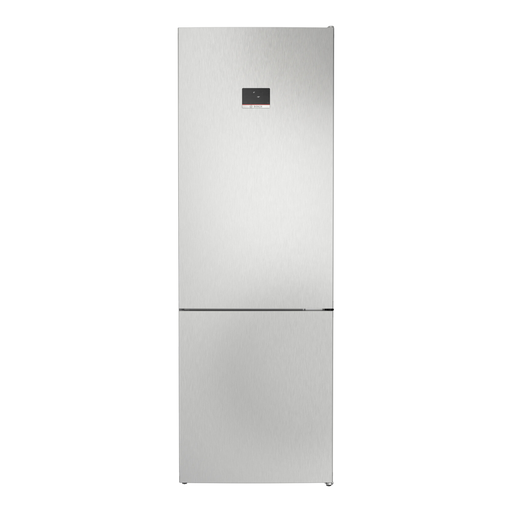 Image unavailable
Worth considering if you want to store fresh shopping and meals to freeze in one appliance. The stated total capacity is 440 L; check the capacity of each compartment and make sure the appliance can be moved through to its intended position.
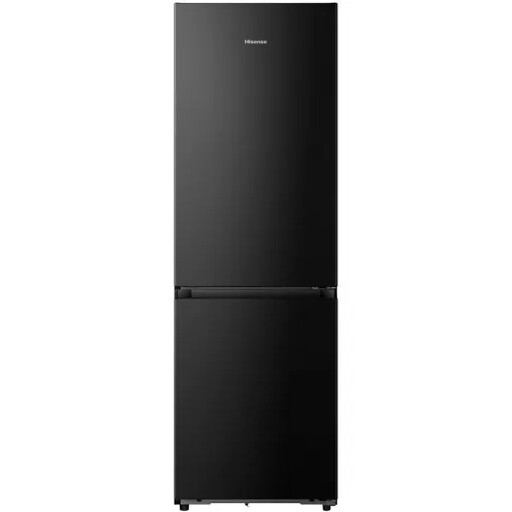 Image unavailable
An option to consider if you’re looking for one appliance to store both fresh and frozen food. Its stated total capacity is 330 L; check the freezer capacity, dimensions and the model’s ventilation requirements.
 Image unavailable
Worth considering if you’re looking for a large-capacity fridge-freezer for shopping and prepared meals. This model has a stated total capacity of 467 L, an E energy rating and Total No Frost; check the available space, access to the room and how the capacity is divided.
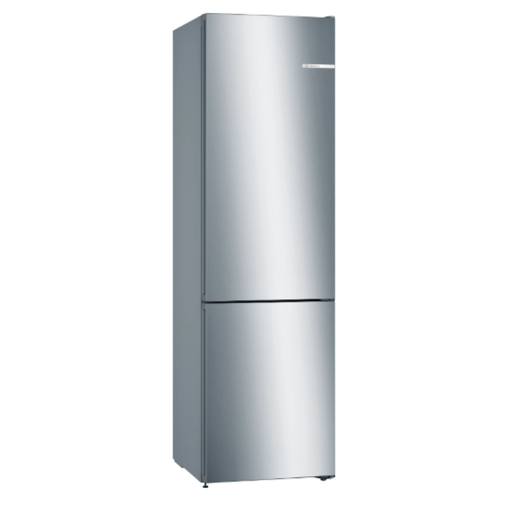 Image unavailable
Worth considering if you want to store fresh and frozen food without a second appliance. The stated total capacity is 368 L; compare the capacity of both compartments and measure the space required before delivery.
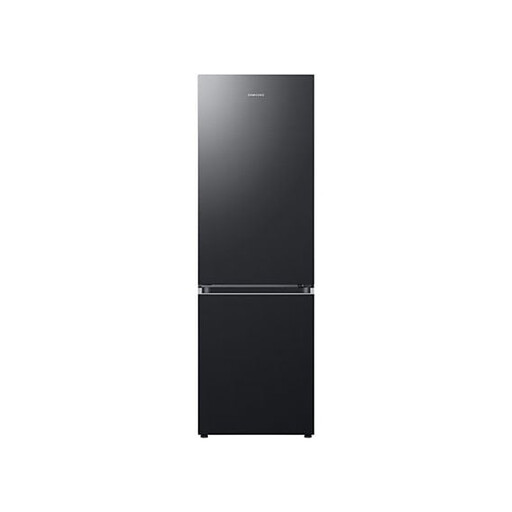 Image unavailable
An option for keeping fresh food and frozen portions in one appliance. The stated total capacity is 344 L; check the energy label to compare annual energy consumption, and check the dimensions and installation instructions.
Compare the capacity reserved for freezing, not just the appliances’ total capacity. With a fridge-freezer, also check the fridge capacity; for a separate freezer, compare its dedicated capacity with the amount of meals and shopping you plan to freeze.
Measure the space where it will go and the entire route to the room, including doors, corridors, stairs, lifts and corners. Tell the retailer about any access issues; for a built-in model, also check the dimensions and any work needed to prepare the housing and fit the door panels.
No. The required clearances depend on the model and how it’s installed. Follow its installation instructions to ensure good airflow, and check that its climate class is suitable for the intended location, as Electrolux highlights in its installation guidance.
Check the annual energy consumption in kWh, storage capacities, noise level and energy efficiency rating. The European Commission explains the information shown on fridge and freezer energy labels; compare like-for-like appliances with similar capacities.
Arrange for it to be collected or take it to an appropriate collection facility, rather than treating it as ordinary waste. The Ministry for Ecological Transition lists options including collection points and recycling centres; when buying a replacement of the same type, ask the retailer about take-back arrangements.