Households stocking up on fresh food
You shop for a week or more at a time and need to store your fresh food without overfilling the fridge. UFC-Que Choisir provides guidance on usable capacity based on the number of people in your household.


A fridge-freezer may be enough if its usable fresh and frozen food capacities can each accommodate the largest amount you’ll need to store between shops. If your fridge meets your needs but the freezer compartment is too small, compare an extra upright or chest freezer based on the space you have, how easily you can access the food and annual energy consumption.
You shop for a week or more at a time and need to store your fresh food without overfilling the fridge. UFC-Que Choisir provides guidance on usable capacity based on the number of people in your household.
Your decision depends mainly on the space actually available for frozen food, not just the total capacity advertised. UFC-Que Choisir distinguishes between upright and chest freezers, which differ in their format and space requirements.
Check that the appliance will fit in its intended space and that its door or lid can open properly. UFC-Que Choisir’s guides highlight the importance of checking the dimensions and the space needed for installation.
Choose this if: you’re replacing your fridge too, and the fresh and frozen food capacities can each accommodate the largest amount you need to store.
Bear in mind: one appliance takes up the space, but its total capacity doesn’t tell you how much room each compartment offers.
Choose this if: space is limited and you mainly store fresh food, with only a small amount of frozen food at a time.
Bear in mind: a small compartment won’t offer the capacity of a dedicated freezer; check the capacity of the specific model.
Choose this if: your fridge has enough room for fresh food but not enough for your frozen food supplies.
Bear in mind: an extra freezer means another appliance to install and power. A chest freezer needs floor space and room to open its lid.
For a fridge, UFC-Que Choisir gives a general guide of 100 to 150 litres of usable capacity for one person, plus 50 litres for each additional person. This isn’t a guaranteed capacity for a week or two of shopping: compare it with the amount you actually store, and check the fresh and frozen food capacities separately.
| Criterion | What to check | Who does this matter to? |
|---|---|---|
| Capacity for fresh food | Compare the fridge’s usable capacity and interior layout with the largest amount you need to store. UFC-Que Choisir’s guide depends on the number of people in your household and doesn’t guarantee enough capacity for less frequent shopping. | When I stock up for several days, I want to store fresh food without overfilling the appliance. Around 36% of consumers prioritise this capacity. |
| Space for frozen food | Check the freezer compartment’s usable capacity separately and make sure it can accommodate the amount you need to store at one time. UFC-Que Choisir distinguishes between upright and chest freezer formats based on their capacities and space requirements. | When frozen food makes up a large part of my shopping, I check the dedicated space rather than the advertised total capacity. Around 29% of consumers make this their top priority. |
| Size and access | Measure the space, the route to the room and the clearance needed for the door or lid. If the appliance will be in a cold room, check the ambient temperatures it can operate in. | If my kitchen or utility room is short on space, I also need to be able to open the appliance and reach what’s inside. Around 21% of consumers make size their main criterion. |
| Energy consumption | Compare the kWh/year shown on the energy label for appliances that meet the same storage needs. If you add a freezer, also factor in the consumption of the fridge you’re keeping. | When several formats could hold my shopping, I look at their annual energy consumption and that of the appliance I’d keep. Around 14% of consumers prioritise electricity costs. |
The total doesn’t tell you how much room is available for fresh and frozen food in their respective compartments.
Check the usable capacities of the fridge and freezer separately, then compare them with the largest amount you need to store.
A small freezer compartment may not be enough if you plan to store a lot of frozen food.
Check the capacity and stated purpose of the compartment on the specific model before relying on it for long-term storage.
A chest freezer takes up floor space and needs room for its lid to open. The permitted ambient temperature varies by model.
Measure the space and the clearance needed for the lid, then check the appliance’s operating conditions and stated annual energy consumption.
The models featured show two different configurations: a freestanding fridge-freezer and an integrated fridge with a freezer compartment.
The models featured let you compare either replacing your appliance with a fridge-freezer or adding an upright freezer.
The HSM14540 chest freezer is an example of an extra freezer with a top-opening lid.
These fridge-freezers let you compare the stated fresh and frozen food capacities when you’re replacing your fridge-freezer.
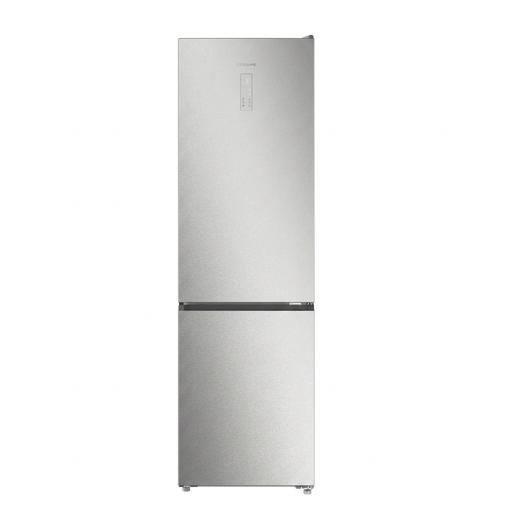 Image unavailable
Worth considering if you want to replace your appliance with a fridge-freezer and compare the fresh and frozen food capacities separately.
Fridge: 314 L; freezer: 142 L. Stated annual energy consumption: 237 kWh. Total No Frost, freestanding, 595 mm wide and with a reversible door.
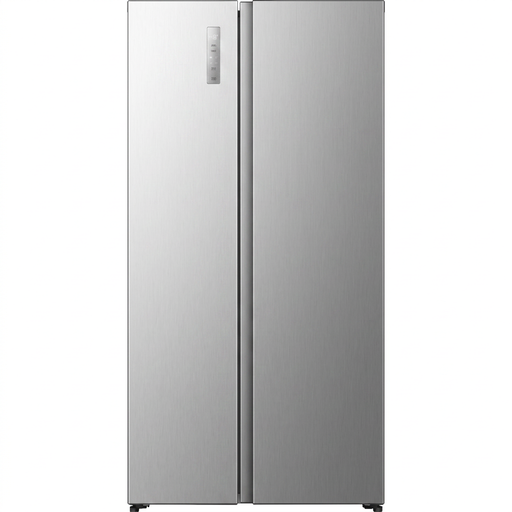 Image unavailable
Compare this model if you’re looking for a fridge-freezer and want to check whether its stated freezer capacity suits the amount you plan to store.
Fridge: 347 L; freezer: 197 L. Stated annual energy consumption: 254 kWh. No Frost, energy rating D, freestanding and stated width of 911 mm.
 Image unavailable
Worth considering if you want a fridge-freezer and would like to compare the capacities of both compartments and the stated interior layout.
Fridge: 235 L; freezer: 125 L. Stated annual energy consumption: 271 kWh. Total No Frost, energy rating E, freestanding, 59.5 cm wide and with a reversible door.
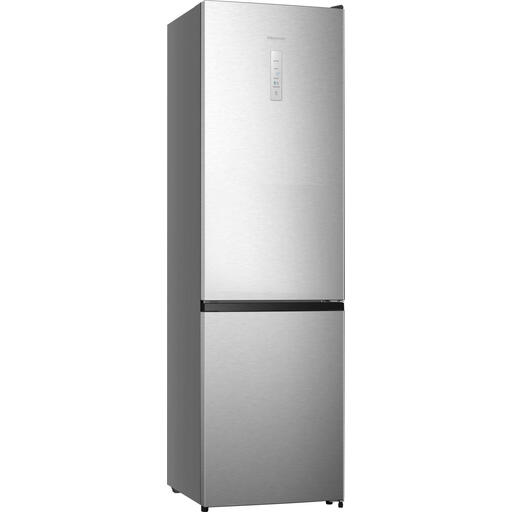 Image unavailable
Compare this model if you want to distinguish between the space for fresh and frozen food and organise frozen items in drawers.
Fridge: 238 L; freezer: 98 L. Stated annual energy consumption: 135 kWh. Total No Frost, energy rating B, three freezer drawers and stated 90° door opening.
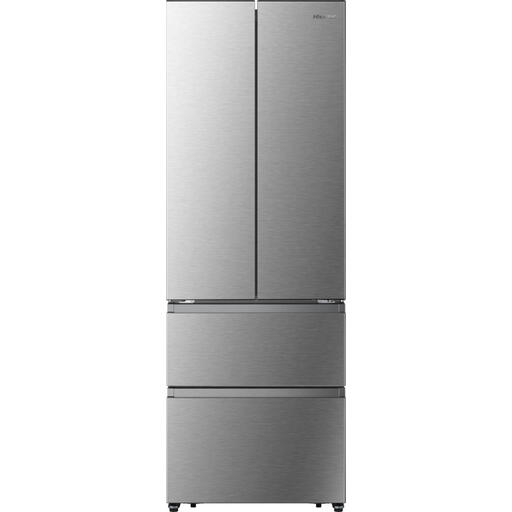 Image unavailable
Worth considering if you’re looking for a fridge-freezer and want to compare a separate frozen food compartment with a large fridge capacity.
Fridge: 336 L; freezer: 149 L. Stated freezing capacity: 11 kg/24 h. Total No Frost, energy rating E and a water dispenser with a tank, with no fixed plumbing required.
Estimate the largest amount of fresh and frozen food you’ll need to store separately, then compare it with the usable capacity of each compartment. UFC-Que Choisir gives a general guide of 100 to 150 l for one person, plus 50 l for each additional person. This doesn’t guarantee that a model will suit a week’s shopping, as the layout and the food you buy also matter.
Anses recommends keeping an eye on the temperature in the coldest part of the fridge, where it should be 4 °C, storing perishable food there and avoiding overfilling the appliance. It states that home freezing at −18 °C stops bacteria multiplying without destroying most micro-organisms; it doesn’t replace the need to observe use-by dates.
Compare the extra freezer’s annual energy consumption in kWh with that of other options that meet your needs. If you keep your fridge, its energy consumption will be added to the freezer’s. For a purchase from a professional seller in France, the Ministry of the Economy states that you have two years from delivery to claim under the legal guarantee of conformity. This guarantee is separate from any commercial extended warranty.
The European energy label for the relevant fridges and freezers shows information including the energy rating, annual energy consumption in kWh and compartment capacities. In France, the DGCCRF notes that when you buy a new appliance, the retailer must take back an equivalent old appliance free of charge under the « one-for-one » scheme. Check the practical arrangements for collection when you place your order.