Which households suit each option?
How you divide space between fresh and frozen food matters just as much as the total capacity available.
Households that meal prep and keep leftovers
If you store opened dishes or portions for the next few days, check whether the shelves fit your containers and let you see what’s inside. ADEME advises checking what you have in stock before shopping to avoid buying duplicates.
Households that regularly freeze portions
If you batch-cook meals or regularly buy frozen food, compare the freezer capacity and drawer layout. If a fridge freezer doesn’t have enough room for your usual supplies, it may be worth considering a separate freezer.
Smaller homes with little frozen food
A fridge with a small freezer compartment may suit occasional use without taking up space for an additional appliance. Still, check that the compartment can hold the food you actually plan to store in it.
How do you choose the right style and capacity?
Start with what you usually keep in your fridge and freezer, then compare your needs with the capacity and dimensions of each appliance.
Fridge freezer
Consider this if: you store fresh food, leftovers and frozen food every week in two compartments within one appliance.
Limit: a large total capacity doesn’t guarantee that each compartment will suit your supplies.
Small freezer compartment
Consider this if: kitchen space is limited and you rarely buy frozen food.
Limit: its smaller capacity can quickly make it difficult to store pre-prepared portions.
Separate freezer
Consider this if: your supplies regularly exceed the freezing capacity of a fridge freezer.
Bear in mind: it needs its own space and runs continuously.
| Priority |
What to check |
Your needs |
| Capacity of both compartments |
Compare the usable capacity in litres of the fridge and freezer separately. For the fridge compartment, UFC-Que Choisir suggests 100 to 150 l for one person, then 50 l for each additional person; adjust this to suit your habits. |
Do I mostly store fresh food and leftovers, or do my frozen portions regularly take up a lot of space? |
| Easy-to-see storage |
Check the shelf height and access, as well as the bins and drawers. Make sure your usual containers fit without hiding the food behind them. |
I’d like to spot opened food and leftovers before I do another food shop. |
| Energy consumption |
Compare the kWh/year shown on the energy label for appliances of a similar size and capacity. The energy rating alone doesn’t tell you the annual consumption; ADEME points out that refrigeration appliances run continuously. |
If I add a freezer, is the extra storage space worth having a second appliance running all the time? |
| Installation |
Measure the space and check the dimensions and clearances specified in the manual. If you’re buying a separate freezer, also plan where it will go and how it will be powered. |
I need enough capacity for my shopping without choosing an appliance that gets in the way in my kitchen. |
| Cold zone |
Check the manual to find the cold zone and use a thermometer to confirm its temperature. The Ministry of Agriculture says it should be no higher than 4 °C for highly perishable foods. |
I want to put highly perishable food in the right place while keeping leftovers easy to reach. |
Which models illustrate different storage options?
These manufacturer models show why it’s important to compare the features of a specific appliance rather than assume they apply to an entire brand.
Bosch
The range includes built-in and freestanding fridge freezers, with layouts that vary by model.
- Bosch lists a 208 l fridge capacity, a 62 l freezer capacity and a noise level of 35 dB for the built-in KIS87EDD0, along with Vario Zone and Big Box storage features.
- These capacities apply to the KIS87EDD0: check whether the space for frozen food and its built-in format suit your needs.
Whirlpool
The range includes fridge freezers with separate fridge and freezer compartments in different sizes.
- Whirlpool lists a 223 l fridge capacity and a 97 l freezer capacity for the WFNF82EOXFR.
- This capacity split applies to the WFNF82EOXFR: compare it with the space your fresh and frozen food takes up.
Liebherr
Some fridge freezers in the range combine a large capacity with dedicated compartments.
- Liebherr lists a total capacity of 423 l, a noise level of 34 dB, and BioFresh and NoFrost features for the CBNsdc 765i.
- Before choosing this model, check its dimensions and how the capacity is divided: a total of 423 l doesn’t tell you how much space is available for each type of food.
Miele
Depending on the model, fridge freezers in the range offer different drawers and systems for circulating or separating cold air.
- Miele lists an adjustable-humidity DailyFresh drawer on the KFN 4375 CD, along with DynaCool and DuplexCool features.
- These features don’t replace checking the usable capacity, drawers and space needed for your containers.
Fridge freezers to explore on Joybuy
These models are fridge freezers that let you store fresh and frozen food in one appliance. Compare their capacity with your usual supplies; this selection alone won’t tell you whether a small freezer compartment or a separate freezer is right for you.
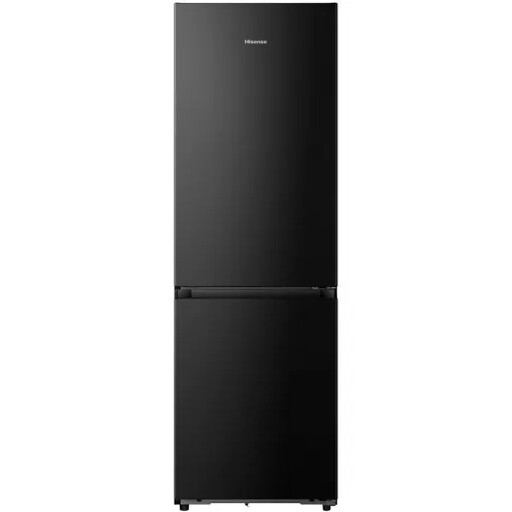 Image unavailable
Hisense RB5K330GSFC, 330 l black fridge freezer
If you want to store fresh groceries and frozen food in one appliance, check how the 330 l capacity is divided between the compartments. Also check that it fits in your kitchen and has the right layout for your containers.
View on Joybuy
 Image unavailable
Candy CFQQ5T817EPS, 467 l four-door fridge freezer
This four-door style is worth considering if your supplies regularly take up a lot of room. The model name indicates a capacity of 467 l, Total No Frost and an E energy rating. Measure the space you have available and check the energy label for kWh/year and the capacity of each compartment.
View on Joybuy
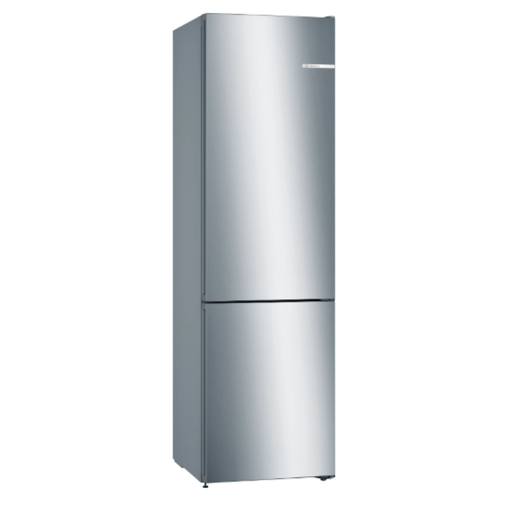 Image unavailable
Bosch KGN39VLEB, 368 l fridge freezer
If fresh food and leftovers make up a large part of what you store, check how the stated 368 l capacity is divided before choosing. The model name indicates an E energy rating; check the kWh/year and dimensions for the exact model.
View on Joybuy
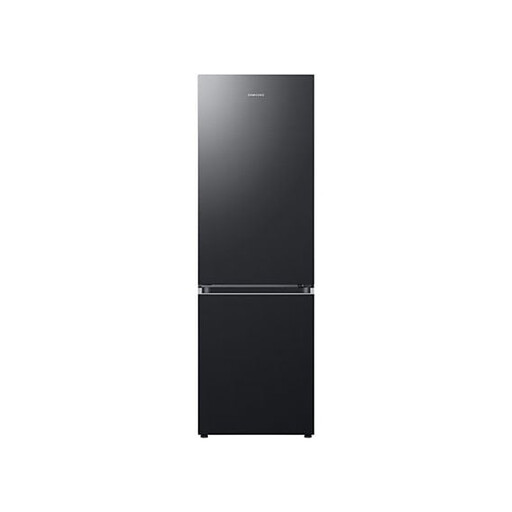 Image unavailable
Samsung RB34C704DB1, 344 l black fridge freezer
For fresh groceries and frozen food, check how the 344 l capacity is divided between the two compartments. The model name indicates a D energy rating; compare the kWh/year on the energy label rather than judging consumption by the letter alone.
View on Joybuy
 Image unavailable
CHiQ JR227LSE, 227 l fridge freezer, 54 cm wide
Its stated width of 54 cm is worth considering if space is tight. The model name gives a fridge capacity of 153 l and a freezer capacity of 74 l. It also indicates Low Frost, a reversible door and an E energy rating. Check the manual for installation and defrosting requirements, then check the energy label for kWh/year.
View on Joybuy
Frequently asked questions
How do you estimate the usable capacity of a fridge freezer?
Work out separately how much space your fresh and frozen food takes up. For the fridge compartment, UFC-Que Choisir suggests 100 to 150 l for one person, then 50 l for each additional person. Adjust this to suit how often you shop and the space your containers take up.
Does No Frost help you find food before you go shopping?
No. This feature doesn’t replace clear organisation or checking what you have in stock. To avoid buying duplicates, ADEME advises checking what food you already have before writing your shopping list. Also check how easy it is to access the shelves and drawers in the model you’re considering.
What temperature should you check for highly perishable food?
The Ministry of Agriculture recommends using a thermometer to find the fridge’s cold zone, which should be no higher than 4 °C. Its position varies between appliances, so check the manual to find where to store highly perishable food.
What should you look for on the energy label?
Check the energy rating and, most importantly, the specific model’s annual consumption in kWh. The European Commission says fridge and freezer labels use a scale from A to G. To help you choose, compare the kWh/year for appliances with similar capacities and formats.
Do you need a separate freezer for batch cooking?
Consider one if your pre-prepared portions regularly exceed the space available in a fridge freezer. First, work out how much capacity you need, then check where the extra appliance will go and how much energy it uses each year, as it will run continuously.


