When choosing a fridge freezer, first compare the usable fridge and freezer capacities with the amount of fresh food you buy and frozen food you store. A fridge freezer combines both functions; if you regularly freeze large quantities, you could also consider a separate freezer. Next, check the space available, the installation instructions, the energy use in kWh/year and the noise level of the model you’re considering.
Which households are these options right for?
Households that regularly buy fresh food
The space for fresh food matters just as much as the total capacity. For two to three people, Gifam suggests 250 to 330 L for the fridge compartment. Adjust this to suit how often you shop, and check separately how much freezer space you need.
Households that freeze prepared portions
If the drawers in a fridge freezer aren’t big enough for your frozen food, compare them with a separate freezer. UFC-Que Choisir distinguishes between chest freezers, which are designed for larger capacities, and upright models, whose drawers make food easier to access.
People fitting out a fitted kitchen
For a built-in appliance, measure the housing space and check the model’s instructions for door fitting and ventilation. The capacity may be right, but that won’t help if the appliance can’t be installed according to its instructions.
What should you compare before choosing?
Start with what you store, then compare appliances with a layout and installation requirements that suit your kitchen.
| What to consider | What to check | Your needs |
|---|
| Usable capacity |
Compare the fridge and freezer capacities separately, then check how easy it is to access the drawers and shelves. Gifam suggests 250 to 330 L of fridge space for two to three people. |
I need enough room for fresh shopping without taking up space needed for the portions I want to freeze. |
| Layout |
Check the freezer capacity in a fridge freezer or a small freezer compartment. If you need more storage, also compare the dimensions and layout of a separate freezer. |
If I often freeze large quantities of meals, I want to be able to reach them without crowding the fridge compartment. |
| Keeping food cold |
Check the temperature controls and how the compartments are arranged. Anses recommends keeping food between 0 and +4 °C at the coldest point in the fridge. |
I want to be able to put perishable food in the coldest part and check its temperature. |
| Energy use and noise |
The EU energy label shows information including kWh/year, capacity and airborne acoustical noise emissions. Compare these figures across appliances with a similar size and capacity. |
In an open-plan kitchen, noise matters to me just as much as the energy use of an appliance that runs continuously. |
| Installation |
Measure the height, width and depth, and check the doorways along the route. For a built-in model, also check the housing space, door fixing and ventilation requirements in the model’s instructions. |
I need to be able to install the appliance in the space provided, not just fit it inside the unit. |
| Room temperature |
Check the model’s climate class if it will be used in a cold or warm room. Liebherr explains that the climate class indicates the ambient temperatures the appliance is designed to operate in. |
If I’m putting it in a utility room or garage, I want to make sure the room temperature is suitable for the appliance I choose. |
What mistakes should you avoid?
-
Choosing based on total capacity alone
Two appliances with different splits between fridge and freezer space won’t suit the same storage habits.
Make a note of what you keep chilled and what you freeze, then compare the capacity of each compartment.
-
Measuring only the width of a built-in model
The depth, height, door fixing or required clearances could prevent the appliance from fitting in the housing space.
Measure the entire space and check the installation instructions for the exact model before ordering.
-
Comparing only the energy rating letter
The European Commission says the label also gives information about energy use, capacity and noise. These figures help you compare different aspects of each appliance.
Compare kWh/year, the capacity of each compartment and noise emissions across similar appliances.
-
Filling the fridge without considering the cold zones
How you organise the fridge can restrict airflow and make it harder to place perishable food in the right area.
Keep the different zones accessible and check the temperature at the coldest point, where Anses recommends 0 to +4 °C.
Which brands should you consider?
These ranges can help you find different layouts to compare; the features listed apply only to the specific models mentioned.
Bosch
The range includes freestanding and built-in fridge freezers.
- Bosch’s product details for the KGN493WDA list 330 L of fridge space, 108 L of freezer space and a noise level of 38 dB.
- These figures don’t apply to other Bosch models. Also check the dimensions and installation instructions for the one you’re interested in.
Liebherr
Some models in the range have dedicated fresh-food compartments, with freestanding and built-in options depending on the model.
- Liebherr lists a total capacity of 320 L, a noise level of 35 dB, BioFresh and NoFrost for the CBNc 5223 Plus.
- Compare the capacity of each compartment and the installation requirements for the model you choose; a feature on one model won’t necessarily be available across the whole range.
Samsung
The range includes different fridge freezer formats, including models with frost-free cooling.
- Samsung describes its all-around cooling system as circulating air and helping to reduce frost build-up. Check that it’s included on the model you choose.
- Check the capacity of each compartment, kWh/year, dB and dimensions rather than assuming these details from the technology name.
Beko
The range includes built-in fridge freezers to consider for a fitted kitchen.
- Beko describes the B3BCNA294HS as having NeoFrost Dual Cooling and a sliding door fixing system.
- Check the housing space, door fitting and ventilation in the documentation for the exact model.
Whirlpool
The range includes built-in fridge freezers designed for fitted kitchens.
- Whirlpool’s product details for the SP408102FR list a total capacity of 400 L and a housing width of 71 cm.
- The housing width alone doesn’t confirm compatibility. Check all the dimensions, door fixing and ventilation requirements for the model you’re considering.
Fridge freezers on Joybuy
These models combine fridge and freezer space to suit different shopping needs. The selection includes freestanding appliances and one built-in model. Compare the internal layout and installation requirements with your kitchen.
 Image unavailable
Haier HTW5618ENMG, 3-door, 360 L
Keep fresh shopping and frozen portions in one appliance. The model name lists Total No Frost, an E energy rating, Wi-Fi and My Zone. Compare the capacity of each compartment and check the installation clearances.
View on Joybuy
 Image unavailable
Candy CFQQ5T817EPS, 4-door, 467 L
Worth considering if you store plenty of fresh food as well as frozen provisions. The model name lists Total No Frost and an E energy rating. Check you have enough room for this multi-door format, and compare the usable capacity of each compartment.
View on Joybuy
 Image unavailable
CHiQ JR263LGE Low Frost, 262 L, 54 cm
Its stated width of 54 cm is worth considering if space is tight. The product details specify manual freezer defrosting despite the Low Frost feature. Before choosing this model, also check the temperature at the coldest point and the installation requirements.
View on Joybuy
 Image unavailable
AEG NSC6M18FES built-in, 249 L
This built-in fridge freezer is designed for a fitted kitchen; the model name lists TwinTech No Frost and an E energy rating. Confirm the capacity of each compartment, then check the housing space, door fixing and ventilation in the exact model’s instructions.
View on Joybuy
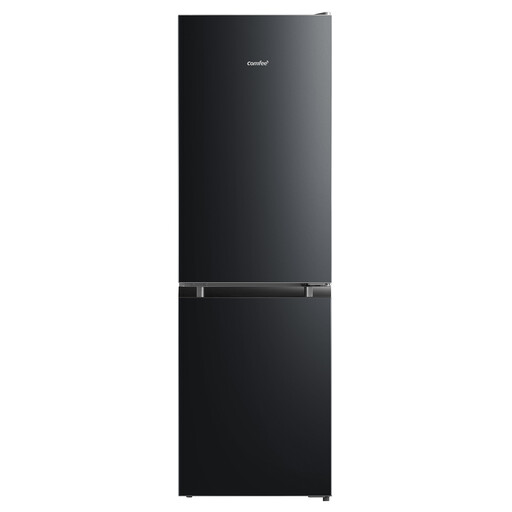 Image unavailable
Comfee' by Midea RCB230BL2EU(E), 174 L
This freestanding model is worth comparing if you need a smaller amount of storage with a freezer compartment. The model name lists Low Frost, an adjustable thermostat and a reversible door. Check the capacity of each compartment, the energy label details and the required clearances.
View on Joybuy
Frequently asked questions
What temperature should you aim for when storing perishable food?
Anses recommends a temperature between 0 and +4 °C at the coldest point in the fridge. Keep perishable food in this area and check its temperature, for example with a thermometer if the appliance doesn’t have a suitable indicator.
What should you look for on the energy label?
When comparing fridge freezers of a similar size and capacity, look at the energy rating alongside the kWh/year, storage capacity and noise level. The European Commission says this information appears on the label for the appliances concerned.
Can any built-in model replace an appliance in a fitted kitchen?
No. The housing space, door fixing system, opening and ventilation must all be suitable for the exact model. Measure the space and follow the installation instructions before choosing an appliance.
When should you check the climate class?
It’s particularly important to check if the appliance will be installed in a garage, an unheated utility room or a very warm room. Liebherr says the climate class specifies the ambient temperature range the appliance is designed to operate in. Check the climate class for the model you choose.


