What should you compare?
Fridge-freezer
Choose this: when your fresh and frozen shopping fits in the two compartments of a single appliance.
Trade-off: a good total capacity can disguise a freezer compartment that’s too small.
Larger fridge-freezer
Choose this: if you’re short of space for both fresh and frozen food.
Trade-off: extra capacity is only useful if it’s distributed in a way that suits you and the appliance fits in your kitchen.
Upright freezer
Choose this: if your fridge has enough room and you want to find frozen food easily in drawers.
Trade-off: the shape of the drawers can make it harder to store large items.
Chest freezer
Choose this: if bulk shopping or bulky items call for a large, open freezer space.
Trade-off: it takes up floor space, and food at the bottom is harder to reach.
Start by checking which compartment is overflowing after your shop, then make sure the type of appliance you’re considering will suit the room where it’s going.
| Priority |
What to check |
My needs |
| Usable capacity |
Compare the fridge and freezer capacities in litres separately. Check the shape of the drawers and the dimensions of the shelves against the packaging you usually buy. |
After my shop, am I short of space for fresh food, frozen food or both? I want to increase the capacity of the compartment that’s actually full, not just the overall capacity. |
| Access to food |
For a fridge-freezer or upright freezer, check how easy it is to access the drawers. For a chest freezer, plan how to store food at the bottom and make sure the lid can open fully. |
I often take frozen food out during the week, so being able to find it without moving everything else matters just as much as capacity. |
| Cooling and maintenance |
Check how each compartment is defrosted. If cooling performance after a big shop is important, look for tests of the specific model: the No Frost label doesn’t measure this. |
I do a big shop every week, so I want to distinguish between the stated maintenance requirements and cooling performance after loading. |
| Installation and use |
Measure the height, width and depth, and allow for door clearance. Compare the kWh/year, capacities and noise levels on the labels of the appliances you’re considering; check the permitted ambient temperature range in the manual. |
In an open-plan kitchen or utility room, I need to be able to fit the appliance and live with its noise and energy use. The European Commission says that fridge and freezer labels include information on these last two values. |
Fridge-freezers and larger models on Joybuy
These models combine fridge and freezer space in a single appliance, from relatively narrow fridge-freezers to larger-capacity options. To choose between them, compare the space actually available for fresh and frozen food, then check the overall dimensions.
 Image unavailable
Haier HTW5618ENMG, 360 L three-door fridge-freezer
Worth considering if you want to keep fresh and frozen food in one 360 L appliance. The product listing mentions Total No Frost, My Zone, Wi-Fi and an E energy rating. Also compare the usable capacity of each compartment with what you buy each week.
View on Joybuy
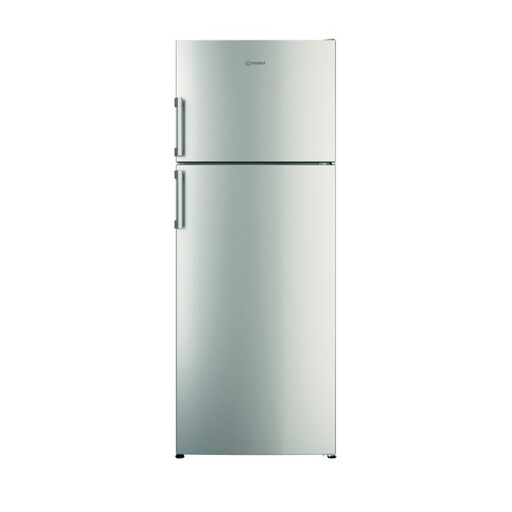 Image unavailable
Indesit IT70 832 S, 437 L freestanding fridge-freezer
Its stated total capacity of 437 L is worth comparing with the amount of space you need in each compartment. The product listing gives it an E energy rating; check the overall dimensions too before choosing this size.
View on Joybuy
 Image unavailable
CHiQ JR263LGE, 262 L Low Frost fridge-freezer
Its stated width of 54 cm may suit a household with limited space. The model is 176 cm high and its product listing gives a 70/30 split. Check that the freezer compartment will meet your needs, and find out what defrosting the model requires.
View on Joybuy
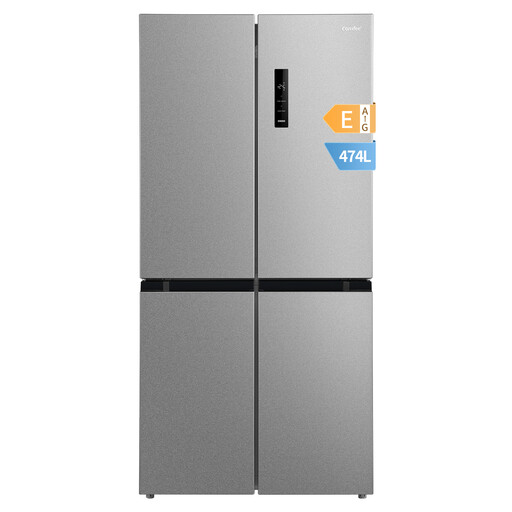 Image unavailable
COMFEE' RCF470LS2EU(E), 474 L four-door fridge-freezer
This 474 L model may be worth considering if you need plenty of space for both fresh and frozen food. The product listing mentions a Flip Tray and an E energy rating. Check the usable capacity of each compartment, the dimensions and the kWh/year before comparing it with another large appliance.
View on Joybuy
 Image unavailable
Sonlu CC-520WE, 444 L fridge-freezer
If you need a large capacity in one appliance, compare its stated 444 L capacity with the split between fridge and freezer space that suits you. The product listing mentions No Frost, an E rating and a stated noise level of 40 dB. Check the dimensions, interior layout and capacity of each compartment.
View on Joybuy
Frequently asked questions
How much fridge capacity do you need for a weekly shop?
Start by estimating how much space you need for fresh food, then work out how much you need for frozen food separately. Que Choisir suggests allowing 100 to 150 L of usable capacity for one person, plus 50 L for each additional person. Adjust this guide to suit your shopping habits; it won’t tell you how large a freezer you need on its own.
Should you get a larger fridge-freezer or a separate freezer?
A larger fridge-freezer is the more direct solution if both compartments are short of space, as long as it fits in your kitchen. If your fridge has enough room and only your frozen food is overflowing, consider adding a separate freezer instead. An upright model makes food easy to access in drawers, while a chest freezer suits bulky items if you have enough space for it.
What should you compare on the energy label?
For the relevant refrigeration appliances in France, compare the A to G rating, annual consumption in kWh, compartment capacities and stated noise level. The European Commission lists these among the details shown on the label. Compare them across appliances with a similar format and capacity that meet the same needs, rather than looking at the letter alone.
Is No Frost enough to judge an appliance after a big shop?
No. No Frost tells you about frost management, not how quickly a model returns to its set temperature after being loaded. If this matters for your weekly shop, look for independent test results on the cooling performance of the specific model.


