Households that do a weekly shop for fresh and frozen food
If you keep fresh and frozen food until your next shop, compare the capacity in litres of each compartment, not just the total capacity.


If you regularly buy fresh and frozen food, compare the capacity of each compartment separately before choosing a fridge-freezer or two separate appliances. A compact fridge may suit you if you have little need for frozen storage, or already have a separate freezer. Either way, check the available space, noise level and annual energy consumption of the model you’re considering.
If you keep fresh and frozen food until your next shop, compare the capacity in litres of each compartment, not just the total capacity.
If you buy in bulk, prepare meals in advance or share food storage, check whether the freezer compartment in a fridge-freezer will be big enough or whether you need a separate appliance.
Your appliance needs to fit in its intended space without obstructing the door. If your kitchen opens onto a living area, compare the stated noise level in dB(A) too.
Start by working out how much space you need for fresh and frozen food, then rule out any configurations that won’t fit your kitchen. Next, compare the energy labels of models with similar dimensions and capacity.
Worth considering: if you mainly store fresh food, or already have a separate freezer.
Bear in mind: if the model has a freezer compartment, check its capacity before relying on it for your frozen food.
Worth considering: if you regularly buy fresh and frozen food and want to store it all in one appliance.
Bear in mind: two fridge-freezers with a similar total capacity may divide their space differently between the fridge and freezer compartments.
Worth considering: if you usually keep more frozen food than you want to store in a fridge-freezer.
Bear in mind: you’ll need space for both appliances and should take account of their combined annual energy consumption.
| What to compare | What to check | Think about your needs |
|---|---|---|
| Usable capacity | Check the capacity in litres of the fridge and freezer separately. If there’s a freezer compartment, check its capacity rather than relying on the total figure alone. | I keep fresh food until my next shop, but how much space do I also need for frozen food? |
| Energy consumption | The European Commission says the energy label for refrigeration appliances shows the energy class, annual consumption and capacity. Compare the kWh/year and energy class of models with similar dimensions and capacity. | An appliance runs continuously in my home, so I want to compare its annual energy consumption with other options that meet the same storage needs. |
| Noise and positioning | Compare the stated noise level in dB(A), then measure the space, access routes and clearance needed to open the door. | In an open-plan or narrow kitchen, I want to know whether the appliance will fit and whether its stated noise level is right for me. |
| Maintenance and lifespan | Check the durability information available for the model and whether it needs defrosting. Anses recommends keeping the coldest part of the fridge between 0 °C and +4 °C. | I want to factor in maintenance after purchase and be able to check the temperature at which fresh food is stored. |
This figure doesn’t tell you how many litres are set aside for fresh or frozen food. A fridge-freezer may therefore be too small in one compartment, even if its total capacity seems sufficient.
Think about what you store between shops, then compare the usable capacity of each compartment on the energy label.
Looking at an energy class without considering annual consumption or capacity doesn’t give you a fair comparison between appliances of different sizes.
First compare models with similar dimensions and usable capacity, then look at their energy classes and kWh/year together.
An appliance that suits your shopping needs may not fit through the door on delivery, or the door may not open properly in its intended position.
Measure the recess, available depth and access routes. Also check which way the door opens and what delivery, installation or old-appliance collection services are available for the model.
Installation, disconnecting your old appliance or changing the way the door opens may require a separate service. Check what’s available before you order.
Keeping fresh food at the right temperature depends on how you set up and use your fridge, not just which model you choose.
Anses recommends a temperature of between 0 °C and +4 °C in the coldest part of the fridge. Check it and leave room for air to circulate inside the appliance.
These ranges and models can help you identify features to compare, but they don’t represent every appliance from each brand.
Bosch offers built-in and freestanding fridge-freezers. It’s worth distinguishing between these installation types before comparing capacity.
Beko’s fridge-freezer range includes models worth considering if your shopping takes up a lot of space in both compartments.
Liebherr France offers freestanding and built-in fridges, as well as fridge-freezers with a separate freezer compartment.
These models combine refrigeration and freezing in one appliance. If you’d rather choose a small fridge or two separate appliances, the guidance above on capacity, positioning and energy consumption still applies.
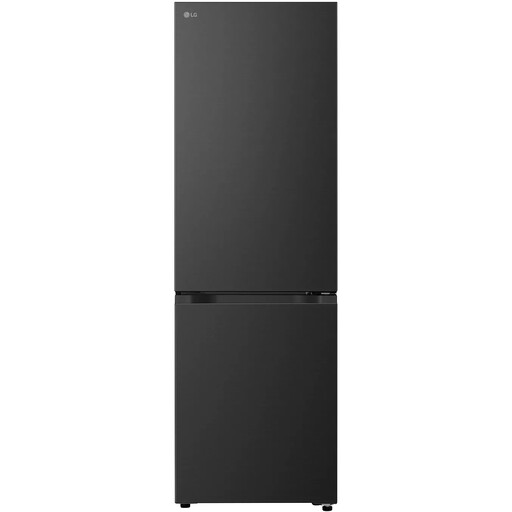 Image unavailable
If you shop for a mix of fresh and frozen food, check how the stated 333 L is divided between the two compartments. The model title lists No Frost and an A energy class. Check its dimensions and door clearance to make sure it suits your kitchen.
 Image unavailable
If you store large quantities of fresh and frozen food, compare the capacity of each compartment rather than relying on the stated 467 L total. This model is listed with Total No Frost and an E energy class. Check the space it needs in your kitchen and the access routes for delivery.
 Image unavailable
If you regularly shop for fresh and frozen food, check how the stated 360 L is divided between the compartments. This model is listed with Total No Frost, an E energy class, Wi-Fi and My Zone. Check its dimensions before deciding where to put it.
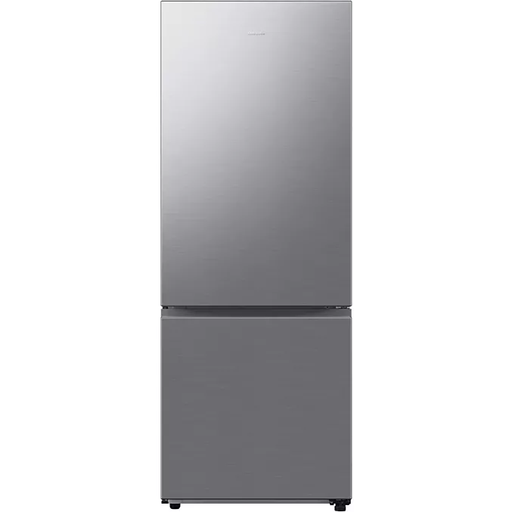 Image unavailable
If you store a lot of food between shops, check how much of the stated 538 L is allocated to the freezer and how much space you’ll need for installation. The energy class information for this model is contradictory, so check its energy label before comparing its consumption.
 Image unavailable
If you have a narrow kitchen, compare its stated width of 54 cm with the available space and clearance needed. This model is 176 cm tall, has a total capacity of 262 L and a 70/30 split. Check whether the space for frozen food will be enough for your shopping. Low Frost doesn’t mean you’ll never need to defrost it manually.
Compare models with similar dimensions and capacity, then look at their kWh/year, the capacity of each compartment and their stated noise levels together. The European Commission says the energy label for refrigeration appliances brings this information together. Its QR code links to detailed model information in EPREL.
Anses recommends keeping the coldest part of the fridge between 0 °C and +4 °C. Check the temperature after installation and avoid overfilling the appliance so that air can circulate.
No. If you want to cut down on manual defrosting, check that the model you’re considering has this feature, but also compare usable capacity, kWh/year, noise and dimensions. A maintenance feature alone won’t tell you whether an appliance is right for your shopping needs.
If your fridge is still usable, you could give it away. Otherwise, look into a collection and recycling scheme for refrigeration appliances, as recommended by ecosystem in France. Before ordering, check the collection and disconnection options available for your new appliance.
Don’t assume they are: available services depend on the product and your order. Check separately whether installation, collection of your old appliance, disconnection and changing the way the door opens are offered, and what terms apply at your address.