If you’re replacing your main appliance and need to store both fresh food and frozen portions, compare fridge-freezers by looking at the net capacity of each compartment. If your fridge still meets your needs but the freezer is often full, a separate freezer is a more direct solution to the lack of space, provided you have somewhere to put it. A small freezer compartment is better suited to occasional use.
Who are these options for?
Households that regularly freeze portions
If prepared meals and bulk buys already fill your freezer, start by checking its net capacity and how easy it is to find food in the drawers. The choice between a fridge-freezer and a separate appliance also depends on how much space you have.
Households that mainly store fresh food
If you need to store several days’ worth of meals in containers, usable depth and shelf space matter just as much as the stated capacity. Anses recommends keeping perishable foods in the coldest part of the fridge and avoiding overfilling it, so that air can circulate.
Small kitchens with limited freezer use
If space is tight and you only need to keep a few items frozen, check the appliance’s dimensions and the net capacity of its freezer compartment. The total capacity alone won’t tell you how much room is available in that compartment.
What should you look for?
First decide whether your current fridge still meets your needs for fresh food. Then compare how much space you need for frozen portions.
Fridge-freezer
Consider this if: you’re replacing your main appliance and want to combine both uses in one.
Downside: a high total capacity can disguise a freezer compartment that’s too small for your portions.
Small freezer compartment
Consider this if: you freeze very little and are mainly looking for a fridge that fits your available space.
Downside: check the compartment’s capacity and features before planning to store food regularly.
Separate freezer
Consider this if: your current fridge suits you, but its freezer limits how many prepared meals you can store.
Downside: you’ll need space for a second appliance and to account for its energy use.
| Criteria |
What to check |
Who is it for? |
| Storing fresh meals |
Net fridge capacity, usable depth and adjustable shelves. |
If I prepare several meals to keep chilled, my containers need to fit without blocking air circulation. Around 37% of consumers would prioritise this kind of storage. |
| Storing frozen portions |
Net freezer capacity and drawer layout; freezing capacity if you often add large quantities of food. |
If I regularly freeze portions, I want to be able to organise and find them without cramming them into a small compartment. This would be a priority for around 27% of consumers. |
| Available space |
Dimensions, clearance needed to open the doors and net freezer capacity. |
In a kitchen where space is limited, I want an appliance that fits the space available while still holding the few frozen items I need. Around 18% of consumers would put this constraint first. |
| Temperature and everyday use |
Settings, defrosting system, any alarms, annual energy consumption and the exact model’s noise level. |
If I store cooked meals and use the appliance often, I want to be able to monitor the temperature and choose maintenance requirements that suit me. For around 18% of consumers, this would be their main need. |
For perishable foods, Anses recommends a storage temperature of between 0 and +4 °C in the coldest part of the fridge, and advises against overfilling it. In France, the DGCCRF states that household refrigeration appliances have been subject to the applicable energy labelling rules since 1 March 2021. The label helps you assess the stated energy consumption, but it doesn’t replace checking the interior layout.
Mistakes to avoid
-
Relying on total capacity alone
Two appliances with a similar total capacity can divide the space differently between the fridge and freezer. This affects how much room is actually available for containers and frozen food.
Compare the net capacity of each compartment, then look at the drawers and shelves in the model you’re considering.
-
Overfilling the fridge to fit in your containers
Anses recommends leaving room for air to circulate and keeping perishable foods in the coldest part of the fridge.
Make sure your containers don’t block the air vents and that you can monitor the temperature.
-
Confusing energy rating with suitable storage
The energy rating won’t tell you whether a drawer will fit your portions or whether the shelves will suit your containers.
Choose a suitable format and capacity first, then compare the annual energy consumption shown on the labels of the models you’re considering.
-
Assuming every model from a brand has the same features
NoFrost, alarms and the stated storage time in the event of a power cut vary by model. A feature listed for one model isn’t necessarily available on another.
Check the product details and manual for the exact model, along with its dimensions, door opening direction and installation requirements.
Brands to know when comparing models
Bosch
The French range includes freestanding fridge-freezers with features that vary by model.
- Bosch states that the KGN36VLED has Total NoFrost and separate temperature settings for the two compartments.
- These features don’t apply to the whole range: check the net capacities, dimensions and label for the model you choose.
Liebherr
Liebherr offers fridge-freezers featuring technologies including EasyFresh and NoFrost.
- Liebherr lists a total capacity of 371 L for the CNSFD 5703 and 359 L for the CNd 5704.
- If you need to store frozen portions, compare the freezer capacity and layout of each model instead.
Samsung
Samsung France offers frost-free fridge-freezers, as well as multi-door and side-by-side models.
- The brand describes multi-door models as generally offering greater capacity.
- Capacity alone won’t help you decide: check the width, capacity of each compartment, noise level and energy consumption of the exact model.
Electrolux
Electrolux offers built-in TwinTech No Frost fridge-freezers for kitchens with a suitable housing unit.
- Electrolux describes the KNT6ME18S4 as having dual cooling and a frost-free freezer.
- Before choosing a built-in model, check the housing unit dimensions, net capacities and installation requirements.
Fridge-freezers available on Joybuy
These models combine refrigeration and freezing in one appliance. For your prepared meals, compare their stated capacities with the space you need for your containers and frozen food, and make sure you have room to install the appliance.
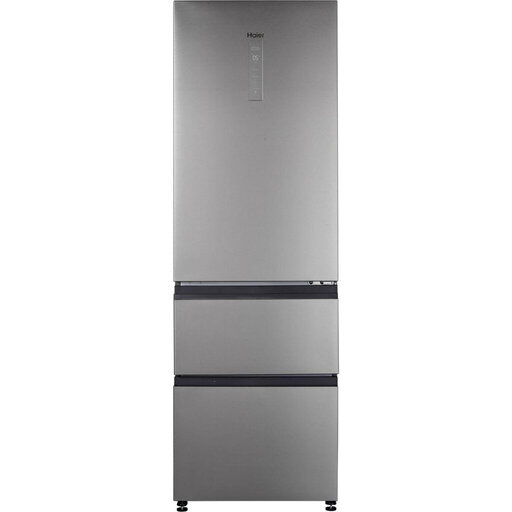 Image unavailable
Haier HTW5618ENMG, 3 doors, 360 L
Worth considering if you want to store fresh and frozen meals in a three-door appliance. The title lists Total No Frost, an E rating, Wi-Fi and My Zone. Check the usable space in each compartment and whether the exact model has alarms in its product details.
View on Joybuy
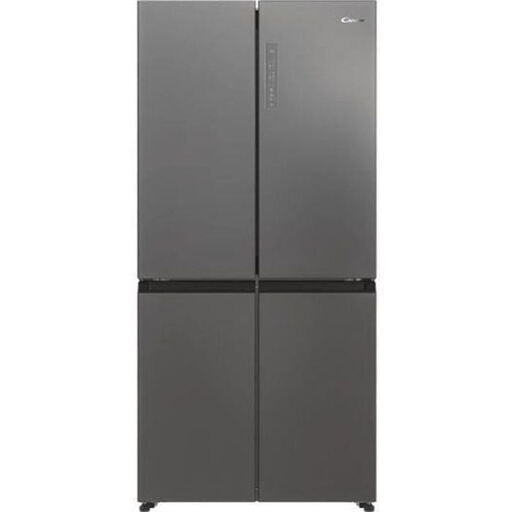 Image unavailable
Candy CFQQ5T817EPS, 4 doors, 467 L
The four-door design is worth considering if you want separate access to different storage areas. The title lists Total No Frost and an E rating. Measure the space and clearance you’ll need before choosing this appliance.
View on Joybuy
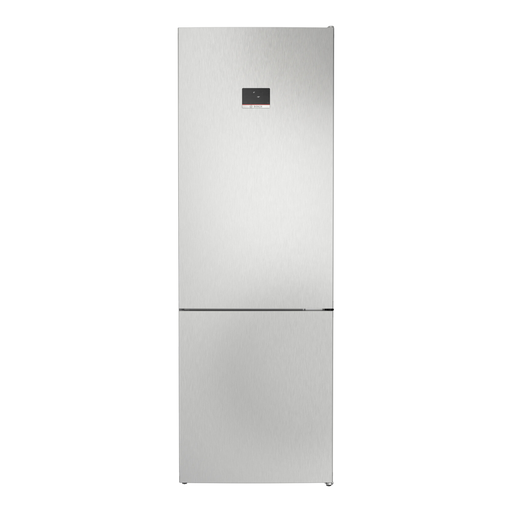 Image unavailable
Bosch KGN497LDF, 440 L, D rating
If you want to store fresh food and frozen portions in a fridge-freezer, compare how the stated capacity is divided between the two compartments. Before buying, also check the freezer drawer layout and defrosting system of this model.
View on Joybuy
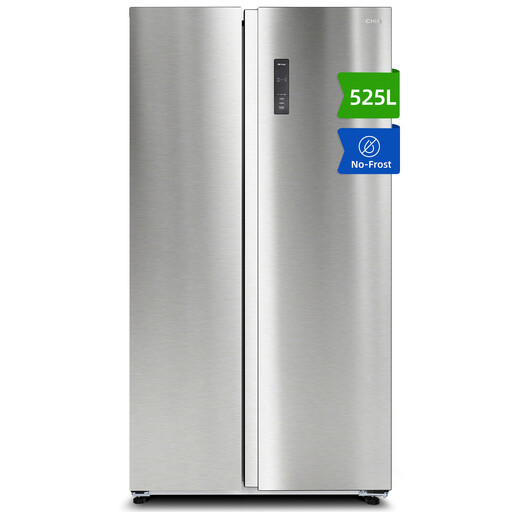 Image unavailable
CHiQ JR525WSE side-by-side, 525 L
Consider this if you have enough room for a side-by-side model and need to store both fresh and frozen food. The title lists 333 L of fridge capacity and 192 L of freezer capacity, and states that it has No Frost. Check the installation dimensions and interior layout.
View on Joybuy
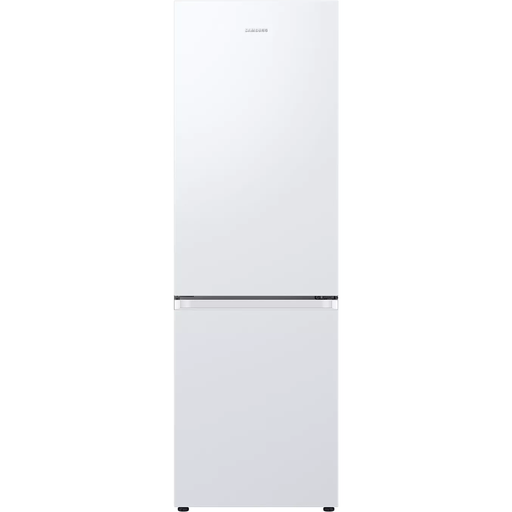 Image unavailable
Samsung RB38C600EWW, 390 L, E rating
If you’re looking for a fridge-freezer to keep fresh food and frozen items separate, check how much of the stated 390 L capacity is allocated to each compartment. Also look at the shelves and drawers to see whether they’ll fit your containers and portions.
View on Joybuy
Frequently asked questions
Where should you put prepared meals in the fridge?
Keep cooked meals and other perishable foods in the coldest part of the fridge. According to Anses, the storage temperature in this area should be between 0 and +4 °C. Check the actual temperature and avoid overfilling the appliance.
Is the energy label enough to help you choose a fridge-freezer?
No: it won’t tell you whether the drawers and shelves will fit your portions. In France, the DGCCRF states that the energy labelling rules for household refrigeration appliances have applied since 1 March 2021. Compare the information shown, then check the dimensions and layout of the exact model.
Is NoFrost essential for prepared portions?
No. Bosch and Liebherr describe NoFrost as a feature that removes the need to defrost the freezer manually on some of their models. When choosing, also check the freezer capacity, how easy it is to access your portions and the fridge temperature.
What should you check if you’re concerned about a power cut?
Check the product details and manual for the stated storage time in the event of a power cut and any alarms. These features vary by model, so don’t assume they’re included based on the brand or total capacity.


