Households replacing an energy-hungry appliance
You want to compare the annual energy consumption of an appliance that runs constantly without giving up the capacity you really need. ADEME points out that fridges and freezers run all year round.


If you regularly store fresh and frozen food, start by comparing the capacity of the two compartments in a fridge-freezer. If you mainly need space for fresh food, a fridge on its own may be enough; if you need to store a large amount of frozen food, consider a separate freezer instead. In either case, compare the annual energy consumption of appliances of a similar size and capacity, then check the available space and installation requirements.
You want to compare the annual energy consumption of an appliance that runs constantly without giving up the capacity you really need. ADEME points out that fridges and freezers run all year round.
You need to decide whether the two compartments in a fridge-freezer suit your usual shopping habits, or whether a separate freezer would be more useful.
Before choosing an appliance type, consider its dimensions, door or lid clearance, ventilation and the room temperature.
First, work out how much space you need for fresh and frozen food: a fridge on its own won’t meet the same needs as a fridge-freezer or a dedicated freezer. Then compare the kWh/year figures for appliances of a similar size and capacity, and check their dimensions against the space available. According to the European Commission, the energy label for refrigeration appliances shows information including energy consumption, capacity and noise levels.
| Criterion | What to check | Who is it for? |
|---|---|---|
| Annual energy consumption | The kWh/year figure and usable capacity, comparing appliances of a similar size; don’t look at the energy rating alone. | If I’m replacing an appliance that runs constantly, I want to limit its energy use without choosing one that’s too small. Around 29% of consumers would make this a priority. |
| Balance of fresh and frozen storage | The usable capacity in litres of each fridge-freezer compartment, rather than just its total capacity. | If I use fresh and frozen food every day, I need enough space for both in one appliance. This would be a priority for around 29% of consumers. |
| Frozen food storage | The usable capacity and design of a dedicated freezer: an upright model makes it easier to access the compartments, while a chest freezer generally takes up more floor space. | If I need to store a large amount of frozen food, I prioritise freezer capacity and how easy it is to reach the food. Around 18% of consumers would put this need first. |
| Space and installation | The dimensions, door clearance, ventilation gaps and climate class specified for the exact model. | In a small kitchen or utility room, I need to be able to get the appliance in, open its door and meet its operating requirements. This compatibility would be a priority for around 24% of consumers. |
Two appliances won’t necessarily meet the same storage needs. ADEME points out that choosing an appliance that’s too large or has more features than you need can increase energy consumption.
Compare the kWh/year figures and usable capacities of appliances of a similar size, then choose a capacity that suits your usual shopping habits.
An appliance may fit in the measured space but still not have enough room for its door or lid to open, or for air to circulate.
Check the delivery route, clearance for opening and ventilation gaps specified in the manual for the model you’ve chosen; requirements vary between models.
According to Bosch, a chest freezer generally takes up more floor space. Its top-opening design also affects how you organise and find your food.
If you open your freezer often and want to organise food in drawers, compare upright models too. If you need more storage capacity, check that you have enough floor space for a chest freezer and room to open its lid.
The permitted ambient temperature depends on the climate class and the guidance for the specific model; you can’t determine it from the appliance’s size alone.
If you’re placing it in a garage or utility room, compare the room temperature with the operating conditions in the appliance documentation.
Its compact fridge and upright freezer models give you two distinct storage options to consider.
The CNgbc 5723 Plus fridge-freezer is one option to consider if you want fresh and frozen storage in a single appliance.
Its fridge-freezer and chest freezer models let you compare combined storage with a dedicated freezer for larger stocks of frozen food.
These models are mainly fridge-freezers for everyday storage of fresh and frozen food, along with a compact fridge for fresh food. To choose between these types, check how much capacity you need. To compare their energy use, look at the kWh/year figure on each model’s energy label.
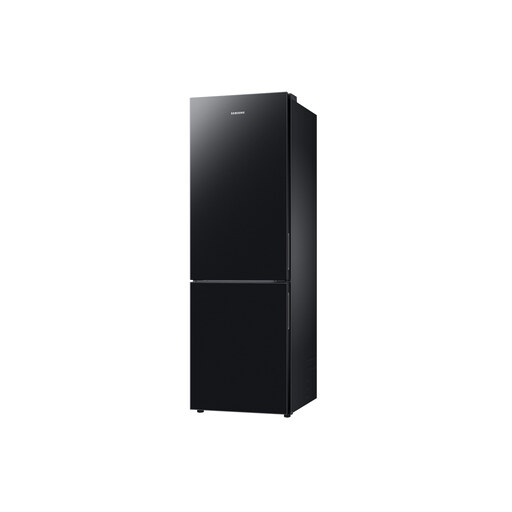 Image unavailable
Worth considering if you want refrigeration and freezing in one appliance. The title lists a total capacity of 344 L and an energy rating of E; check the capacity of each compartment, the kWh/year figure and the dimensions before comparing it with another fridge-freezer.
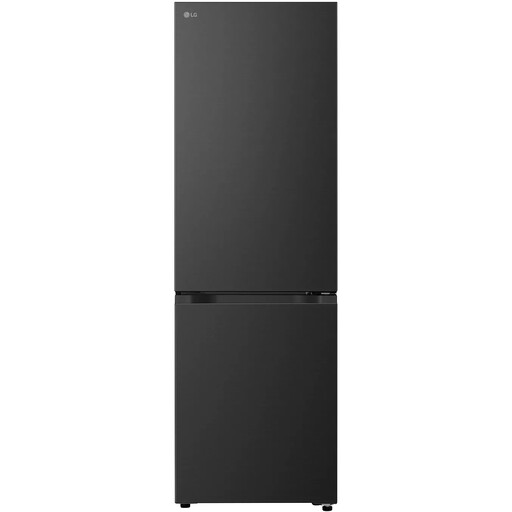 Image unavailable
If you want to store fresh and frozen food in one appliance, check that the balance between the two compartments suits your habits. The title lists a total capacity of 333 L, No Frost and an energy rating of A; also check the kWh/year figure and the exact model’s dimensions.
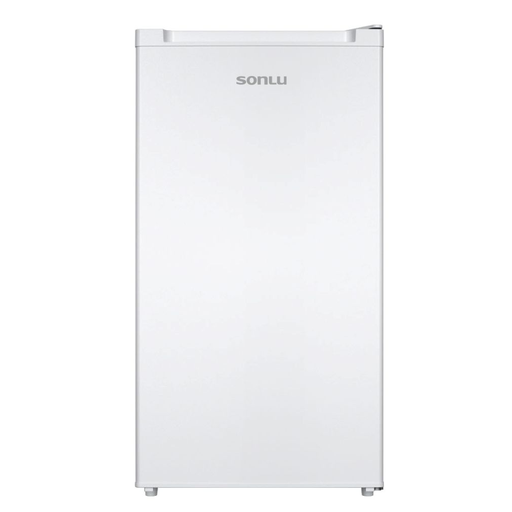 Image unavailable
Worth considering if you mainly need a small amount of space for fresh food. The title lists an 82 L capacity and an energy rating of E; check whether it has a freezer compartment, as well as the kWh/year figure and dimensions, if these affect your choice.
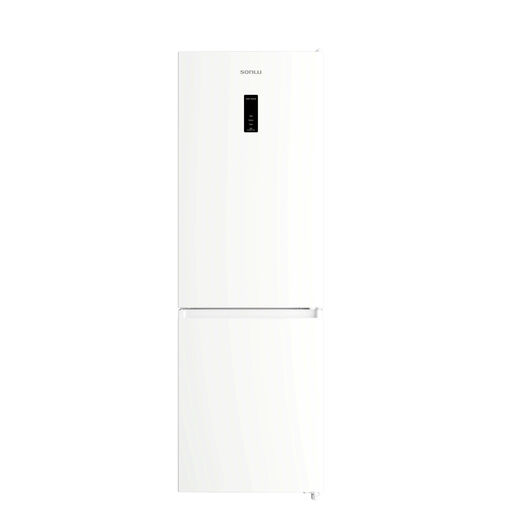 Image unavailable
For everyday storage of fresh and frozen food, the title lists 211 L of fridge capacity and 99 L of freezer capacity. It also specifies a width of 60 cm, a reversible door and an energy rating of E; check the kWh/year figure, height, depth and required clearance.
 Image unavailable
Worth considering if you need a high total capacity for fresh and frozen food, without assuming how much space each compartment offers. The title lists a 444 L capacity, frost-free technology, 40 dB and an energy rating of E; check the capacity of each compartment, the kWh/year figure and the dimensions before choosing.
Compare annual energy consumption in kWh, usable capacity and noise levels, as well as the energy rating. The European Commission says this information appears on fridge and freezer energy labels; the QR code takes you to the model’s entry in the EPREL database.
No. Follow the clearances specified in the manual for your model and installation type. Electrolux recommends allowing air to circulate around the appliance, but this doesn’t mean there’s one clearance that suits every fridge and freezer.
Use an appropriate collection service for electrical and electronic equipment rather than disposing of it as ordinary waste. The French Ministry for Ecological Transition explains how this collection scheme works in France; you can also check the collection options offered when you make your purchase.