A mix of fresh and frozen meal prep
You keep portions and ingredients chilled, while freezing some for later. How the space is divided and how the drawers are arranged matter more than the total capacity alone.


For meal prep, start by working out how much fridge and freezer space you need, based on the foods you want to store at the same time. A fridge-freezer suits you if you use both compartments regularly; a separate freezer or a multi-door model may be worth considering if you have the space and need the extra capacity. A larger appliance won’t replace keeping track of what you have or planning your shopping, as ADEME points out.
You keep portions and ingredients chilled, while freezing some for later. How the space is divided and how the drawers are arranged matter more than the total capacity alone.
You want to store more frozen portions. Check the freezer capacity, freezing capacity and space requirements before considering a separate appliance.
You store lots of fresh food and leftovers at the same time. Easy access to food, space for containers and the appliance’s footprint all become important.
Start by estimating what needs to fit in the fridge and freezer at the same time, then check the dimensions and annual energy consumption of the models you’re considering.
Choose one if: you regularly use both compartments for meals, ingredients and some frozen portions.
Consider: one appliance gives you both compartments, but the balance of fridge and freezer space varies between models.
Choose one if: you mainly need fridge space and freeze only a few portions.
Consider: the smaller compartment leaves less room for frozen food. If you prepare batches, check whether it can freeze fresh food.
Choose one if: you need to store more frozen portions for longer and have a suitable space for it.
Consider: you’ll need to make room for a second appliance and factor in its electricity use as well as your fridge’s.
Choose one if: you need plenty of space in both compartments and have room to install the appliance and open its doors.
Consider: a large total capacity doesn’t guarantee a suitable split for the portions you want to freeze.
| What matters | What to check | Who prioritises it most |
|---|---|---|
| Balance of fridge and freezer space | Compare the usable litres in each compartment and make sure there’s room for your containers. | If I keep meals and ingredients chilled while freezing portions, I want both compartments to suit what I store. Around 36% of consumers prioritise this balance. |
| Freezing batches | Check the freezer capacity, freezing capacity and, if you freeze freshly prepared food, the compartment’s guidance. | When I prepare several portions to freeze, I check that they’ll fit and can be frozen to suit my needs. Around 29% of consumers make batch freezing their priority. |
| Storing the weekly shop | Check the usable shelf space, how easy it is to see leftovers and whether there’s room for your containers. | If I store shopping and leftovers together, I want to find food easily and arrange the space around my containers. Around 21% of consumers put organisation first. |
| Space, energy use and noise | Compare the dimensions, door clearance, kWh/year and stated noise level for each model. | If the space available or how the appliance runs limits my choice, I check these factors before looking at total capacity. Around 14% of consumers prioritise size, energy use or noise. |
UFC-Que Choisir suggests allowing an average of 100 to 150 litres of usable fridge space for one person, plus 50 litres for each additional person. This is a guide for fridge space: adapt it to the foods you store at the same time and don’t treat it as a fixed rule for freezer capacity.
The space you need for chilled and frozen food also depends on how often you shop and prepare batches. Two appliances with the same total capacity may have very different amounts of space in each compartment.
Think about what you store at the same time and compare the usable capacity of each compartment separately before choosing a format.
The space for storing food that’s already frozen doesn’t, on its own, tell you how much fresh food the appliance can freeze.
If you freeze your own meals, check the compartment’s guidance and the model’s freezing capacity.
Extra space won’t stop you buying things twice or forgetting about food. ADEME recommends checking what you already have before shopping and keeping track of food that needs using up.
Choose a capacity that suits your portions and arrange the shelves so you can see your leftovers.
External dimensions alone won’t tell you whether you can access the drawers, and stated noise levels vary between models.
Measure the space and access route, check the manual for the clearance needed to open the doors, and compare the stated noise levels.
The HDPW7620AANPK is a large-capacity freestanding fridge-freezer worth considering if its compartment layout and height suit your kitchen.
The GBB92MCB2P and GMX844MCKV are examples of a fridge-freezer and a multi-door model respectively, with different storage layouts.
The KGN392I1F is a fridge-freezer with a bottom freezer, making it easy to compare the space available for chilled and frozen food separately.
The B3RCHE305HW is a fridge-freezer with a bottom freezer worth considering if freezing capacity and a reversible door are among your priorities.
The CNSFD1853-2 and FNd 5026 give you two options to compare: a fridge-freezer and a separate freezer.
This selection includes fridge-freezers with integrated freezers and a multi-door model, so you can compare fridge and freezer capacity for meal prep and your weekly shop.
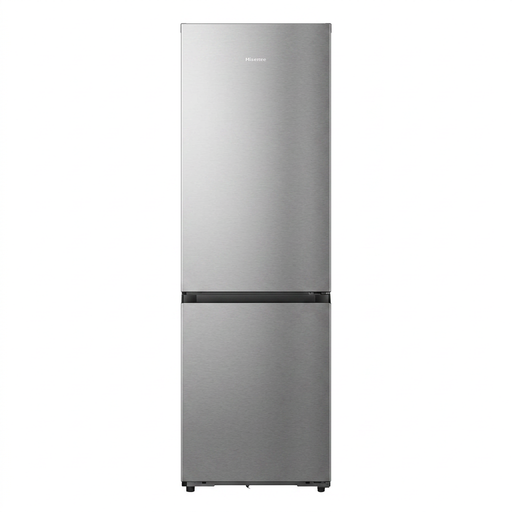 Image unavailable
Worth considering if you want to store fresh shopping and frozen portions in a fridge-freezer with a bottom freezer.
Capacity: 330 L in total, including 215 L of fridge space and 115 L of freezer space.
Freezing capacity: 10 kg/24 h; three freezer drawers.
Stated energy use: 165 kWh/year; noise level: 35 dB.
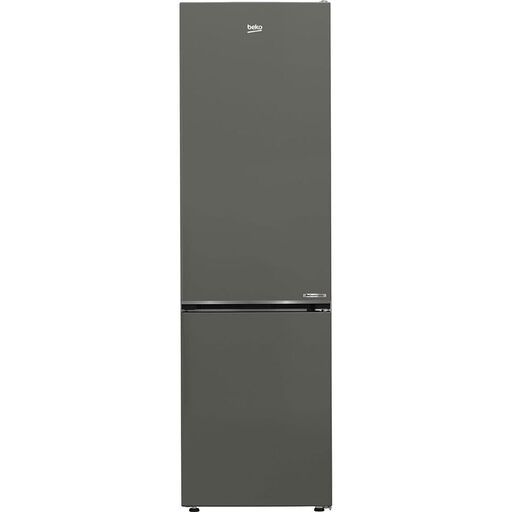 Image unavailable
Worth considering if you’re looking for a fridge-freezer with separate compartments and a stated freezing capacity.
Capacity: approximately 249 L in the fridge and 106 L in the freezer.
Four-star compartment; freezing capacity: 6 kg/24 h.
Total No Frost; stated energy use: 240 kWh/year; noise level: 35 dB.
 Image unavailable
Worth considering if you want to organise fresh and frozen food separately in a three-door appliance.
Capacity: 235 L in the fridge and 125 L in the freezer.
Freezing capacity: 10 kg/24 h; four-star compartment and three freezer drawers.
Stated energy use: 271 kWh/year.
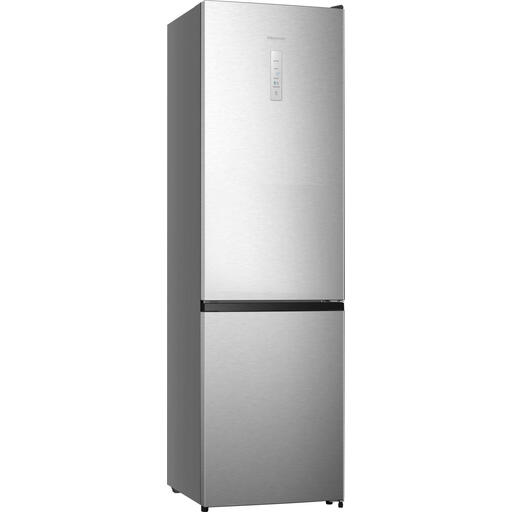 Image unavailable
Worth considering if you want a fridge-freezer with dedicated drawers to help organise both compartments.
Capacity: 238 L of fridge space and 98 L of freezer space.
Freezing capacity: 6 kg/24 h; three freezer drawers.
Energy rating B; stated energy use: 135 kWh/year; noise level: 35 dB.
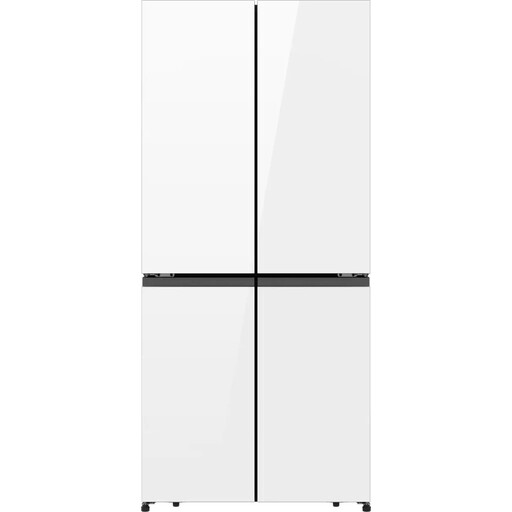 Image unavailable
Worth considering if you need plenty of space and want a compartment with an adjustable temperature to suit what you’re storing.
Capacity: 304 L of fridge space, 87 L of freezer space and a 92 L variable-temperature compartment.
Freezing capacity: 8 kg/24 h; stated energy use: 293 kWh/year.
The My Fresh Choice compartment can be set from +5 °C to −18 °C, so its 92 L capacity isn’t fixed freezer space.
Start with the food and containers you’ll have in each compartment at the same time. UFC-Que Choisir suggests an average of 100 to 150 L of usable fridge space for one person, plus 50 L for each additional person. This isn’t a recommendation for freezer capacity, or a reason to buy a larger appliance without considering your habits.
Not necessarily. Space for storing food that’s already frozen doesn’t, on its own, tell you how much fresh food the appliance can freeze. If you prepare batches, check the compartment’s guidance and the model’s freezing capacity.
Compare the kWh/year figures on each model’s energy label. If you’re considering a separate fridge and freezer, add together their stated annual energy use. The energy rating alone won’t tell you the combined energy use of two appliances.
Anses recommends keeping the coldest part of your fridge between 0 and +4 °C and storing perishable cooked dishes there. It advises refrigerating them within two hours and not overfilling the appliance. This guidance doesn’t set a universal storage time for every dish.
No. According to Anses, freezing food at home at −18 °C stops bacteria from multiplying, but most micro-organisms survive. Anses recommends freezing food before its use-by date. Once defrosted, food should be eaten promptly, within three days at the latest, and should not be refrozen.