What should you check before choosing?
Start by working out how much space you really need for fresh and frozen food, then check that your chosen style can be delivered and installed in your kitchen.
| Priority | What to check | Your needs |
|---|
| Capacity split |
Compare the usable capacity of the fridge and freezer separately, then check the space available for containers and bulky items. UFC-Que Choisir suggests 100 to 150 L for one person, plus 50 L for each additional person; adjust this to suit your habits. |
I shop for several days at a time and want enough room for fresh food without running short of space for frozen meals. |
| Freezer type |
A fridge freezer keeps fresh and frozen food in separate compartments. If you only need a little freezer space, check the capacity of the compartment on offer: UFC-Que Choisir notes that a small freezer compartment isn’t enough if you regularly buy frozen food. |
I freeze a few portions each week, or only occasionally. The compartment I choose needs to suit how often I freeze food. |
| Plenty of freezer storage |
Check the capacity and drawers in a multi-door model. If you regularly need more freezer than fridge space, see whether you can install and use a separate freezer alongside a fridge. |
Prepared meals and bulk buys regularly take up freezer space; I don’t want to increase the amount of fresh-food storage unnecessarily as well. |
| Installation |
Measure the space, door clearance and delivery route, including the packaged appliance. Follow the ventilation clearances specified in the model’s manual. |
A large appliance needs to fit through my doorways and be practical to use once installed. |
| Energy and noise |
Check the energy rating, kWh/year and stated dB(A), comparing appliances with similar capacities and features. ADEME recommends using the energy label to help guide your choice. |
Noise matters day to day in an open-plan kitchen. I also want to compare stated energy use without overlooking differences in capacity. |
| Maintenance and features |
Check which compartment the No Frost feature applies to. If the appliance has a water or ice dispenser, check the connection and maintenance requirements for that specific model. |
I’d rather know about defrosting and installation requirements before choosing extra features. |
Which brand models provide useful points of comparison?
These specifications apply to the models listed, not to every appliance from each brand.
Bosch
The KGN39AIAU and KGN492IAF fridge freezers show two possible splits between fresh and frozen storage.
- Bosch lists 260 L of fridge capacity and 103 L of freezer capacity for the KGN39AIAU, compared with 311 L and 129 L for the KGN492IAF. Both product listings state an A energy rating and 29 dB(A).
- Bosch lists the KGN492IAF as 70 cm wide, so check that it will fit in your kitchen and along your delivery route.
Liebherr
The CBNsdc 765i Prime and CNd 5704 fridge freezers show the range of capacities and widths available within the range.
- Liebherr lists the CBNsdc 765i Prime at 423 L, 34 dB and 74.7 cm wide, compared with 359 L, 35 dB and 59.7 cm for the CNd 5704.
- Check which compartments are covered by BioFresh or NoFrost on the model you choose; these feature names alone don’t tell you how its capacity is divided.
Samsung
The RF65DG960ESL multi-door model is a high-capacity option if you have enough space for it.
- Samsung lists this model with a capacity of 646 L and dimensions of 912 × 1 830 × 723 mm.
- Check that the packaged appliance will fit along your delivery route. If you plan to use the water or ice dispenser, also check the connection requirements for this model.
LG
The GML844PZ6F multi-door model gives you a chance to compare an appliance with a stated freezer capacity.
- LG lists a total capacity of 506 L, including 220 L for the freezer.
- Its product listing states 392 kWh/year and 40 dB. Compare these figures with the capacity you need and the appliance’s location.
Fridge freezers to compare on Joybuy
This selection includes fridge freezers, a multi-door model and a side-by-side model for storing fresh and frozen food. Compare their internal layouts and overall sizes in line with your shopping habits and the meals you prepare.
 Image unavailable
Candy CFQQ5T817EPS, 467 L multi-door fridge freezer
Worth considering if you’re looking for several doors to help organise fresh and frozen food. The model name indicates Total No Frost and an E energy rating. Check its packaged dimensions, door clearance and available space before choosing this style.
View on Joybuy
 Image unavailable
Haier HTW5618ENMG, 360 L three-door fridge freezer
A fridge freezer to consider for dividing your groceries and meals between fresh and frozen storage. Its model name mentions Total No Frost, My Zone, Wi-Fi and an E energy rating. Check whether these features are useful for your household, and that the packaged appliance will fit along your delivery route.
View on Joybuy
 Image unavailable
CHiQ JR263LGE, 262 L Low Frost fridge freezer
Worth comparing if you have limited width and don’t need much frozen storage. The model name states a 70/30 split, a width of 54 cm and a height of 176 cm. Low Frost doesn’t mean you’ll never need to defrost it, so check what freezer maintenance is required.
View on Joybuy
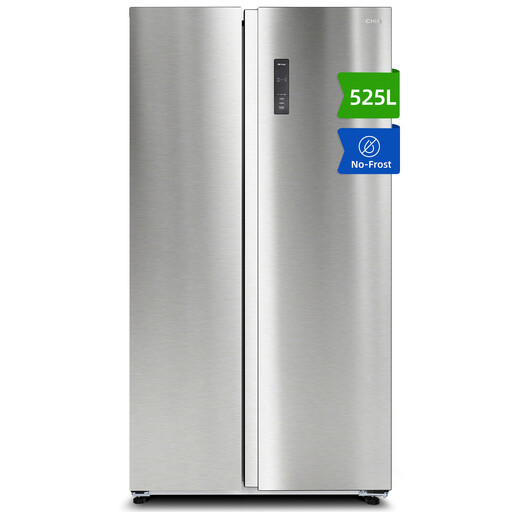 Image unavailable
CHiQ JR525WSE, 525 L side-by-side fridge freezer
Worth considering if you regularly need plenty of room for both fresh and frozen food. The model name splits the 525 L into 333 L for the fridge and 192 L for the freezer, and lists No Frost, 37 dB and an E energy rating. Check the installation dimensions, delivery route and kWh/year on the model’s energy label.
View on Joybuy
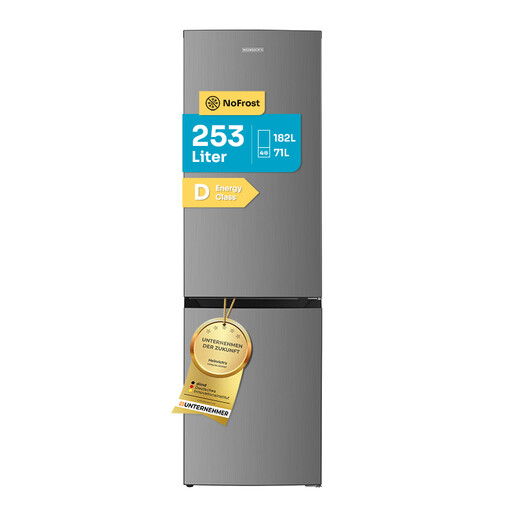 Image unavailable
Heinrich´s, 253 L fridge freezer
A size to compare if you mainly store fresh food, with a smaller amount of frozen food. The model name lists 182 L for the fridge, 71 L for the freezer, No Frost and 39 dB. Check the delivery dimensions and kWh/year on the energy label before comparing it with other fridge freezers.
View on Joybuy
Frequently asked questions
Which type should I choose for a weekly shop and a few frozen meals?
Start by comparing fridge freezers with a separate freezer compartment, looking at the usable capacity of each section rather than the overall total. UFC-Que Choisir recommends matching capacity to your shopping habits and how much frozen food you eat. If you often cook in batches, check the drawers and the space available for portions too.
When should I consider a multi-door model instead of a fridge freezer?
Consider a multi-door model if you regularly need more capacity and storage zones, provided it can get through your access points and fit in your kitchen. To give you an idea of size, Samsung lists the RF65DG960ESL as 912 mm wide. Remember to measure the packaged appliance and the clearance needed for the doors too.
How should I use the energy label to compare two appliances?
Compare the energy rating, kWh/year, compartment capacities and stated noise level, preferably between appliances with similar capacities and features. ADEME recommends using the energy label to guide your choice; the rating alone doesn’t tell you whether both models meet the same storage needs.
What noise level should I look for in an open-plan kitchen?
Check the dB(A) figure and noise class stated for each model. UFC-Que Choisir uses a stated noise level of under 40 dB(A) as a guide to the quietest fridges. This figure helps you compare product listings, but it can’t guarantee how noisy an appliance will seem in your room.
Does No Frost mean I won’t need to defrost the freezer?
First check that the No Frost feature applies to the freezer compartment on the model you’re considering. Bosch and Liebherr describe this technology as preventing the need for manual defrosting on the models it covers. Don’t assume it means the same as an appliance described as Low Frost.


