If you regularly store fresh food and frozen food, a fridge-freezer combines both in one appliance. If you mainly buy fresh food, a fridge on its own may be enough. Consider a separate freezer when your frozen food stock consistently exceeds the space available in a fridge-freezer, then compare the capacity of each compartment, the appliance’s footprint and the models’ annual energy consumption.
Who are these options for?
Households that buy both fresh and frozen food
You want to store fresh shopping and a moderate amount of frozen food in one appliance. With a fridge-freezer, check how much space is allocated to each compartment rather than looking only at the total capacity.
Households that stock up on frozen food
If you often buy or prepare food in bulk, compare the freezer capacity of a fridge-freezer with that of a separate appliance. A separate freezer also needs space and runs continuously.
Households short on space or mindful of energy use
If you’re replacing an appliance in a specific kitchen, compare its dimensions and installation instructions with the space available. Also compare each model’s usable capacity, kWh/year and stated noise level.
What sets these appliances apart?
First choose the configuration that suits your shopping habits, then compare models with the right capacity. A large total capacity doesn’t guarantee enough room in the compartment you need.
Fridge only
Consider this if: you mainly buy fresh food and don’t need an integrated freezer compartment, or you already have a separate freezer.
The trade-off: on its own, it won’t meet your needs if you regularly store frozen food.
Fridge-freezer
Consider this if: you regularly buy fresh and frozen food and want to store it all in one appliance.
The trade-off: capacity is split between two uses, so check the litres available in each compartment before choosing a size.
Separate freezer
Consider this if: you regularly stock up on frozen food and a fridge-freezer’s compartment can’t hold it all.
The trade-off: this appliance takes up extra space and also runs continuously.
| Criterion |
What to check |
What matters to shoppers? |
| Space for fresh and frozen food |
Compare the usable capacity, in litres, of the fridge and freezer compartments separately. |
When my shopping regularly fills both compartments, I want enough room in each and don’t want to rely on the total capacity alone; around 27% of consumers would put this balance first. |
| Size and installation |
Measure the space and check the door clearance; consult the instructions for installation and ventilation requirements. |
In a kitchen where every centimetre counts, I need to be able to install the appliance and access what’s inside; this would be a priority for around 27% of consumers. |
| Energy use and noise |
Compare the kWh/year of appliances with similar functions and capacities, and check their stated noise levels. |
An appliance that stays plugged in day and night makes me check its annual energy consumption first; around 26% of consumers would make this their main criterion. |
| Frozen food storage |
Before considering a second appliance, check whether a fridge-freezer’s freezer capacity meets your usual storage needs. |
If I often freeze bulk purchases or prepared portions, I mainly want enough storage space; almost 20% of consumers would prioritise this need. |
For appliances covered by the EU energy label, the declared annual energy consumption, capacity and noise level help you compare models. ADEME points out that refrigeration appliances run continuously, so the energy rating letter shouldn’t replace checking the kWh/year and capacity you actually need.
What should you look out for before buying?
-
Relying on a fridge-freezer’s total capacity
A total capacity that looks sufficient may hide a compartment that’s too small for your fresh or frozen shopping.
Work out which type of food you usually struggle to fit in, then compare the fridge and freezer capacities separately.
-
Comparing only the energy rating
Two appliances with different sizes or configurations may not meet the same needs, even if they have the same energy rating.
Compare the kWh/year of models with similar capacities and uses, then look up the exact model in EPREL, the European Commission’s public database.
-
Adding a freezer without a regular need for extra storage
A separate freezer takes up space and adds another appliance that runs continuously. ADEME lists an average consumption of 300 kWh/year for this category in its indicative table; this figure doesn’t apply to every model.
First check whether a fridge-freezer with a more suitable freezer compartment would be enough. If not, compare the usable capacity, kWh/year and location for the second appliance.
-
Ordering before checking the installation requirements
The door-opening direction, space dimensions and required clearances depend on the model you choose; a feature listed for one model won’t necessarily apply to an entire range.
Measure the space and delivery access, then read the installation instructions for the exact model, especially if it’s built in or positioned near a wall.
Brands to explore
Bosch
The range includes freestanding and integrated fridge-freezers, which you can compare based on the layout you want for your kitchen.
- Depending on the model, Bosch offers Total NoFrost features and storage options such as large freezer drawers.
- Check the features, installation requirements and energy consumption for the exact model; they don’t apply to every Bosch appliance.
Whirlpool
The range includes fridges and fridge-freezers, both freestanding and built-in, with configurations to compare against the space you have available.
- Whirlpool offers selected No Frost models, as well as models with reversible doors or adjustable feet.
- Check the capacity, kWh/year and noise level of your chosen model, and the niche dimensions if it’s built in.
Liebherr
The range covers domestic refrigeration and freezing, with freestanding and built-in appliances.
- Liebherr offers features including NoFrost and BioFresh on selected models.
- The brand says its BluPerformance platform offers more usable capacity for the same external dimensions. Still, compare the dimensions, capacity and energy label of the models you’re interested in.
Fridge-freezers to explore on Joybuy
These five appliances combine refrigeration and freezing. To choose between them, start by working out how much space you need in each compartment and check that the model will fit in your kitchen. Their features aren’t relevant if you’re choosing a fridge only or a separate freezer.
 Image unavailable
Samsung RB33B612EBN, black 344 L fridge-freezer
Worth considering if you want to store fresh and frozen food in one appliance. The title lists a total capacity of 344 L and an E energy rating; check the capacity of each compartment and the energy label details for the exact model.
Before choosing this model, also check its dimensions and the ventilation clearances in the instructions.
View on Joybuy
 Image unavailable
Candy CFQQ5T817EPS, silver 467 L four-door fridge-freezer
Its four doors and stated total capacity of 467 L are worth considering if you need to store a large amount of fresh and frozen food. The title mentions Total No Frost and an E energy rating; compare the capacity of each compartment and the energy label details for the exact model.
Measure the space and check the instructions for installation requirements.
View on Joybuy
 Image unavailable
Samsung RF50C530EB1, black 495 L multi-door fridge-freezer
This multi-door model has a stated total capacity of 495 L for fresh and frozen food. If this capacity suits your shopping, check how it’s divided between compartments and how much space you’ll need to install it.
The title lists an E energy rating; check the energy label for the exact model to compare its annual consumption.
View on Joybuy
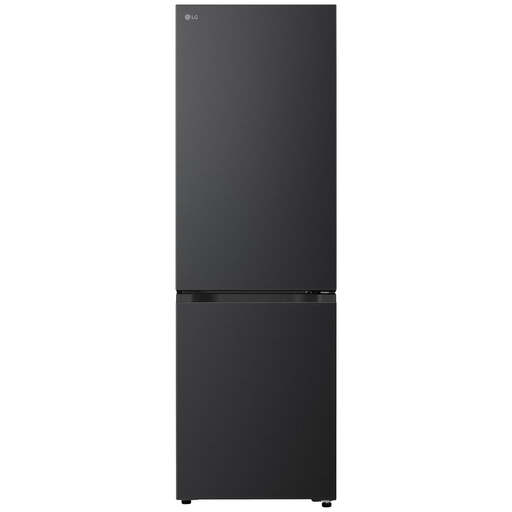 Image unavailable
LG GBBS312CEV, black 333 L fridge-freezer
Worth comparing if you’re looking for a fridge-freezer with a stated total capacity of 333 L. The title lists a C energy rating; check the capacity of each compartment and the annual consumption on this model’s energy label before comparing it with others.
Check the instructions for the dimensions and installation clearances required.
View on Joybuy
 Image unavailable
CHiQ JR227LSE, silver 227 L fridge-freezer
For a narrow kitchen, its stated width of 54 cm is a good starting point when checking the available space. The title lists its 227 L capacity as 153 L for refrigeration and 74 L for freezing.
The stated feature is Low Frost, not No Frost. Check the height, depth, installation requirements and kWh/year in the documentation for the exact model.
View on Joybuy
Frequently asked questions
What should I compare on a fridge or freezer energy label?
Compare the A to G efficiency rating, annual energy consumption in kWh, usable compartment capacities and stated noise level. When comparing two appliances with different sizes or configurations, consider all these details together rather than choosing based on the letter alone.
What is the QR code on the energy label for?
It links to the model’s information in EPREL, the European Commission’s public database. Use it to find the energy details for the exact model you’re considering.
Does a better energy rating always mean fewer kWh/year?
No. When comparing appliances that suit your shopping, also look at their stated annual consumption, capacity and how the compartments are divided. The energy rating letter alone doesn’t tell you the storage capacity or the model’s kWh/year.
Should I choose a No Frost appliance?
This feature is worth considering if you want to reduce the need for manual defrosting. Bosch and Whirlpool offer No Frost technology on selected models. Check that the exact model has this feature, then also compare its capacity, kWh/year and installation requirements.


