When shopping for a shared household, first compare the net capacity of the fridge and freezer separately: a large total capacity can still leave too little room for frozen food. A fridge freezer usually takes up less floor space; a multi-door model prioritises access to different sections, while separate fridge and freezer appliances are only worth considering if a single appliance’s compartments don’t meet your needs and you have room for both. In every case, check the dimensions, noise level and energy consumption of the model you choose, then look for an independent test of that exact model to see how well it maintains its temperature after a food shop.
Who is this guide for?
Households that do a weekly food shop
If you put away a lot of fresh food in one go, check the usable capacity and shelf layout, while making sure there’s still enough room for frozen food. Que Choisir’s testing protocol takes account of adding a food shop when testing fridge freezers.
House shares and families that eat lots of frozen food
The freezer’s net capacity and drawer layout matter just as much as the total capacity. Compare them with the amount of frozen food you need to store between shops.
Households with an open-plan kitchen or limited space
Measure the space, delivery route and clearance needed to open the doors. Also compare the stated noise level: Que Choisir uses less than 40 dBA as a guide for quiet models, though this figure doesn’t guarantee the same level of comfort in every room.
Which factors should you compare?
Fridge freezer
Consider it if: you want the fridge and freezer compartments in one upright appliance that takes up relatively little floor space.
Bear in mind: the balance between the two compartments may not suit a household that stores lots of frozen food.
Multi-door
Consider it if: easy access to different sections and an organised layout are particularly important for your household’s food shops.
Bear in mind: a larger appliance may need more space, and its total capacity doesn’t guarantee a suitable split between compartments.
Separate fridge and freezer
Consider it if: the compartments in a single appliance aren’t big enough for your regular food shops and you have room for both appliances.
Bear in mind: you’ll need space for two appliances and should check the energy consumption of each. This isn’t about choosing an additional freezer for storing large quantities of food.
For a shared household that shops regularly, the priorities below highlight the needs that are likely to have the biggest influence on your choice. Que Choisir offers a guide to capacity based on household size; the European Commission lists capacity, annual energy consumption and noise level among the information shown on the energy label.
| Factor |
What to check |
Who is this important for? |
| Capacity and layout |
Compare the net capacity in litres of each compartment, as well as the layout of the shelves and drawers. Que Choisir suggests starting with 100 to 150 L for one person, then adding 50 L for each additional person; adjust this to suit your household’s habits. |
When we do a big food shop, we need enough room for fresh food without sacrificing freezer space. Around 36% of consumers would prioritise this balance of capacity. |
| Temperature performance |
Look for an independent test of the exact model, covering temperatures after food is added and its freezing performance. Que Choisir describes these measurements in its testing protocol. |
When we put away a food shop all at once, we want to know how well the appliance maintains its temperature. This would be the top priority for around 29% of consumers. |
| Installation and noise |
Measure the space and access routes, then check that the doors can open fully and look at the stated noise level. For a built-in model, check the required niche dimensions for the exact model. |
In an open-plan or narrow kitchen, we need to be able to install and open the appliance without overlooking how noisy it is. Around 21% of consumers would put these practical considerations first. |
| Energy consumption and after-sales support |
Check the annual kWh figure on the energy label and compare appliances with similar capacities and formats. Also find out about repair options and the services offered by the retailer. |
If the appliance runs constantly in our home, its energy consumption and the support available after purchase matter to our decision. These considerations would be a priority for around 14% of consumers. |
Mistakes to avoid
-
Looking only at the total capacity
Two fridge freezers with a similar overall capacity can offer different amounts of space for frozen food. A household that buys lots of frozen food may find the freezer too small, even if the appliance seems spacious.
Compare the net capacity of the fridge and freezer separately, then check how the drawers and shelves will accommodate your food shop.
-
Confusing cooling technology with test results
A label such as No Frost or Multi-Flow doesn’t, on its own, prove that temperatures remain stable after a big food shop. Que Choisir’s testing protocol includes laboratory measurements to assess how appliances perform.
To compare models on this point, look for an independent test of the exact model and read about the conditions under which it was tested.
-
Comparing energy classes alone
The energy class letter doesn’t tell you how much space is available for different types of food or, by itself, how much energy the appliance uses each year.
Compare the full label: energy class, kWh per year, compartment capacities and noise level. The European Commission lists this information among the details shown on fridge and freezer energy labels.
-
Measuring up without planning the replacement
An appliance may fit in your kitchen but still be difficult to get through the delivery route. You’ll also need to arrange for the old fridge to be removed and the new one installed with the retailer.
Measure the route to the appliance’s final position and confirm the delivery, installation and old-appliance collection arrangements before you buy.
If collection hasn’t been arranged, the old appliance could still be taking up the space you need on delivery day.
Brands to consider for this choice
LG
LG France features the GBV3200DSW fridge freezer, with a stated capacity of 387 L and noise level of 35 dB. This model is one option to consider when comparing the stated capacity and noise levels of fridge freezers.
- LG’s product information lets you compare the stated capacity and noise level with those of other models.
- The brand’s claims about food preservation and temperature fluctuations are based on specific test conditions; they don’t replace an independent test of the model you choose.
Samsung
Samsung France features the RB38C7B6AS9/EF fridge freezer, with a stated capacity of 387 L, an energy rating of A and Wi-Fi connectivity.
- This model has stated specifications you can compare against your capacity needs and preferred features.
- For the connected features in question, Samsung says that Wi-Fi access and a Samsung account are required; the stated results for AI Energy mode may vary depending on how it’s used.
Electrolux
Electrolux’s range of built-in fridge freezers is worth considering when fitting the appliance into a kitchen niche is your main priority.
- The built-in dimensions given for each model help you check whether it will fit in your kitchen.
- If your household eats lots of frozen food, check the freezer capacity of the model you’re considering: being built-in doesn’t tell you how much space it offers.
Fridge freezers on Joybuy
This selection includes fridge freezers, multi-door models and a side-by-side model. Compare their compartments and check the space you have at home: being featured here doesn’t tell you how well they maintain their temperature after a big food shop.
 Image unavailable
Candy CFQQ5T817EPS, four-door, 467 L
Worth considering if you want to access your food through several doors. This model has a stated total capacity of 467 L, Total No Frost technology and an energy rating of E; check the capacity split and the space needed for installation.
View on Joybuy
 Image unavailable
Bosch KGN33NLEB, bottom freezer, 282 L
Worth considering if you’re looking for a fridge freezer with the freezer at the bottom. It has a stated total capacity of 282 L and an energy rating of E; check the capacity of each compartment and the noise level to make sure it suits your kitchen.
View on Joybuy
 Image unavailable
Samsung RF50C530EB1, 495 L, black
Worth considering if your household is looking for a total capacity of 495 L. This model has an energy rating of E; check the door layout and the balance between fresh and frozen food before deciding whether it suits your food shops.
View on Joybuy
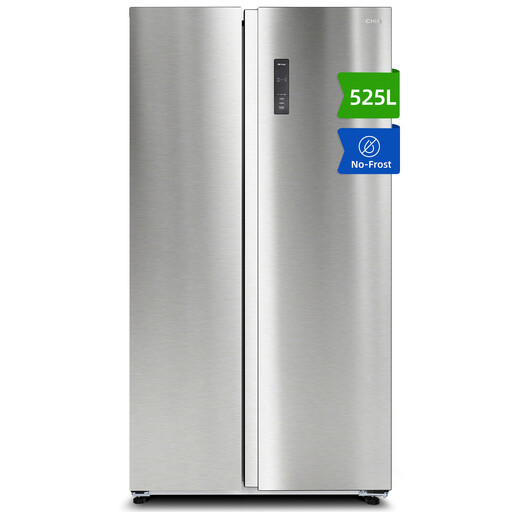 Image unavailable
CHiQ JR525WSE, side-by-side, 525 L
Worth comparing if freezer space is important for your household. The product title states a capacity of 333 L for the fridge and 192 L for the freezer, as well as No Frost, 37 dB and an energy rating of E; check the dimensions required for installation.
View on Joybuy
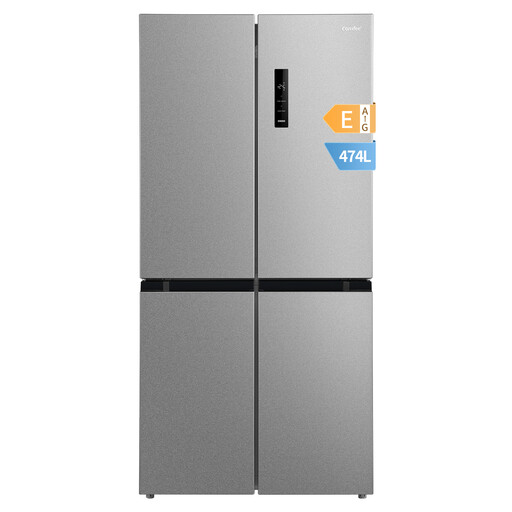 Image unavailable
COMFEE' RCF470LS2EU(E), four-door, 474 L
Worth considering if you want a four-door appliance to keep your food shop organised. The product title states a total capacity of 474 L, a crisper drawer with three temperature settings and an energy rating of E; check the net capacity of each compartment before choosing.
View on Joybuy
Frequently asked questions
What capacity should you choose for a shared household?
Start by estimating the capacity you need in the fridge and freezer separately. Que Choisir suggests a general guide of 100 to 150 L for one person, then 50 L for each additional person; adjust this starting point to suit how often you shop and how much frozen food you eat.
Does the energy label show whether the temperature will stay stable after a food shop?
No: the label includes information such as annual energy consumption, capacity and noise level, but it doesn’t show how well the appliance maintains its temperature after being loaded. To compare performance, look for an independent test of the exact model; Que Choisir describes the temperature and freezing measurements included in its testing protocol.
What should you check before delivery of a built-in model?
Compare the niche dimensions required for your chosen model with the space in your kitchen, then check its instructions for installation and ventilation requirements. Also measure the delivery route: dimensions that work for another appliance aren’t enough to confirm that the new one can be brought in and installed.
What should you do if a fridge bought in France has a lack of conformity?
If you bought it from a professional retailer in France, you can request a remedy under the legal guarantee of conformity if the product has a defect covered by that guarantee. The Ministry of the Economy states that you have two years to make this request. This remedy relates to the product’s conformity and is separate from returning it because you’ve changed your mind or from a commercial guarantee offered by the retailer.


